What is a tree? Methods to improve tree survival rates
To grow trees that look beautiful, you not only need to put more effort into cultivation, but also understand tree knowledge, learn to arrange trees rationally and skillfully blend trees and shrubs together - all of these are worth studying.
I. How many kinds of trees are there
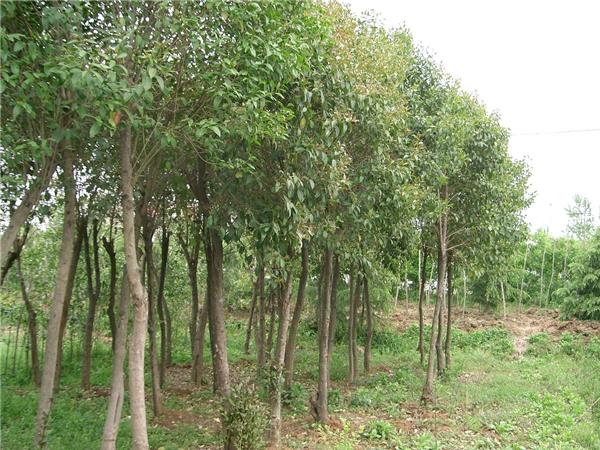
There are many kinds of trees, with over 2000 species according to incomplete statistics. According to whether they are evergreen, trees can be divided into deciduous trees and evergreen trees. According to their different heights, we can further divide them into giant trees over 31 m, large trees between 21 and 30 m, medium trees between 11 and 20 m, and small trees from 6 to 10 m. They can also be divided by different families, including Lauraceae, Platanaceae, Salicaceae, Cupressaceae and so on, with hundreds of families and genera, and under each of the several hundred families there are also dozens of tree species. So the tree family is a very large family. Almost all families and genera have trees except for some within the monocotyledons.
II. Optimal arrangement of trees
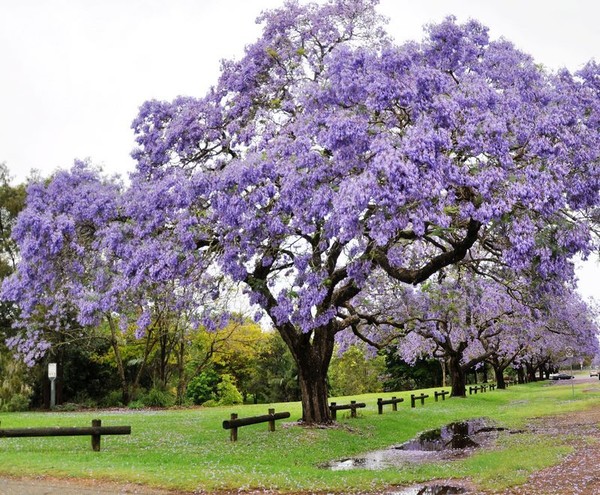
1. Arrangement of the same tree species at the same height level: forming a canopy line of equal height, straight and monotonous, simple yet spectacular, and also able to express the morphological beauty of a particular tree species. For example, cylindrical trees planted as street trees and in belt-style planting.
2. Arrangement of trees with different crown shapes: the canopy line composed of trees of different heights determines visitors' field of vision and affects visitors' sense of space.
3. Arrangement of isolated trees: sometimes in a grove where the canopy line has little undulation, a particularly tall isolated tree stands out, serving as a landmark and guide.
4. Arrangement of trees with repeated forms: repeated forms will expand people's viewing field of vision, can attract people's visual attention, and easily form a visual center or focal point for viewing.
5. Arrangement of trees with rhythm: the order of arrangement can go from small to large, or from tall to short, and can also change gradually and regularly from dense to sparse.
6. Arrangement reflecting contrast and harmony: in the arrangement of trees, adopt a gradual-change form, or increase repeated and similar modeling forms, so as to add consistent elements to the whole work and achieve a relatively perfect effect.
III. Planting methods to improve tree survival rates
1. Solution spraying. First prepare a solution of the corresponding concentration as needed and spray the plants, requiring fine, uniform droplets, with the sprayed parts moistened as the standard. To make the agent easy to adhere to the plant surface, a little emulsifier such as laundry detergent, neutral soap, etc., or surfactant and other adjuvants can be added to the agent to increase the adhesion of the agent.
2. Soaking method. Often used to promote cutting rooting, seed treatment, fruit ripening, storage and freshness preservation, etc.
3. Smearing method. The smearing method on the cut of aerial layering can be used for growing precious, difficult-to-root flowers. The method is to make a ring cut on the branch, expose the phloem, smear lanolin containing auxin-type agents on the cut, keep it moist with moss, etc., and wrap the outside with film to prevent water evaporation.
4. Soil irrigation method. Prepare plant growth regulators into an aqueous solution and directly irrigate it into the soil or apply it mixed with fertilizer, etc., so that the roots can fully absorb it.
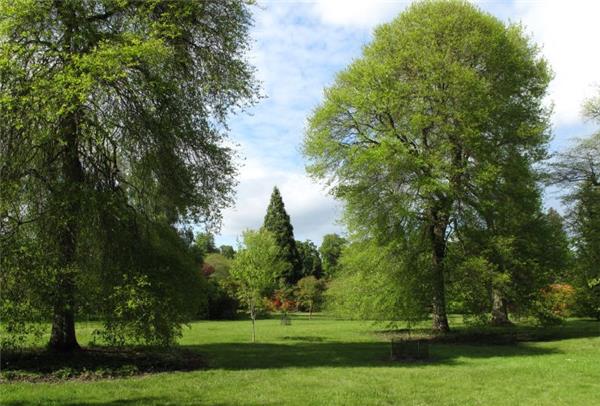
Trees are a type of tree that will definitely be used in landscaping design. Generally speaking, trees are not difficult to grow, so if there are suitable conditions at home, trees can also be grown at home, and there are very many types to choose from.