What are the common pests and diseases of corn?
Before learning how to prevent and control corn pests and diseases, we need to have a fairly comprehensive understanding of the various pests and diseases that corn may be affected by, so that we can treat the problem accordingly.
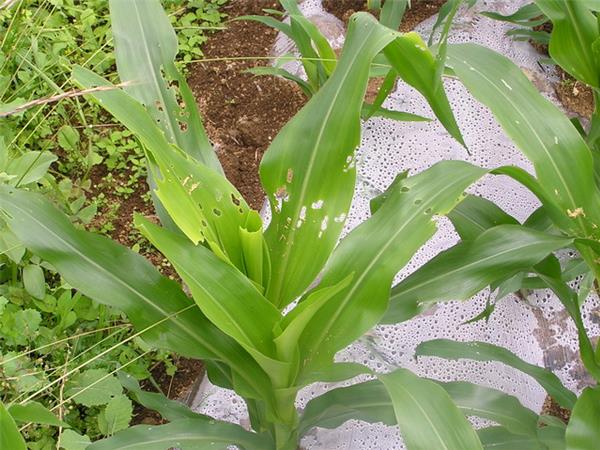
Common corn pest species
1. Corn borer: The corn borer can cause corn mosaic leaves, bore into the stems, and damage the female and male ears. Prevention and control of the corn borer should be carried out at the end of the whorl stage, using the "three fingers and a pinch" method, applying 1.5% phoxim granules at 1.5-2 kg per mu into the whorl, with an obvious control effect. You can also use pyrethroid pesticides diluted 1000 times with water or 50% phoxim emulsion diluted 1000 times, remove the sprayer nozzle, and spray the solution into the whorl leaves.
2. Armyworm: Armyworm, commonly known as the five-colored worm or wheat silkworm, belongs to the order Lepidoptera, family Noctuidae. It is a major pest of grain crops and forage crops, and causes serious damage to corn. Armyworm is a polyphagous, migratory, and outbreak-prone pest. The occurrence of armyworm is closely related to temperature and humidity. The optimum temperature for adult oviposition is generally 19-25°C, and oviposition is affected above 30°C. In addition, the higher the humidity, the more favorable it is for adult oviposition, especially under alternating cloudy and clear, rainy and humid climatic conditions, which not only favor adult oviposition but also favor egg hatching and larval survival and development.
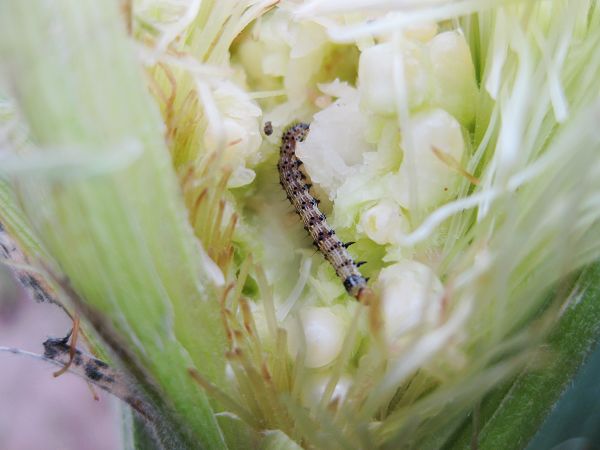
3. Cotton bollworm: Belongs to the order Lepidoptera, family Noctuidae. Also known as the corn earworm, green worm, cotton bollworm, etc.
4. Corn aphid: For aphids, detasseling and tassel pruning can reduce their damage to a certain extent, and you can also use 40% dimethoate emulsion or 10% imidacloprid diluted 1000 times for spray control.
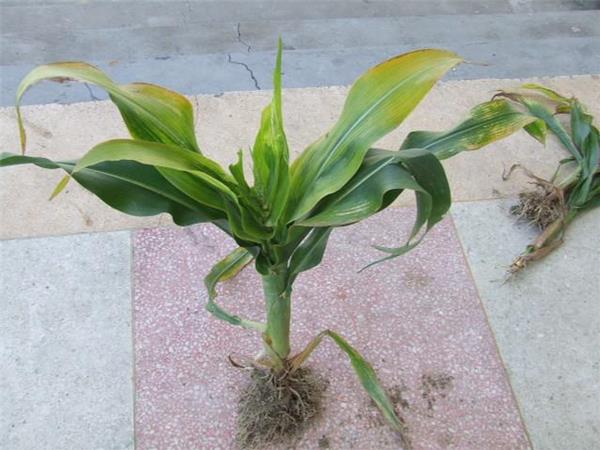
5. Corn leaf mite: Commonly known as the red spider, it can harm many crops. Adult mites and nymphs pierce and suck the juice from the tissues on the underside of host leaves. Affected leaves turn from yellow to white and then die, affecting the corn grain-filling process, causing the thousand-grain weight to decrease and reducing yield. Spraying plants carefully with 2% Tianda abamectin diluted 3000 times can control corn leaf mites.
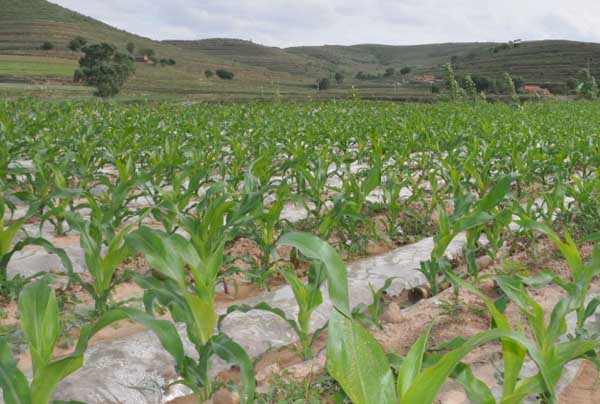
Common corn disease species
Dry rot: Corn can be affected throughout the growing period, with heavier damage in the later growth stage. It damages the stalks and ears. Brown, dark brown, and purplish-red large lesions appear on the stalk base and on the stalk at the ear. In severe cases, the stalk breaks at the diseased part. The cob of the diseased ear becomes loose and breaks easily. The grains on the lower part of the diseased ear turn brown and lose their luster, and white mycelium is often present between the grains. The diseased ear sticks to the husk and is difficult to peel open. Control methods: (1) Select and breed disease-resistant varieties. Implement a 2-3 year crop rotation, deeply plow the soil in autumn, remove diseased residues in the field, and reduce sources of infection. Strengthen cultivation management, sow at the right time, increase the application of organic fertilizer, etc., cultivate strong seedlings, and improve disease resistance. (2) Before sowing, soak the seeds in 50% carbendazim wettable powder diluted 1000 times for 24 hours. After soaking, rinse with clean water and then sow. At the heading stage, spray with 50% carbendazim wettable powder or 50% thiophanate-methyl wettable powder diluted 1000 times. Focus on spraying the ears and the lower stems and leaves, and spray again after 7 days.
Rough dwarf disease: It mostly appears when corn has 5-6 leaves. The diseased plants have dark green leaves, and the leaves are wide, short, hard, and brittle, and densely clustered. The plants grow slowly and become dwarfed. It is caused by virus-carrying small brown planthoppers transmitting the virus. Small brown planthoppers generally live in places with many weeds. Therefore, during the "one spray, three preventions" treatment for wheat, weeds on field ridges, field edges, and roadsides should be uniformly sprayed to kill the insect source. You can also use 3-3.5 kg of 1.5% 1605 powder, add 10-15 kg of soil, and before corn emerges, spread it in the rows of the planted corn. If diseased plants are found, pull them out promptly to reduce sources of infection.
As a food crop and cash crop, corn is very valuable, and once corn matures, it tastes very good. Therefore, be sure to prevent and control corn pests and diseases well, so that they do not destroy all of this in an instant.