How to grow Brunfelsia pauciflora? Growing methods and care tips
When Brunfelsia pauciflora first blooms, the flowers are blue-purple, gradually turning to lilac, and finally to white. Because the flowers open in succession, blue-purple and white flowers can be seen on the same plant at the same time, so it is also called the "yesterday-today-and-tomorrow plant." So how do you grow Brunfelsia pauciflora? Below, I will share the growing methods for Brunfelsia pauciflora.
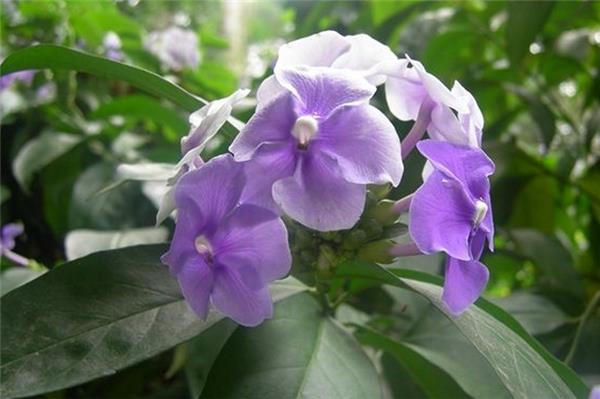
I. Growing methods for Brunfelsia pauciflora
Soil: The best soil for growing Brunfelsia pauciflora is a slightly acidic potting mix rich in humus, loose and fertile, with good permeability. It is not tolerant of saline-alkaline soil. You can use black mountain soil, peat soil, pine needle soil, and leaf mold mixed together, with a small amount of river sand added to improve drainage and aeration.
Temperature: The optimal growing temperature for Brunfelsia pauciflora is 20-30°C. On clear days in summer when the temperature exceeds 30°C, provide appropriate shade and maintain 60% light transmission. In winter, move Brunfelsia pauciflora indoors to keep it warm; maintain a temperature above 10°C for it to overwinter safely.
Sunlight: Brunfelsia pauciflora likes abundant sunlight. In spring and autumn, give it plenty of sunlight and place it in a sunny spot. During high temperatures in summer, provide appropriate shade to prevent intense direct sun from scorching the leaves. In winter, move Brunfelsia pauciflora indoors and place it on a sunny windowsill.
Watering: When grown in pots, Brunfelsia pauciflora is relatively easy to manage. Keep the soil moist during the growing season, and prevent water accumulation in the pot during the rainy season. In dry weather, frequently spray water on the plant to increase air humidity.
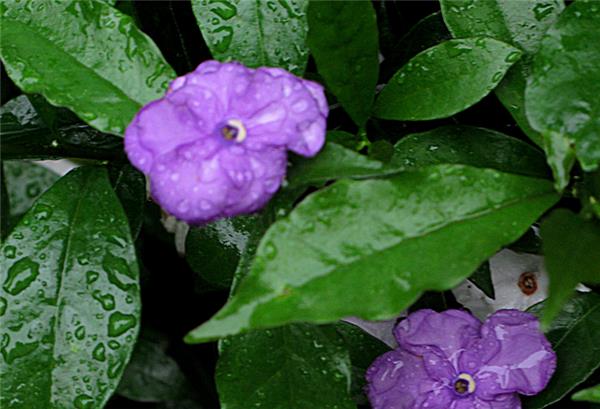
II. Precautions for growing Brunfelsia pauciflora
1. Suitable potting soil: Use a slightly acidic soil that is loose, fertile, permeable, well-draining, and rich in humus. Generally, use 1 part leaf mold, 1 part garden soil, and 1 part wood shavings or coal cinder ash; alternatively, use 2 parts garden soil, 1 part coal cinder ash, plus a small amount of cake fertilizer mixed together. Never use alkaline soil.
2. Suitable light and good ventilation: It prefers a sunny, semi-shaded, well-ventilated environment. It is not tolerant of intense direct sunlight and has poor wind resistance. After moving it outdoors around Qingming, place it in a sunny, wind-sheltered spot for cultivation. In summer, place it in a cool, ventilated area or under a shade frame with 50% shading to prevent direct sunlight, otherwise the leaves tend to turn yellow and scorch.
3. Moderate watering: Brunfelsia pauciflora likes moisture but is not tolerant of waterlogging. Daily watering should follow the principle of "water when dry, stop when wet." In summer, when temperatures are high and the air is dry, in addition to watering the soil thoroughly, spray the leaves with clean water 2-3 times a day and sprinkle water around the plant to increase air humidity and lower the temperature. In winter, reduce watering and keep the soil on the dry side; during the rainy season, prevent water accumulation in the pot. Preferably, after each flush of flowers fades, when new shoots have grown to about 3 cm, control watering to promote flower bud differentiation, so that it can bloom every month.
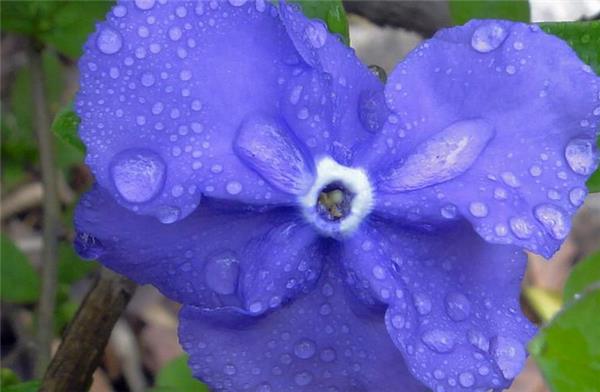
III. Cutting propagation methods for Brunfelsia pauciflora
The yesterday-today-and-tomorrow plant is often propagated by softwood cuttings in late spring and early autumn using current-year branches, or by hardwood cuttings in early spring using branches from the previous year.
Cutting medium: This refers to the nutrient soil, river sand, peat soil, or other materials used for cuttings. For home propagation, it is difficult to obtain an ideal cutting medium due to limited conditions. It is recommended to use a pre-mixed and sterilized cutting medium; medium-coarse river sand can also be used, but it should be rinsed several times with clean water before use. Do not use sea sand or river sand from saline-alkaline areas, as they are not suitable for the growth of flowering plants.
Selection of cutting branches: For softwood cuttings, from late spring to early autumn when the plant is growing vigorously, select robust current-year branches as cuttings. After cutting the branches off, choose the sturdy parts and cut them into segments 5-15 cm long, each with more than 3 leaf nodes. When taking cuttings, note that the upper cut should be made straight across about 1 cm above the topmost leaf node, and the lower cut should be made at an angle about 0.5 cm below the bottommost leaf node. Both cuts should be smooth (the knife must be sharp).
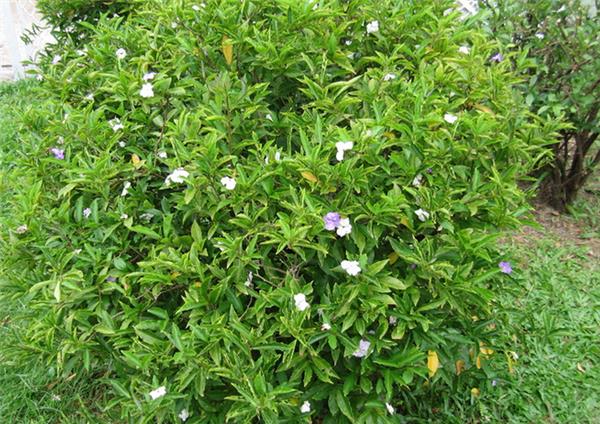
The flowers of Brunfelsia pauciflora are blue and white, fresh and elegant, with a delicate fragrance. It can be grown in pots indoors as an ornamental flowering plant. That concludes the introduction to the growing methods for Brunfelsia pauciflora. Friends who like Brunfelsia pauciflora can try growing a pot.