How to Grow and Care for the Cane Begonia (Begonia maculata)
The biggest difference between the cane begonia and ordinary begonias lies in its flowering stems, which grow in a bamboo-like, jointed pattern, which is how it got the name "cane begonia." It is a very beautiful plant once it blooms. There are not many special precautions for growing cane begonias; generally, you just need to care for it according to its habits.
I. What Is the Cane Begonia
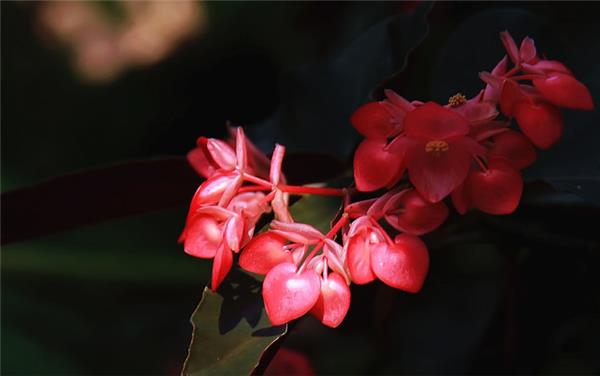
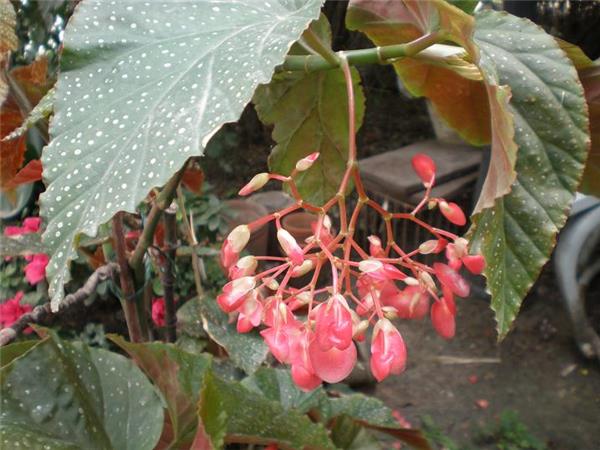
1. Scientific name of the cane begonia: Begonia maculata, belonging to the family Begoniaceae, genus Begonia. It is a fibrous-rooted begonia. A perennial evergreen herbaceous plant, shrub-like, with a height of over 1 m. The stems are upright, with short, swollen, slightly fleshy internodes, forming a bamboo-like jointed appearance. The leaves are lanceolate, asymmetrical and slanted to one side, with entire margins that are often wavy; the upper surface is green and glossy with numerous small white spots, while the underside is deep red. It blooms in winter and spring, or in spring when temperatures are low. The flowers and flower stalks are deep red, hanging in clusters. The green leaves of the cane begonia are covered with white spots, like stars scattered across the sky, contrasting with the bright red undersides of the leaves and the large, drooping deep red inflorescences, making the colors appear even more delicate and gorgeous, each enhancing the other. It is an ornamental flower prized for both its foliage and its blooms.
2. Similar species in the same genus: silver-spotted begonia (B. argenteo-guttata), also known as silver-spotted begonia, silver-spotted cane begonia, or silver-spotted cane hybrid begonia. The leaves are green and glossy, densely covered with silvery-white spots on the surface, with toothed or wavy angular margins, and green undersides. It blooms in all four seasons, with axillary, drooping inflorescences that are white tinged with red.
II. Habits of the Cane Begonia
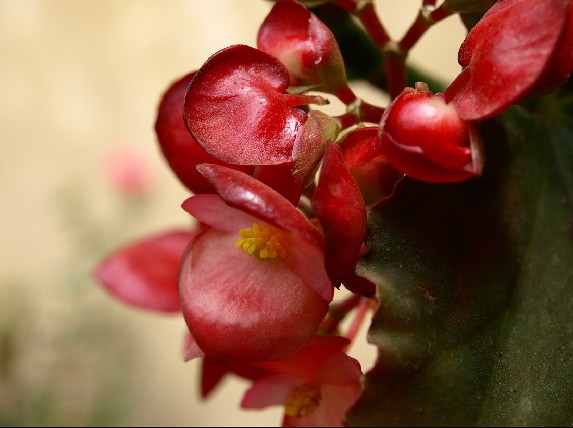
The cane begonia is a shallow-rooted plant. It likes semi-shade, moisture and warmth, is not cold-tolerant, and dislikes harsh sun, heat and waterlogging. The suitable growing temperature is 15°C to 25°C. It is highly drought-tolerant, fears water accumulation, and prefers loose, fertile sandy loam. The watering principle is to water when the soil is dry and withhold when wet.
III. Care Tips for the Cane Begonia
1. Watering management: The cane begonia is a shallow-rooted plant that likes semi-shade and a mild, humid environment. Its optimal growing temperature is between 15 and 25 degrees, and it is highly drought-tolerant but afraid of waterlogging. Therefore, watering should follow the principle of watering when dry and withholding when wet, keeping the potting soil moist as the ideal. In midsummer, spray the leaves and the ground to raise air humidity, which will help its growth.
2. Light management: The cane begonia likes ample scattered light, but too strong light will cause the leaf tips to dry and the edges to scorch, leading to yellowing and even leaf drop. In hot summer, it is best to place it under a cool, ventilated trellis or on a north-facing balcony to receive scattered light. If it is kept in a dark place for a long time, insufficient light will also cause yellow leaves and, in severe cases, plant death.
3. Fertilization management: Fertilizer is an essential element for plant growth. Fertilizer should be applied when the potting soil is dry, by loosening the soil first, and watering after fertilizing helps the plant absorb it. When stems and leaves are not vigorous or just after repotting, heavy fertilizing should be avoided. During the vigorous spring growth period, apply a dilute liquid fertilizer once every 10 to 15 days. In the high-temperature summer season, the plant stops growing, so fertilization should be reduced. Pause fertilizing during the flowering period and in winter.
4. Pruning: Strengthening pruning helps maintain a good plant shape. For plants grown for many years, or those that have grown too tall, or whose lower stem leaves have fallen off, making the plant shape unattractive and reducing its ornamental effect, pruning can be done together with spring repotting to encourage new shoots and more bright flowers.
5. Pest and disease control: Excessively high summer temperatures and humid weather can cause pests and diseases in cane begonias. For prevention and control, on the one hand, improve ventilation and light penetration and do not let large amounts of water accumulate in the pot; at the same time, ensure a fungicide spray every 15 days, such as thiophanate-methyl or carbendazim, to prevent diseases. If red spider mite damage is found, spray a 1500-fold solution of dicofol; if a small number of scale insects are found, they can be removed manually with a brush.
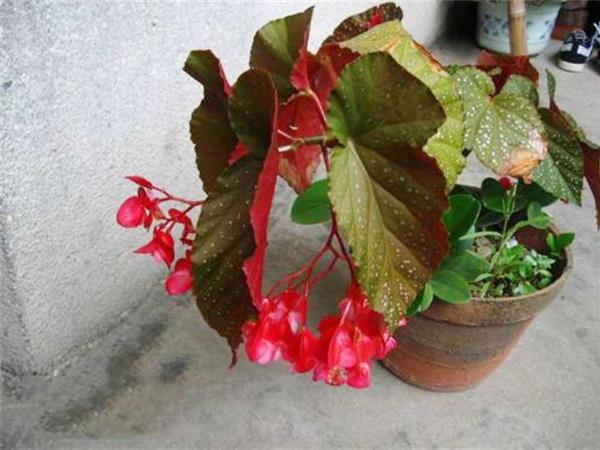
The cane begonia also has another name, "Cigu Begonia" (Arrowhead Begonia). Does it not sound very girlish? Its red stamens hang gently downward, looking just like a shy young girl. So growing a cane begonia at home will undoubtedly add a touch of youthful, delicate atmosphere to the household.