Evening Primrose Cultivation Precautions: How to Grow Evening Primrose
Evening primrose is a beauty under the moon. Whenever night shrouds the earth and clear moonlight pours down, this beauty begins to reveal her outstanding grace, making anyone who happens to glimpse her unable to look away. Evening primrose has many benefits. When growing it, container cultivation is generally not used, but it can be planted on a balcony or other open-air spot so it can bathe in nature's care.
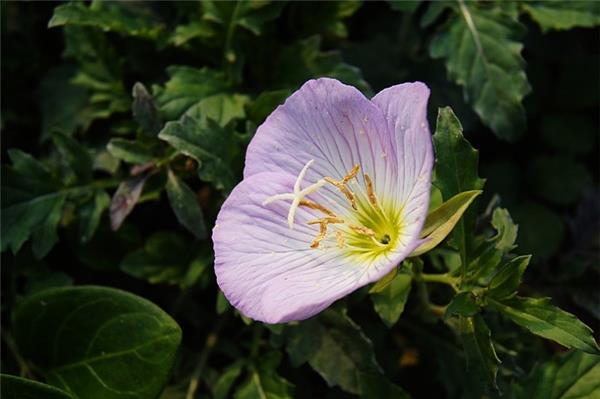
I. Benefits and Effects of Evening Primrose
1. Evening primrose has beautiful flowers and is often cultivated for ornamental purposes. The flowers of evening primrose can be used to extract aromatic oil; the seeds can be used medicinally and also pressed for edible oil; the stem bark fibers can be made into rope.
2. Evening primrose is warm in nature and sweet in taste. It has the functions of strengthening tendons and bones and dispelling wind and dampness. It can be used to treat symptoms such as rheumatism and pain in the tendons and bones.
3. Evening primrose oil and its finished products have extensive applications and medicinal value in treating high blood pressure, preventing cerebral thrombosis, lowering lipids, lowering blood sugar, and resisting aging.
4. In addition to its preventive and therapeutic effects on cardiovascular diseases commonly suffered by the elderly, evening primrose is also very useful for the age-related disease diabetes.
5. Evening primrose can reduce calcium loss and has the effect of preventing osteoporosis. It is helpful for physiological health, so it is a priority choice for women.
II. Ecological Habits of Evening Primrose
It has strong adaptability and is not strict about soil. It is cold-resistant, drought-resistant, and tolerant of poor soil. It likes light and avoids waterlogging. Bolting and flowering require a certain low-temperature stimulus.
Evening primrose performs best when cultivated in courtyards in ventilated, open places in loose, fertile, well-drained sandy loam soil. It can also be grown in containers on a balcony for viewing. Under the moonlight in the quiet night, waves of delicate fragrance make people feel refreshed. Evening primrose has strong self-seeding ability. After one planting, its self-sown seedlings can grow on their own every year and bloom continuously.
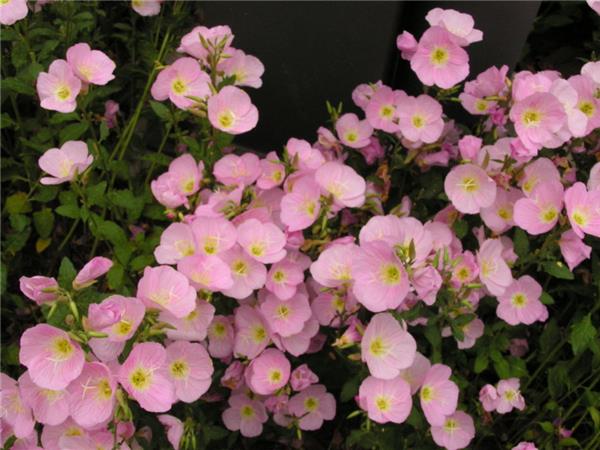
III. Propagation Methods of Evening Primrose
1. Seed propagation: Use seeds for propagation. In the north, sow in spring. In areas south of the Huaihe River, sow and raise seedlings in autumn or spring. When sowing, the soil should be raked fine and level. Scatter the seeds on the seedbed surface, rake lightly with a rake, and cover with a thin layer of soil. The seeds are small, so the soil must not be too thick, otherwise it will affect seed germination and growth. After sowing, the soil should be kept moist. About 10~15 days after sowing, the seeds can germinate into seedlings.
2. Cutting technique: The branches used for cuttings are called cuttings. Usually combined with pinching work, the thick, pest-free top shoots that are removed are used as cuttings, directly using the top shoots for cuttings. The optimum temperature for cutting rooting is 18°C~25°C. Below 18°C, cuttings root with difficulty and slowly; above 25°C, the cut ends of the cuttings are easily infected by pathogens and rot, and the higher the temperature, the greater the proportion of rot. When low temperatures are encountered after cutting, the main measure for keeping warm is to wrap the flowerpot or container used for cuttings with plastic film; when the temperature after cutting is too high, the main cooling measure is to shade the cuttings, blocking 50~80% of sunlight, and at the same time spray the cuttings 3~5 times a day. On sunny days with higher temperatures, spray more often; on cloudy and rainy days with lower temperatures and higher humidity, spray less often or not at all. After cutting, the relative air humidity must be kept at 75~85%.
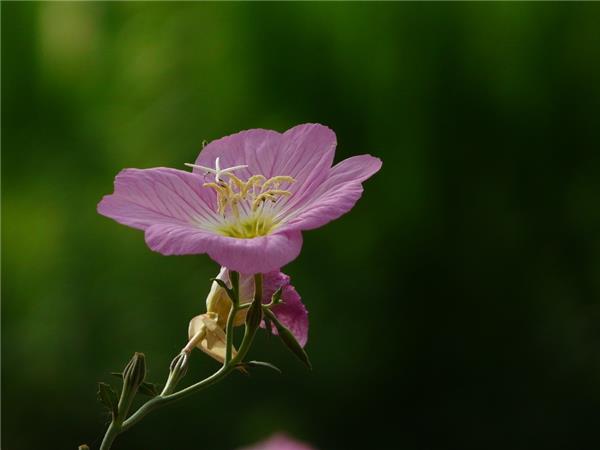
IV. Evening Primrose Cultivation Precautions
1. Site selection and land preparation: Evening primrose is strong by nature, cold-resistant, drought-resistant, tolerant of poor soil, likes light, and avoids waterlogging. Choose fertile soil with good drainage, such as fields previously planted with soybeans or melons, and continuous cropping is possible. However, plots with residues of herbicides such as chlorsulfuron, imazethapyr, Pursuit, and clomazone cannot be used to grow evening primrose.
2. Transplanting and planting: When putting small seedlings into pots, first place a 2~3 cm thick layer of coarse-grained substrate or ceramsite at the bottom of the pot as a drainage layer, sprinkle a layer of fully decomposed organic fertilizer on top as base fertilizer, about 1~2 cm thick, then cover with a layer of substrate about 1~2 cm thick, and then place the plant in so as to separate the fertilizer from the root system and avoid burning the roots. The substrate used for potting can be one of the following. Vegetable garden soil: furnace slag = 3:1; or garden soil: medium-coarse river sand: sawdust (mushroom residue) = 4:1:2; or one of paddy soil, pond mud, or leaf mold. Or peat + perlite + ceramsite = 2 parts + 2 parts + 1 part; vegetable garden soil + furnace slag = 3 parts + 1 part; peat + furnace slag + ceramsite = 2 parts + 2 parts + 1 part; sawdust + vermiculite + medium-coarse river sand = 2 parts + 2 parts + 1 part. After potting, water thoroughly once and place in a slightly shaded environment for one week of care.
3. Field management: Before the second pair of true leaves expands, the seedlings are very similar to weed seedlings, so hoeing and weeding cannot be carried out. Only after the second pair of true leaves unfolds can this be done. When they grow into rosette-stage seedlings, thin them to set the stand or transplant them. The plant and row spacing is 65 cm x 65 cm. When the plants reach 30 cm in height, mound soil around the plants to prevent lodging due to height. After transplanting or setting the stand, apply manure or urea once as a top dressing to promote seedling-stage growth. At the early bud stage, apply a second top dressing to promote flowering and seed setting.
4. Pest and disease control: Common pests and diseases of evening primrose include rot disease, leaf spot disease, and copper green chafer, which can generally be killed with relevant chemicals.
5. Harvesting and processing: Evening primrose has an indeterminate inflorescence, and the fruits mature successively. Generally, it can be harvested when half of the inflorescence has matured. When harvesting, use pruning shears or a knife to cut (mow) off the inflorescence, or pull up the whole plant, dry it in the sun, press it with a roller or beat it with a stick, remove all fruit shells and impurities, and store it in a dry, cool place.
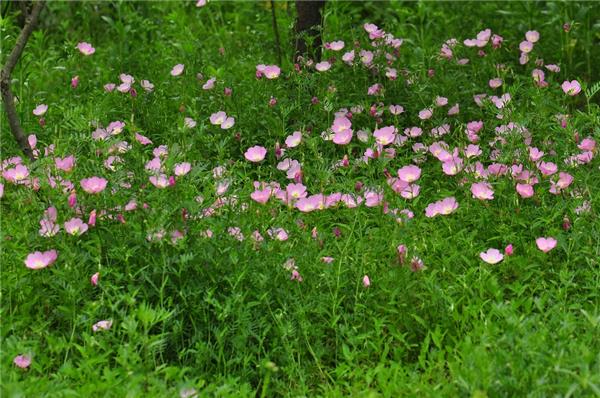
That is all for the introduction to evening primrose. Do you all feel confident about trying to grow evening primrose? This beauty in the night can absolutely bring a different color to everyone's life, and its habit of blooming at night will also give people a different feeling.
Generally, it can be harvested when half of the inflorescence has matured. When harvesting, use pruning shears or a knife to cut (mow) off the inflorescence, or pull up the whole plant, dry it in the sun, press it with a roller or beat it with a stick, remove all fruit shells and impurities, and store it in a dry, cool place.
That is all for the introduction to evening primrose. Do you all feel confident about trying to grow evening primrose? This beauty in the night can absolutely bring a different color to everyone's life, and its habit of blooming at night will also give people a different feeling.