How to grow Asparagus fern? Learn the Asparagus fern cultivation methods in one article
Asparagus fern, also known as Asparagus grass, has two names that both sound very beautiful, as if suddenly catching a glimpse of a vibrant fresh green amid the snowy white winter. Growing Asparagus fern is not difficult, so let's learn about it together below.
I. The uses and value of Asparagus fern
1. Ornamental value: The clear, emerald-green stems and branches of Asparagus fern trail and hang in a cascading manner, never withering throughout the year, long and slender, elegant and graceful. It is not only an excellent potted foliage plant for decorating interiors in all four seasons, but if the green stems and branches are cut to make bouquets and flower baskets, they become even more brilliant.
2. Medicinal value: The main medicinal properties of Asparagus fern are nourishing yin and clearing heat, moistening dryness and promoting fluid production. It is mainly used to treat pulmonary tuberculosis, cough, hernia, consumptive bodily pain, mouth sores, bronchitis and other diseases. However, it is said that Asparagus fern must not be eaten together with carp, as it will cause adverse reactions and is bad for the body.
II. The morphological characteristics of Asparagus fern
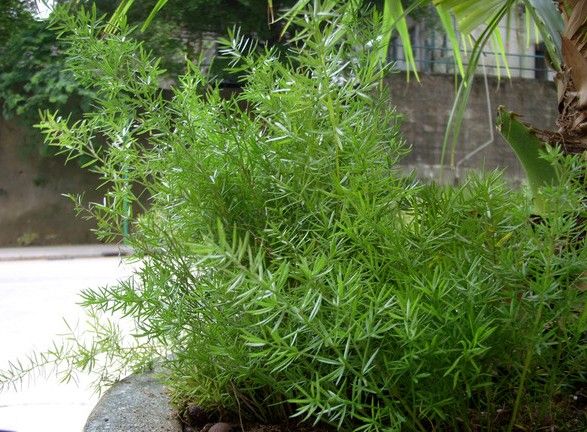
Climbing plant. The roots become spindle-shaped and swollen in the middle or near the ends, with the swollen parts 3-5 cm long and 1-2 cm thick. The stem is smooth, often curved or twisted, up to 1-2 m long, with branches having ridges or narrow wings. The leaf-like branches are usually in clusters of 3, flat or slightly sharply triangular due to the keeled midrib, slightly sickle-shaped, 0.5-8 cm long, about 1-2 mm wide; the scale-like leaf bases on the stem extend into hard spines 2.5-3.5 mm long, while the spines on the branches are shorter or inconspicuous. Flowers are usually in pairs in the leaf axils, pale green; pedicels 2-6 mm long; the joint is generally located in the middle, sometimes varying in position; male flowers: perianth 2.5-3 mm long; filaments not adnate to the perianth segments; female flowers similar in size to male flowers. Berry 6-7 mm in diameter, red when ripe, with 1 seed. Flowering period May-June, fruiting period August-October.
III. The ecological habits of Asparagus fern
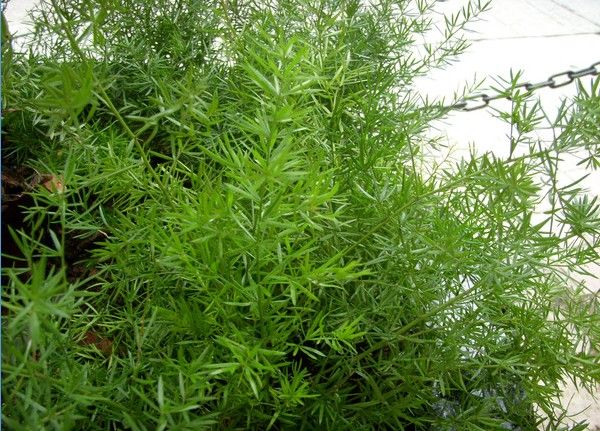
Asparagus fern prefers fertile sandy soil and is suited to a humid climate and environment, but it fears waterlogging and scorching sun. It likes a warm and humid climate, is not tolerant of severe cold, and avoids drought and standing water. It is best to choose deep, fertile, humus-rich, well-drained loam or sandy loam for cultivation; it should not be planted in clay soil, barren soil, or places with poor drainage.
IV. The propagation methods of Asparagus fern
Asparagus fern can be propagated by seeds and also by division.
Seed seedling and transplanting propagation method: Collect the fruits when they turn yellow and ripe, remove the flesh, and select the plump, large ones to plant in March-April. Be careful to maintain a certain row spacing, and apply fertilizer and weed regularly, so as to ensure the growth nutrients for Asparagus fern. Water once every two or three days, as Asparagus fern fears waterlogging. It does not need frequent watering; just keep the surrounding humidity adequate.
Division propagation: Autumn cuttings in August-September have a relatively high germination rate and grow very robustly. Apply decomposed fertilizer or nitrogen fertilizer once every ten to twenty days, keep plenty of sunlight, and maintain the temperature above 5 degrees. In some places, Asparagus fern is made into potted plants and used as an ornamental fruit and foliage plant to decorate the home, which is very charming. But Asparagus fern grows relatively quickly and needs frequent repotting.
V. Key points for cultivating Asparagus fern
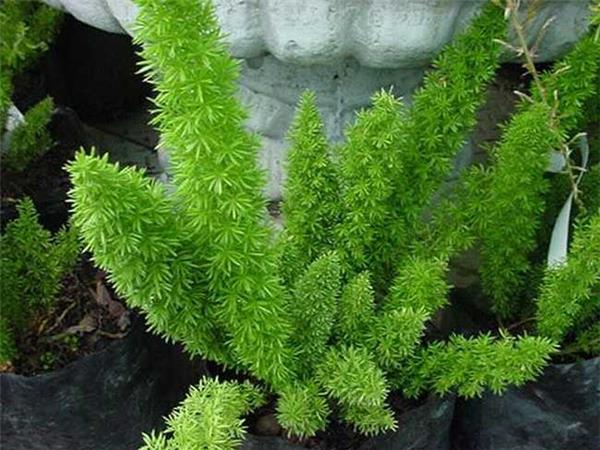
1. Plenty of sunlight, good ventilation, and the cultivation soil should be loose, fertile and well-drained. In northern regions it is mostly grown in pots. After being brought out in early spring, it can be placed under the eaves of a corridor or on a balcony. Since early summer in the north often has dry, hot and scorching weather, it should be slightly shaded around noon, and water should be sprinkled on the nearby ground to increase air humidity. After the beginning of spring, Asparagus fern enters a rapid growth season, and the amount of watering can be gradually increased, along with topdressing with dilute liquid fertilizer. To promote lush branches and leaves, more nitrogen fertilizer can be applied.
2. The root system of Asparagus fern grows rapidly, so it must be repotted every year in early spring, and part of the fleshy old roots must be cut away for it to grow luxuriantly; otherwise the roots will be crowded in the pot, nutrients will be in short supply, and the stems and leaves will often turn yellow and wither. If Asparagus fern is placed in a dark indoor spot for a long time, the stems and leaves will also easily turn yellow and wither due to insufficient light, so every so often the flower pot should be moved to a sunny spot outdoors, with strengthened fertilizer and water management, to help it recover after a period, and then it can be placed indoors for decoration again. In cold northern regions, move it indoors for overwintering before the Frost's Descent solar term in late October, place it in front of a sunny south-facing curtain, stop fertilizing, and control watering. If it is watered too much in winter and the indoor light is insufficient, the stems and leaves often turn yellow. As long as the room temperature is not lower than 5 degrees, it can overwinter safely.
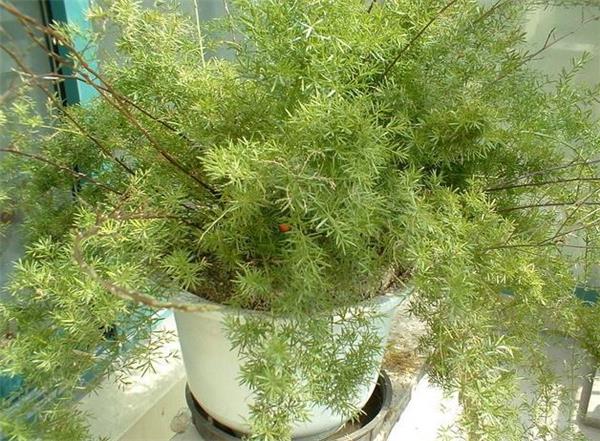
Here we should also tell everyone that Asparagus fern rarely suffers from pests and diseases. Its pest and disease-prone period is May-June each year, and generally it is enough to pay more attention during this time. However, for household potted Asparagus fern, the probability of pests and diseases appearing is even lower, so it is enough to do daily care well.
However, for household potted Asparagus fern, the probability of pests and diseases appearing is even lower, so it is enough to do daily care well.