How to Effectively Prevent and Control Diseases of French Holly
There are many kinds of plants, and many plants look very similar or even identical. Therefore, to distinguish two similar plants well, one must differentiate them by their plant morphological characteristics, growth habits, and application scope. So how do you prevent and control French holly diseases?
Seedling raising and pest and disease control of French holly;
Cutting propagation
Propagation and cultivation are mainly by cutting propagation, and seed propagation is also possible. Using cutting propagation is not only simple and easy, but also roots quickly and has a high survival rate, so it is widely used in production.
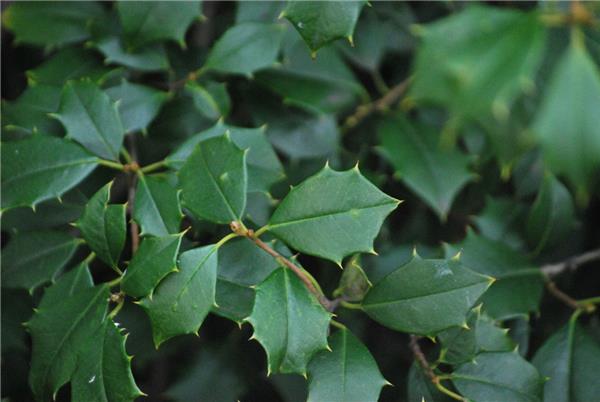
The cutting seedbed should be selected as a plot with high terrain, deep soil layer, loose soil, and good drainage and irrigation. After clearing grass roots and stones, form a high bed about 1-1.2 m wide, and drench with 10% imidacloprid at 1000 times plus 5% mancozeb at 1500 times to eliminate underground pests and harmful pathogens. After leveling the seedbed, pat it flat with a shovel, pour on 10% decomposed dilute human urine, then spread a layer of sifted cinder ash or yellow soil on the bed surface, about 5 cm thick.
Cuttings should be inserted shallowly rather than deeply. For small-branch division cuttings, the flat cut surface faces downward, and the depth should be 1 cm into the soil for the mother plant; for large-branch cuttings, the depth is 1 cm with the next stem node inserted into the soil, and the cutting slips are tilted at about 45 degrees to the ground. Shallow and slanted insertion helps the cuttings root and survive earlier. After inserting the cuttings, compact the soil around the cutting slips and immediately water once thoroughly, so that the lower part of the cutting slips fits tightly with the soil. The row spacing for cuttings is generally 12-15 cm, and the plant spacing is 6-8 cm. When inserting cuttings, the leaves on the cutting slips should not be kept too many, nor should they all be cut off. The lower leaves can all be cut off together with the petioles, and 2 leaves are kept on the upper part. Then, depending on leaf size, cut each leaf by another 1/2 to 2/3 to reduce excessive consumption of water and nutrients.
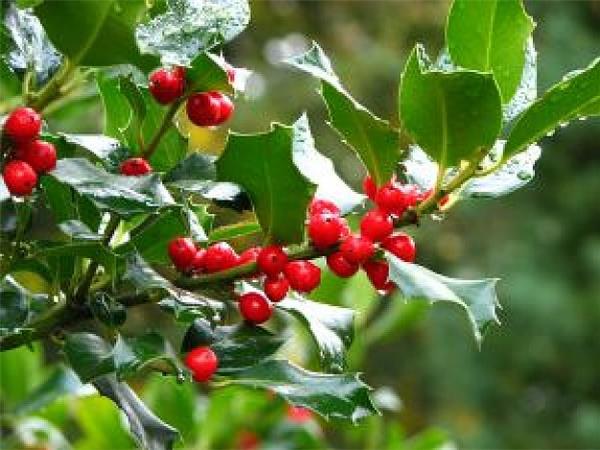
Pest and disease control of French holly
After French holly is cut, it is necessary to build a shed for shading to reduce transpiration and direct sunlight on the seedbed. When cutting in early spring or late autumn, plastic film should also be added to prevent winter damage. After cutting, it should also be watered frequently to keep the seedbed soil moist, so that the surface soil of the seedbed does not appear white. Topdressing for cutting seedlings can be carried out together with watering, or potassium dihydrogen phosphate plus urea can be used for foliar spraying. Weeding work must be very careful, and do not bump the cutting slips. French holly has strong stress resistance and few pests and diseases. Occasionally, slug moths or aphids occur, and pesticides such as dichlorvos and imidacloprid can be sprayed for control.
French holly is propagated by cuttings. After insertion, rooting generally begins in about 25 days, and new shoots sprout and grow in about 40 days. After 3-4 months of cultivation, when the seedlings are 15-20 cm tall, they can be taken out of the bed and transplanted. The cutting success rate is over 95%.
French holly sometimes suffers from root rot and black rot. Spray or irrigate with 10% antibacterial agent 401 acetic acid solution at 1000 times. Among insect pests, red spider mites are harmful; spray with 20% tetradifon wettable powder at 1000 times.
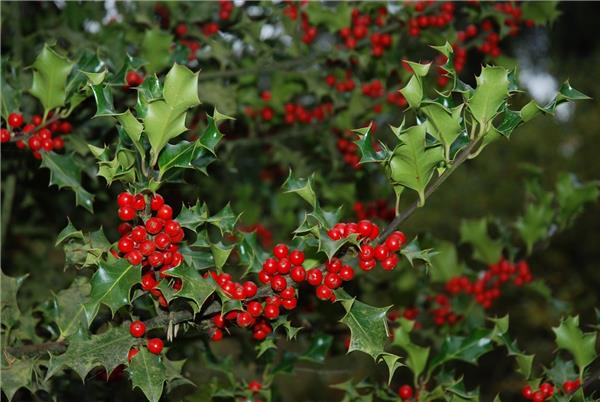
When French holly is harmed by stem rot, leaf spot, and angular leaf spot, spray with 75% chlorothalonil wettable powder at 600 times. Among insect pests, aphids, leafhoppers, and scale insects are harmful; spray with 50% fenitrothion emulsifiable concentrate at 1000 times.
French holly brown spot disease
Integrated management:
(1) Remove diseased residues in time, and bury them deeply or burn them in a centralized manner.
(2) Plant at a reasonable density and apply an appropriate amount of phosphorus and potassium fertilizer.
(3) When contiguous areas are infected and diseased, spray with 3% polyoxin at 900 times, 29% lime sulfur mixture at 100-200 times, 27% copper hydroxide at 500-800 times, 4% agricultural antibiotic 120 aqueous solution at 600-800 times, and 1% wuyiencin at 100-200 times.
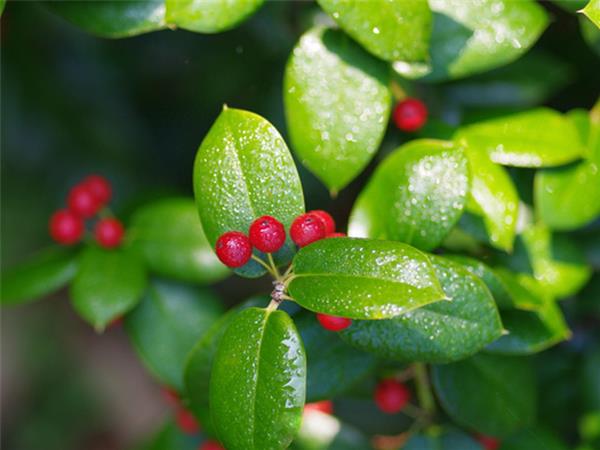
French holly algal spot disease
Integrated management:
(1) During the growing season, promptly pick off scattered diseased buds, diseased leaves, diseased branches, diseased flowers, and diseased fruits, bury them deeply or burn them, and do not spray pesticides for control.
(2) In autumn and winter, clean the tree disk and remove diseased residues such as dead branches and leaves.
(3) Spray the tree disk and trunk with 45% solid lime sulfur mixture at 30 times.
(4) Track pest and disease forecasts. In years expected to become epidemic and cause disaster, it is necessary to promptly spray with 1% wuyiencin at 100-200 times, 3% polyoxin at 900 times, 25% amicida suspension concentrate at 1250-2500 times, 4% agricultural antibiotic 120 aqueous solution at 600-800 times, 2% ningnanmycin at 200-300 times, 88% oxytetracycline hydrochloride at 1000 times, etc.