What Is the Difference Between Forsythia viridissima and Forsythia suspensa? A Quick Guide to Telling Them Apart
Forsythia viridissima flowers before its leaves emerge, blooming in brilliant golden yellow. It can be planted in groups on lawns, by wall corners, along roadsides, at the edge of trees, and in courtyards and front yards, with excellent ornamental effect. However, Forsythia viridissima and Forsythia suspensa look quite similar. Below, let us admire the flower form of Forsythia viridissima and learn about the differences between Forsythia viridissima and Forsythia suspensa:
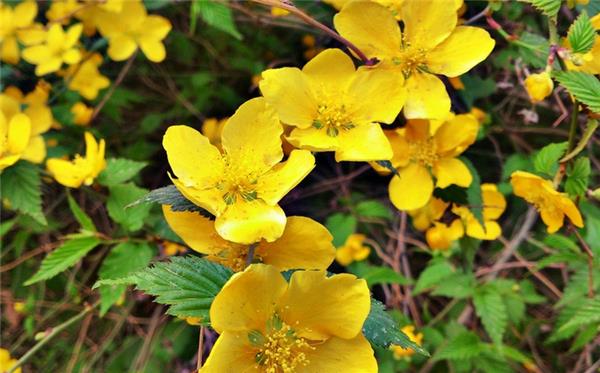
I. Differences Between Forsythia viridissima and Forsythia suspensa
Forsythia viridissima and Forsythia suspensa are close relatives of the same family, and their main differences lie in plant form and flower color. Forsythia viridissima has upright branches and bell-shaped flowers in golden yellow or deep yellow; Forsythia suspensa has arching, drooping branches with hollow pith and bell-shaped flowers in bright yellow. However, their hybrid is called Forsythia x intermedia; its plant form resembles Forsythia viridissima with upright branches, while its flower color resembles Forsythia suspensa, being bright yellow. Let us now look at the specific differences between Forsythia viridissima and Forsythia suspensa:
Branches: Forsythia suspensa has clustered, upright stems with spreading branches that arch and droop; the twigs are yellowish brown with hollow pith. Forsythia viridissima has upright branches; the twigs are yellow-green with thin, plate-like pith.
Flowers: Forsythia suspensa flowers are usually solitary, rarely 3 in leaf axils, with a golden yellow corolla, and the sepals are equal in length to the corolla tube. Forsythia viridissima flowers are borne 1 to 3 per leaf axil, yellow-green, with sepals reaching to the middle of the corolla tube.
Leaves: Forsythia suspensa has simple leaves or sometimes 3 leaflets, opposite, with coarse serrations along the leaf margin. Forsythia viridissima has simple, opposite leaves with coarse serrations above the middle of the leaf.
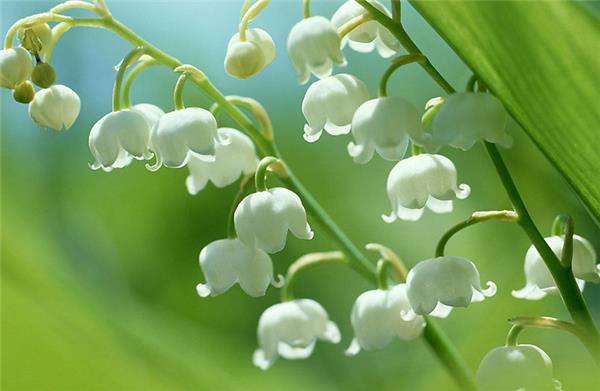
II. Growing Fuchsia hybrida
1. Soil: For potted Fuchsia hybrida, the growing medium should be fertile, loose, well-drained potting soil. Generally, leaf mold plus sandy loam plus decomposed organic fertilizer and phosphate fertilizer, mixed evenly, can be used, without applying base fertilizer, so as to avoid root rot.
2. Watering: For Fuchsia hybrida, watering should normally follow the principle of watering when dry and letting it dry between waterings. In dry spring weather and in hot, high-temperature summer seasons, water can be sprayed on the branches and leaves 1-2 times a day. Do not water too much and cause waterlogging in the pot. When winter room temperature is low, watering must be controlled even more strictly and fertilizing stopped to prevent root rot. After each fertilizing and watering, loosen the soil promptly to improve aeration.
3. Sunlight: Fuchsia hybrida prefers shade, but this does not mean it does not need sunlight. Apart from needing shade in summer, in other seasons it should still receive some warm, gentle sunlight.
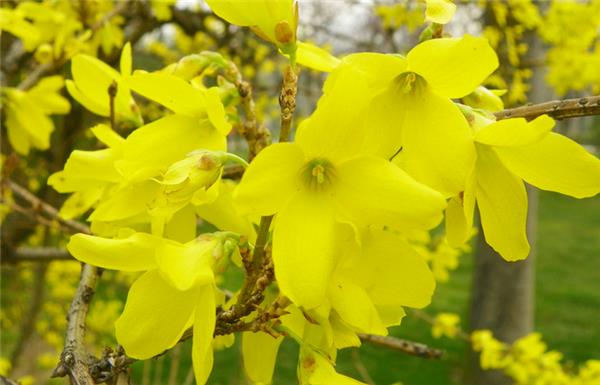
III. How to Prune Forsythia suspensa
Forsythia suspensa can be pruned into various shapes such as the open-center form and the shrub form. The two pruning methods are described below:
1. Open-center form: After Forsythia suspensa is planted, when it reaches about 1 m tall, cut off the top shoot at 70-80 cm above the ground on the main trunk. In summer, pinch the tips to encourage branches to grow in different directions. Select several well-developed side branches and train them as main branches. Through several years of shaping and pruning, form a natural open-center tree shape with a low trunk and low crown, hollow inside and rounded outside, with good ventilation and light penetration.
2. Shrub form: This uses the strong sprouting ability of Forsythia suspensa for cutting propagation. In early spring of the second year after planting, cut off the upper part of the plant at 20-25 cm above the ground. When spring temperatures rise, the roots of Forsythia suspensa begin to become active, and nutrients stored in the roots are transported upward. With increased fertilizer and water management, the branches of Forsythia suspensa grow very quickly. When they reach about 25 cm, pinch off the terminal buds to induce secondary branches. Each first-level branch can sprout more than 10 second-level branches. For later cutting collection, collect the third-level or fourth-level branches sprouting from the second-level stubble.
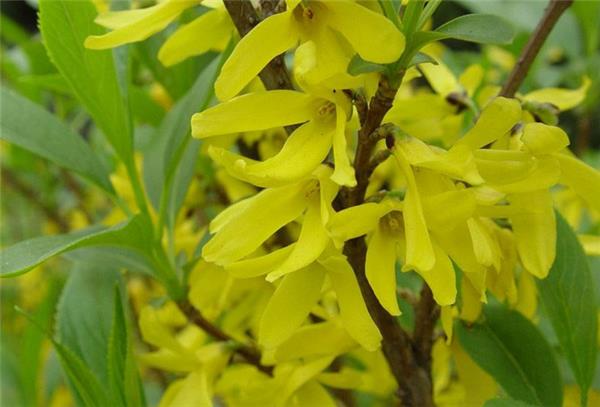
When Forsythia suspensa blooms, its fragrance is light and delicate, and the brilliant yellow flowers look very lovely, giving it fairly good ornamental value. The growing methods for Forsythia suspensa have been shared above, and we hope they are helpful to everyone.