What plant is the climbing rose? A detailed explanation of its effects and functions
The climbing rose is also called the climbing rose, trailing rose, or climbing wall plum, and is a climbing plant of the genus Rosa in the family Rosaceae. So what impression do you have of the climbing rose?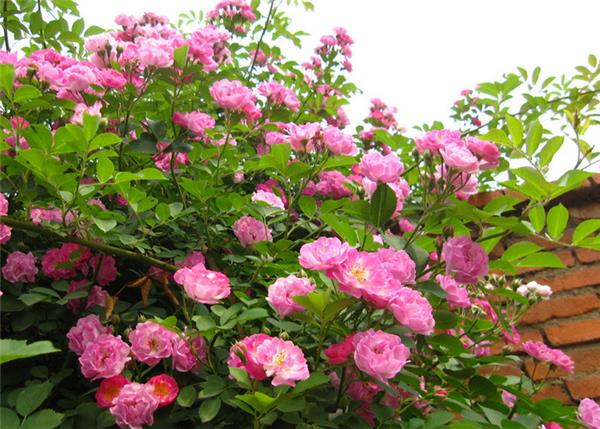
What the climbing rose is
When I was a child, a single one was once planted by the east wall of the small courtyard in my rural hometown. Just one plant, and in less than three years it had covered the entire east wall. Every flowering season, it drew the children from the neighboring houses east and west to come and look, and of course they could not resist picking a few flowers to play with. It was a large-flowered pink rose, blooming large, abundant, and dense; picking a few did not make it look any sparser, and the next day it would again be a wall full of blossoms. Unfortunately, those flowers only bloomed for a few years before my mother dug it up. The reason for digging it up was that it was extremely prone to insects. At that time, the countryside drank well water, and according to the traditional custom of the Azure Dragon of the East and the White Tiger of the West, the large water vat holding the well water had to be placed under the east wall. The climbing rose plant may have had a sweet taste, and it was constantly infested with insects all year round, impossible to guard against, so that worm droppings and small insects were often found in the water vat. A serious conflict arose between living and having beauty, and the inevitable result was of course that living was more important. That climbing rose in my childhood memories thus became a sacrifice to human life. Even so, the beauty of that pink rose has always stayed in my heart. Whenever I see a climbing rose blooming, I think of it, and whenever a climbing rose is blooming somewhere, I always stop and linger to admire it, feeling it is so intimate, so familiar.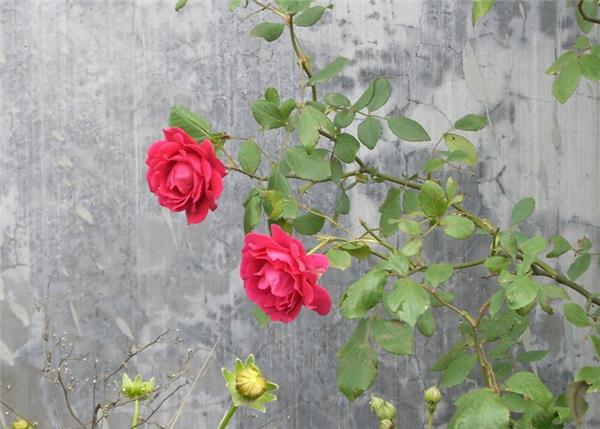
The climbing rose not only has very gorgeous flowers, but also has extremely strong vitality, almost strong to an astonishing degree. In the season after flowering, casually cut off a small section of branch and stick it into the soil; whether old branch or young branch, without much management, as long as it is watered a little, in less than half a month to twenty days it will grow into a new seedling. After the new seedling survives, it grows very rapidly, and in the same year it can climb to two or three meters high; in the second year it will branch and tiller abundantly, covering half a wall; in the third year it stretches its branches in all directions to cover the entire enclosing wall, and even climbs beyond the wall to propagate new plants everywhere. It is said that some botanists have observed that the vines of the climbing rose can grow at a rate of more than 6 meters in a year. However, a question in my mind has never been resolved: I have never seen a climbing rose that grows and reproduces infinitely, nor have I ever seen how they age. All I have seen is them desperately reproducing until people can no longer stand them.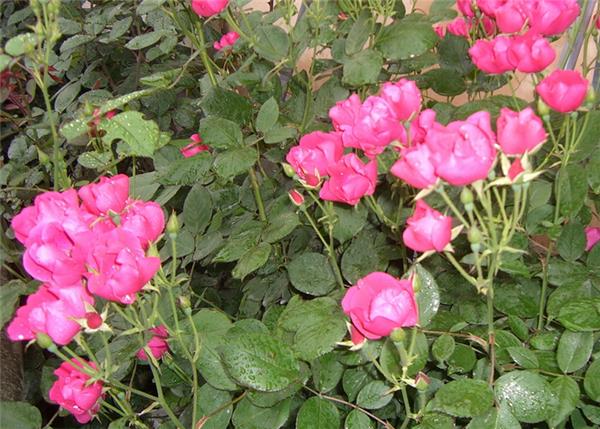
The effects of the climbing rose
The climbing rose is a very common flower. It not only has ornamental value, but also has medicinal uses.
Take 15--20 grams of fresh rose flowers, put them into a thermos cup, brew with boiling water, and take several times in succession; it can treat irregular menstruation in women.
Take 30 grams of fresh rose flowers and stew them with an appropriate amount of red wine; it can treat uterine prolapse.
Collect 3-5 spent rose flowers and wash them, add two cups of clean water, simmer over low heat down to one cup, add 30 grams of rock sugar to make rose flower soup, and take it warm; it can treat blood-stasis amenorrhea, sores and boils with swelling and pain, and traumatic swelling and pain.
Take rose flowers, dry them over a fire, grind them into powder, and take 3 grams each time mixed with yellow wine; it can treat pain in the muscles and bones and minor bruises.
Take 6 grams of rose flowers, 15 grams of agarwood, and 9 grams of fried genkwa, rub them together into pieces, stuff them into the belly of a crucian carp, sew it shut with thread, then stew it with equal parts water and yellow wine until cooked. Eat the meat and drink the soup; it can treat scrofula that has not yet ulcerated.
Take 9-15 grams of rose root and decoct in water; it can treat red and white vaginal discharge.
Take an appropriate amount of fresh tender rose leaves, mash them and apply to the affected area; it can treat swelling and pain of the waist and knees.
How to cultivate the climbing rose
1. Soil. Potted roses are best grown in fertile sandy soil rich in humus and slightly acidic, and alkaline soil should not be used. Every year before new buds sprout in spring, the potting soil should be changed once to facilitate vigorous growth; changing the soil helps the rose bloom that year. Roses can be planted in flowerpots of various materials, and clay pots are naturally also fine.
2. Light. Roses like light. During the growing season they need sufficient sunlight, at least more than 6 hours of light per day; otherwise, they will only grow leaves and not bloom, and even if flower buds form, after blooming the flower color will not be vivid and there will be no fragrance.
3. Watering. Watering roses has its particularities: it should be done so that the soil dries before watering and stays moist after, not watering when dry, and watering thoroughly when watering. Roses are afraid of being waterlogged, and there must be no standing water in the pot, as too much water easily causes root rot. In the height of summer, water once a day, and water as soon as the surface of the potting soil turns white. During the winter dormant period, be sure to water less, keeping it only half moist.
4. Overwintering. In winter, if the home has heating conditions, the room temperature is best kept above 18°C, and there must be more than 6 hours of light per day. If there are no heating measures, then let it go dormant naturally. At the Beginning of Winter solar term, after the leaves fall, keep only 5 cm of each branch, and cut off all branch parts above 5 cm, then place the flowerpot in a cool place at around 0°C to store. The potting soil should be on the drier side, but it must not be excessively dry, to prevent death by drying out.
Too much water easily causes root rot. In the height of summer, water once a day, and water as soon as the surface of the potting soil turns white. During the winter dormant period, be sure to water less, keeping it only half moist.4. Overwintering. In winter, if the home has heating conditions, the room temperature is best kept above 18°C, and there must be more than 6 hours of light per day. If there are no heating measures, then let it go dormant naturally. At the Beginning of Winter solar term, after the leaves fall, keep only 5 cm of each branch, and cut off all branch parts above 5 cm, then place the flowerpot in a cool place at around 0°C to store. The potting soil should be on the drier side, but it must not be excessively dry, to prevent death by drying out.