How to prune the dragon bone flower? A detailed guide to the correct pruning method
Yesterday I told you a lot about the ornamental value of potted plants, improving air quality, predicting weather, and medicinal value. Today I will talk about potted plants that can also bear fruit, beyond the values mentioned before. Everyone is surely familiar with the dragon fruit, but growing a pot of dragon fruit at home is something new. Next, let me tell you how to prune the dragon bone flower.
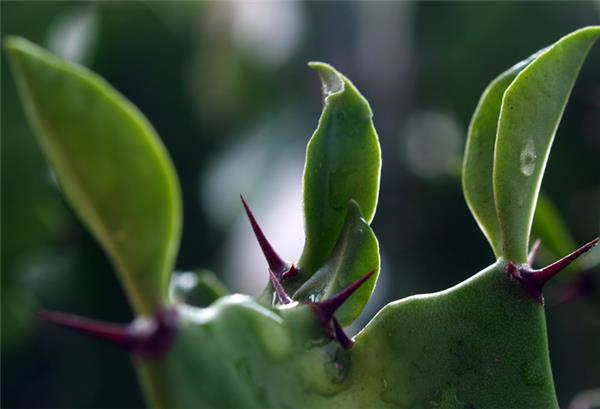
I. How to prune the dragon bone flower
When a nine-ribbed plant grows to 20 cm to 30 cm, use a sharp knife to cut off the top, and immediately seal it with plant ash. After the plant grows branches, keep only the three branches at the top, one at each angle, and remove the rest. When the second tier grows to 25 cm to 30 cm, cut off the top again. After the branches emerge, still select three branches, 3 at each angle, that is, a dragon bone in the 1, 3, 9 form.
The method for selecting angles in the twelve-ribbed form is the same as above, except that when the 9-ribbed form has grown to 20 cm to 30 cm, cut off the top, then cultivate three more branches, selecting 1 or 3 at each angle. Remove the other small branches as they grow, to keep the tree shape uniform.
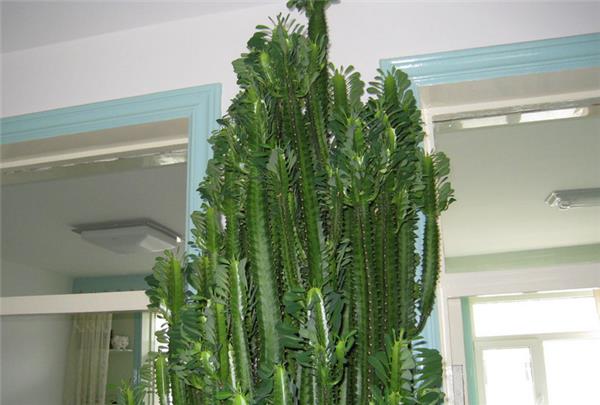
II. Cultivation techniques for the dragon bone flower
Planting requires loose, fertile soil rich in humus. For potting soil, you can use a growing medium made by mixing 1 part leaf mold and 1 part coarse sand, with a small amount of decomposed chicken manure or cow manure added.
Light and temperature: In summer, keep it in a semi-shaded environment. In winter, it requires sufficient light, so place it in a sunny spot indoors, and the temperature should be kept above 10°C; when the temperature is below 10°C, frost damage is likely to occur.
Watering and fertilizing: In spring, do not water too much; watering once every 10-15 days is enough, but spray water on the plant every day to increase air humidity. In summer, water once a day, preferably in the morning or evening. In winter, the potting soil should be kept moderately dry, and the pot can be wrapped with plastic film to protect it through the winter. The overwintering cultivation environment should maintain both a relatively high temperature and relatively high air humidity.
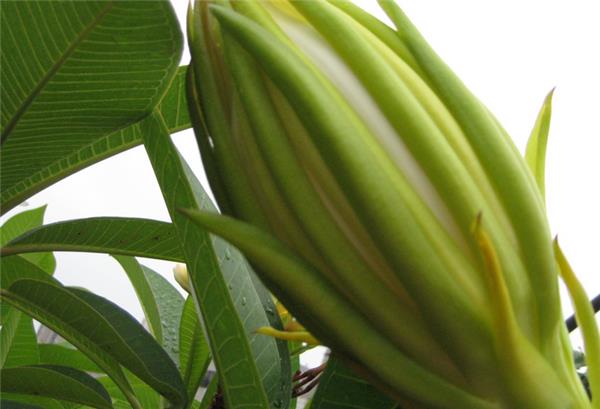
III. Points to note when matching the dragon bone flower with home decor styles
The dragon bone flower is a climbing shrub, with sword-like stems, huge flowers, and fruits like fireballs. Its stems are emerald green, its flowers are large and white, and its fruits are red as fire. It is widely planted in tropical regions, so when planted in the ground at the corners or edges of exhibition greenhouses, it can display a tropical rainforest scene. The highlight of tropical rainforest charm is the variety of forms, the riot of colors, and the expanse of verdant green, and the dragon bone happens to have emerald green stems and large, imposing flowers. Moreover, the dragon bone belongs to the cactus family, giving the feeling that it grows in tropical desert places, so it fully displays the tropical rainforest charm.
In addition, the dragon bone flower is also suitable for European pastoral style. Although the European pastoral style more often features abundant flowers and plants placed in front of the door and outside the window, in order to create a more authentic flavor, a pot of green vine plant is often placed at the top corner of a cabinet. The dragon bone can also be planted on the balcony to show enthusiasm. When the dragon bone flower blooms, it is like a great curtain of flowers falling from the sky, making the tone warmly rich and full of vitality.
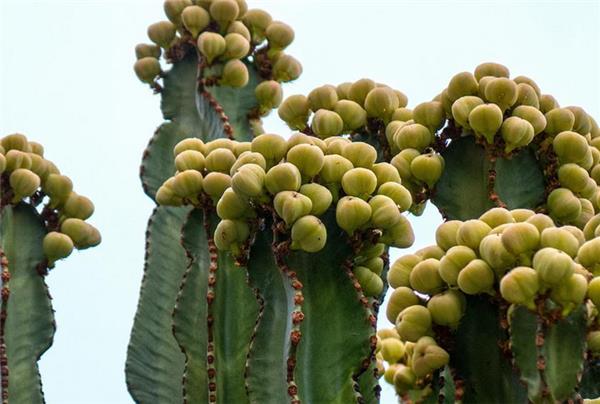
The dragon bone flower is a plant of the genus Hylocereus in the cactus family, an epiphytic succulent plant. The stems are thick, dark green, and have three ribs. The flowers are large, white, fragrant, and open at night from May to September. The dragon bone flower's blooms are huge and fragrant, suitable for courtyard planting, potted cultivation, or use as a hedge plant.