How to grow a jade plant? Detailed pruning methods
The jade plant is a plant. An old saying goes, "a jade tree in the wind," describing a person as graceful and elegant as a jade tree. However, the jade tree here is a mythical tree; whether it has any connection to our protagonist today, the jade plant, is something only Mr. Du Fu, the creator of that phrase, could answer. Today let's talk about how to grow a jade plant.
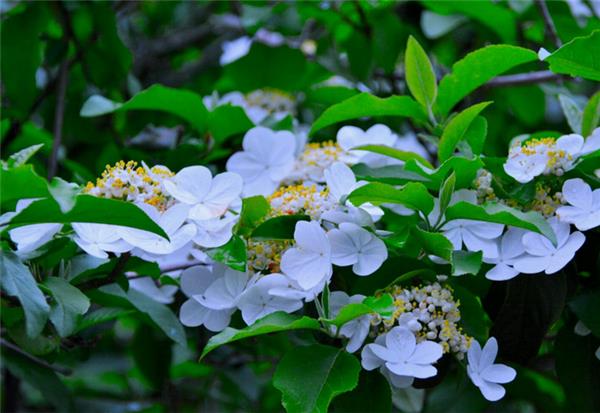
I. Pruning methods for the jade plant
Dormant-season short pruning, that is, pruning the elm-leaved spirea from late December to January of the following year, leaving branch lengths of 10-25 cm and 4-12 buds. The lengths of the branches should be matched appropriately so that the flowering branches are thick and strong. At the same time, remove dead branches, diseased and pest-infested branches, thin and weak branches, leggy branches, overly dense branches, and three-forked branches. The tree shape formed by this pruning method resembles a bonsai stump, hence the name plum-stump shape.
Post-bloom short pruning, with the pruning time from late April to early May, that is, within 1-2 weeks after flowering, and the time must not be delayed too long. The cut length left is 10-20 cm, with 4-10 buds retained, and at the same time overly dense and useless branches should also be removed. To concentrate nutrients and provide ventilation and light, bud selection must be carried out in June in summer, keeping 1-3 well-positioned buds on each branch (mostly 2 buds), and all other buds are rubbed off. Bud selection must not be delayed until July, because the later the bud selection, the more nutrients are consumed, which is unfavorable for flower bud differentiation. Because this shaping retains a trunk and the crown forms a round-headed shape, it is named the trunked round-headed shape.
Winter retrenchment and thinning: that is, from December in winter to February of the following year, retrench the branches that have grown too tall and too long; generally no short pruning is done, and the bulk of the work is retrenchment and branch thinning. Also remove dead, diseased and pest-infested, damaged, and thin and weak branches. Because the branches of this shaping are mostly clustered and the retained branches are long, nearly natural in form, it is named the clustered-trunk flat-round shape.
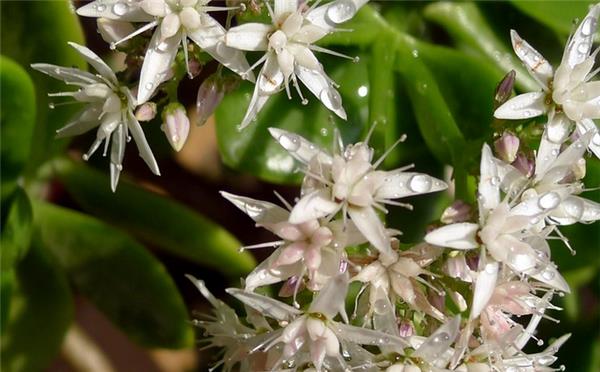
II. Methods for preventing and controlling diseases and pests of the jade plant
The main diseases of the jade plant are anthracnose and leaf spot, which can be sprayed with a 1000-fold dilution of 70% thiophanate-methyl wettable powder. When indoor ventilation is poor, the stems and leaves are susceptible to scale insects, which can be killed by spraying with a 1000-fold dilution of 40% omethoate emulsifiable concentrate.
When indoor ventilation is poor, the stems and leaves are susceptible to scale insects, which can be killed by spraying with a 1000-fold dilution of 40% omethoate emulsifiable concentrate. Application: The jade plant has a tall and elegant crown, emerald-green stems and leaves, and white flowers borne at the tips, making it very elegant and unique. If combined with a pot stand and gravel to make a small bonsai, it is even more attractive when decorating a tea table or desk. Jade plant pruning can be done according to individual preference. For those who like a full and rounded crown, prune away leggy branches and overly overlapping and crowded branches when pruning, so that the outer crown of the plant is full and round and the inner branches are appropriately sparse and dense. If the tree is old and the old trunk is thick and the crown is not very round, it can be pruned or styled as a stump bonsai, cutting away some branches and leaves as needed for the styling.
The jade plant is very easy to grow; the main thing is to give it plenty of sunlight. Do not water it too much. The jade plant has strong adaptability, is extremely drought-tolerant, and is not demanding about soil. During the growing period, it is enough to keep the potting soil slightly moist and the environment ventilated; watering should not be excessive, and water again after the soil dries. Water accumulation in the potting soil will cause root rot. In summer, if the potting soil is too dry, it will also cause leaf drop. During cultivation, generally not much fertilizer is needed; applying 1-2 times a year of dilute liquid fertilizer is enough.
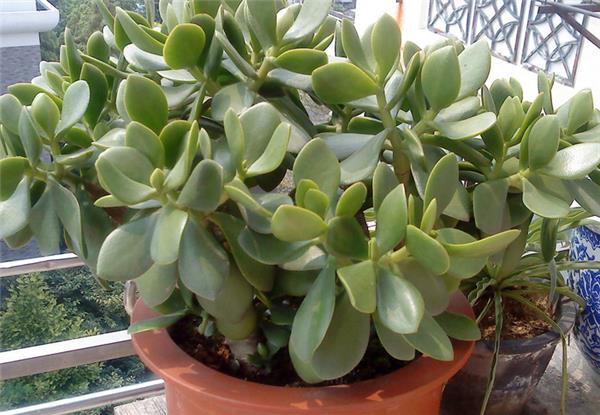
III. How to grow a jade plant
Propagation method: The common method for growing a jade plant is cuttings. In the growing season of the jade plant, cut off plump terminal branches 8-10 cm long, let them dry slightly, and insert them into potting soil; they root in about 3 weeks.
Light and temperature control: Spring and autumn are suitable growing periods for the jade plant, with an optimum growth temperature of 20-30°C. In summer, when temperatures are high, shade it to avoid direct sunlight. When the temperature exceeds 38°C, growth slows. In winter, place it indoors in a sunny spot and maintain a room temperature of 7-10°C. If the temperature drops below 0°C, it will freeze and die.
Water and fertilizer management: During the growing period, water the jade plant once every 2-3 days, but do not let water accumulate. In hot summer, watering must be strictly controlled and ventilation increased, otherwise leaf drop is likely. In winter, reduce watering, and keep the potting soil slightly dry. During the growing period, apply topdressing, generally 2-3 times a month with decomposed dilute cake liquid fertilizer. To keep the jade plant full in shape, fertilizer and water should not be excessive, to avoid leggy growth.
Disease and pest control: The main diseases and pests of the jade plant are leaf spot, anthracnose, scale insects, brown soft scale, and so on.
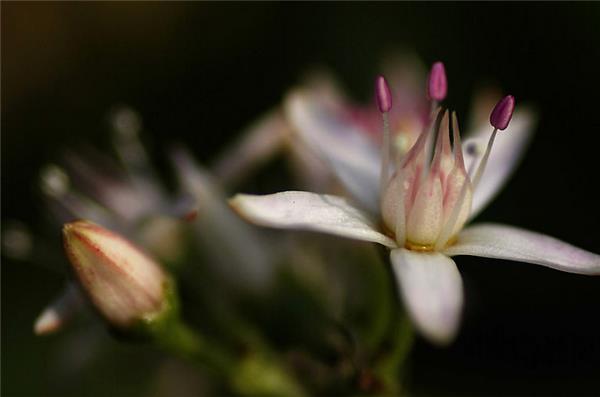
After seeing the snow-white jade plant flowers in the pictures inserted in the article, do you think the jade plant is a very beautiful shrub? For lazy people, the jade plant is truly one of the easiest potted plants to grow. Use a jade plant to decorate your living room.
Use a jade plant to decorate your living room.