How to Grow Red Woodsorrel? A Detailed Guide to Cultivation Methods
Red woodsorrel (Oxalis corymbosa) is one of the many species in the rich genus Oxalis. Its leaves are often picked to give to others, and legend has it that finding a four-leafed red woodsorrel leaf can bring happiness, which makes this a much-loved plant that is also very easy to grow.
I. Morphological Characteristics of Red Woodsorrel
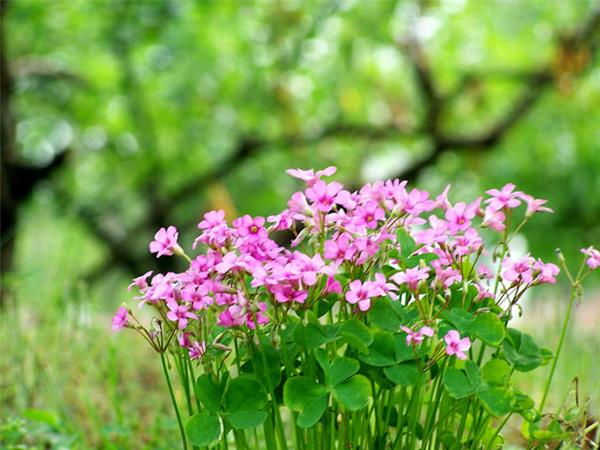
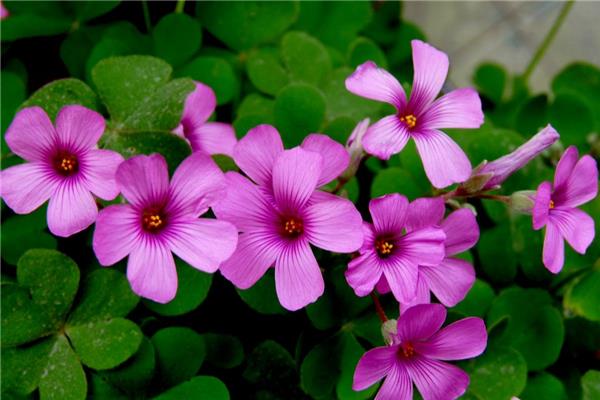
Perennial evergreen herbaceous plant. It has spindle-shaped tuberous rhizomes underground. The plant grows in clumps, 20-30 cm tall. The leaves have long petioles, are basal, and have three leaflets; the leaflets are stalkless, obcordate, with a notched tip, hairy on both sides, and with yellow spots along the leaf margins. It flowers from April to November, with peak bloom periods from April to July and September to November, and few flowers in August. The flower stems emerge from the base, and the flowers are pale red or deep peach red.
II. Growth Habits of Red Woodsorrel
It prefers sunny, warm and moist environments. In hot summer regions it should be given half shade. It has fairly strong drought resistance and is not cold-tolerant; in North China it must be grown in a greenhouse in winter, while south of the Yangtze River it can overwinter outdoors. It likes shady, humid environments and is highly adaptable to soil, growing in ordinary garden soil, but it grows most vigorously in sandy loam rich in humus. It has a short dormant period in summer. When the sunlight is very strong, it tends to open its flowers.
III. Cultivation Techniques for Red Woodsorrel
[Sowing]: Red woodsorrel can grow in ordinary soil, but it grows fastest in fertile, loose, well-drained sandy soil. When planting, do not set it too deep. Apply organic fertilizer once a month during the growing season and water promptly. During the growing season, pay attention to watering to keep the soil moist, and apply fertilizer 2-3 times to keep the flowers abundant and the leaves lush. In hot seasons growth slows and the plant is basically dormant, so stop fertilizing and watering, place it in a shady spot, and protect it through the summer. In winter and spring, during the period of vigorous growth, strengthen fertilizer and water management.
[Lifting seedlings]: Use a shovel to dig up entire aged seedlings, gently pat off the soil around the roots, and pile them together. When digging, keep a little distance from the plant so as not to accidentally damage the bulbs, and make sure to dig straight down with the shovel rather than at an angle, which could injure the bulbs.
[Division]: Remove withered and leftover leaves from the dug-up red woodsorrel, and strip off about 1/2 of the old leaves to reduce transpiration water loss after planting. Use a sharp knife to cut off the lower old bulbs, preferably with the cut just below the first or second new bulb above, so that the seedling retaining 1 to 2 new bulbs can, after planting, both have its lower old bulbs removed for renewal and rejuvenation and store enough nutrients to sprout and flower quickly. Finally, dip the cut wound on the new bulbs in fresh plant ash to prevent the wound from rotting.
[Fertilizing]: In the flower bed where the aged seedlings were dug out, apply additional organic fertilizer, turn the soil over thoroughly once, and rake out withered leaves and weeds. Generally apply 0.5 to 0.8 kg per sq m of decomposed cake fertilizer, and appropriately increase phosphorus and potassium fertilizer to ensure the flowering needs of red woodsorrel.
[Planting]: Separate the large red woodsorrel plants, with each small plant bearing several corms, then plant and water. The underground stems of red woodsorrel spread rapidly, and division is very easy and can be done throughout the year. Even during peak bloom, as long as the soil around the roots is pressed firm when planting and the plant is watered thoroughly, a very high survival rate can still be achieved.
[Pest and disease control]: Red woodsorrel is susceptible to damage by red spider mites; if not controlled in time, this can cause leaves to turn yellow and dry up, with few flowers, reducing its ornamental value. Therefore, during the growth of this plant, spray 40% omethoate at 1000 to 1500 times dilution, 0.2 to 0.3 degree lime-sulfur mixture, as well as acaricides and the like.
IV. Ornamental Value of Red Woodsorrel
1. It is widely planted in gardens and can be arranged in flower beds and flower borders, and is also a good material for potted plants.
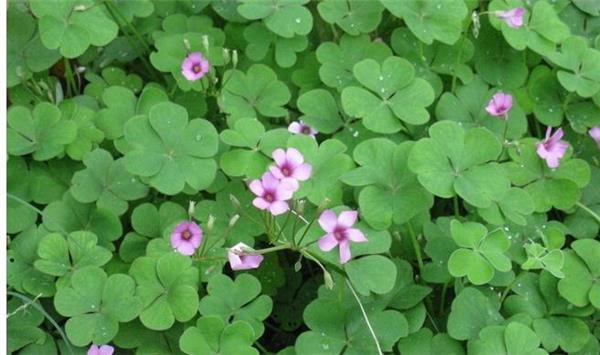
2. Red woodsorrel has many advantages, including a low, neat plant habit, abundant flowers and leaves, and the ability to suppress weed growth. It is very suitable for large-scale planting in flower beds, flower paths, open woodland and forest edges, and using red woodsorrel to form characters or patterned designs gives very good results. Red woodsorrel can also be potted to decorate plazas and indoor balconies, and it is also a good material for edging in courtyard landscaping.
3. Red woodsorrel has a long flowering period and bright flower colors. Its underground stems spread rapidly and can cover the ground fairly quickly, and it is easy to cultivate with minimal management, making it suitable for large-scale planting as a groundcover plant and for clump planting in gaps.
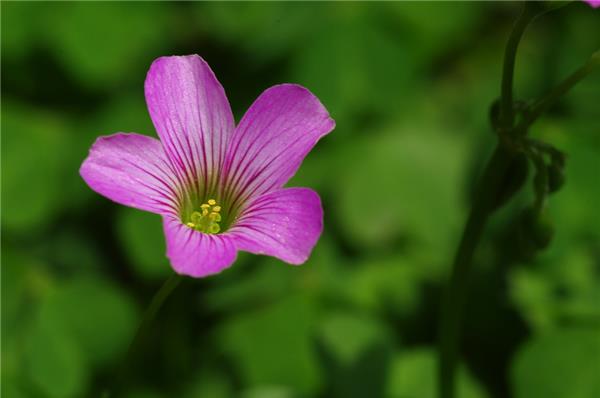
Red woodsorrel is a fairly common wild-growing plant, and its plants are generally very short, with small, delicate and very cute flowers. If grown as a potted flowering plant, it can also be used to cover the surface of the pot to retain soil moisture, and its flower shape is charming in itself, so planting it together with potted flowering plants can also bring out a feeling of a hundred flowers competing in beauty.
And its flower shape is charming in itself, so planting it together with potted flowering plants can also bring out a feeling of a hundred flowers competing in beauty.