Can Phalaenopsis orchids be grown in water? A detailed guide to water culture methods
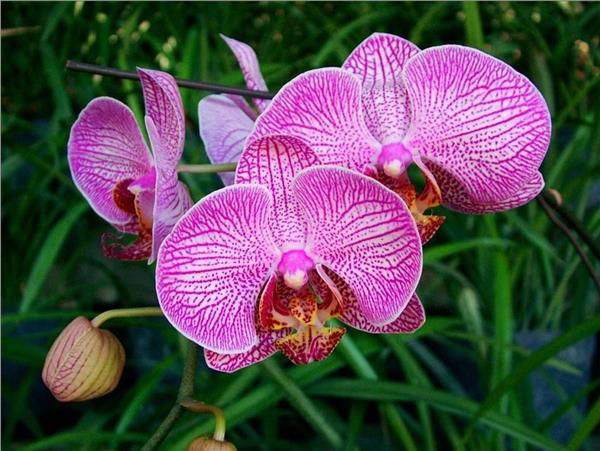
The Phalaenopsis orchid has a beautiful face and stands out among the many plants; decorating a home with it adds a touch of purple. Whether a house is full of life depends greatly on color, and living things also play a very good role in this. Given these two considerations, the Phalaenopsis orchid is a very suitable choice. The genus Phalaenopsis is a famous type of cut flower. The Phalaenopsis orchid is a monopodial epiphytic orchid with a short stem, large leaves, and one to several arching flower stems. Its flowers are large and named for their butterfly-like shape. Its flower posture is elegant and its colors are gorgeous, making it a treasure among tropical orchids, with the reputation of "Queen of Orchids." The most beautiful and most capable person in a country is the queen; with such a title, the Phalaenopsis orchid's strength speaks for itself. So, can Phalaenopsis orchids be grown in water?
Can Phalaenopsis orchids be grown in water?
Yes
Hydroponic Phalaenopsis orchids
1. Rinse the potting medium off the Phalaenopsis orchid's roots with water, remove dead and rotten roots. If conditions allow, growers can soak the plant in a disinfectant, then let the plant dry in a cool, shady place.
2. Choose a suitable container. I personally suggest using a transparent glass bottle. The advantages: you can observe the state of the roots at any time, exposure to light is good for root growth, and the roots are also a kind of beauty.
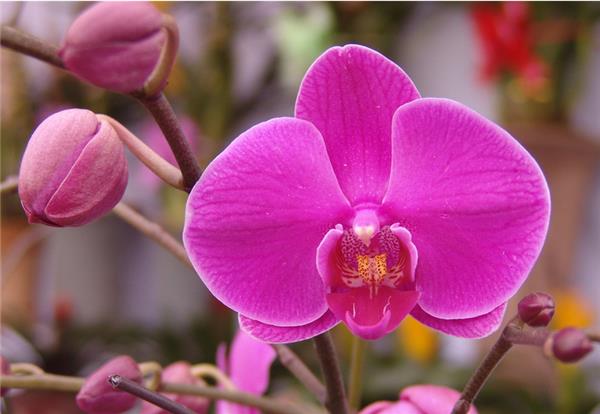
3. Place the dried plant into the prepared container. At this point you may encounter the problem that the plant cannot be fixed in place. Method one: if the plant and container happen to fit well, no additional fixing measure is needed and it can be supported directly by the Phalaenopsis orchid's leaves. Method two: choose a suitable planting basket to use together with the container. Method three: use wire of appropriate thickness to form a ring, wrap it from the roots to the stem of the Phalaenopsis orchid, and hook it on the rim of the container. The specific winding method depends on personal aesthetics.
4. After the orchid and container are adjusted, water needs to be added to the container mainly to provide humidity through evaporation. The water level should be such that it does not touch the roots, or only slightly touches the root tips. Then, according to the ambient temperature, maintain the humidity of the orchid plant and mist it with water. (Because this is completely breathable, you can spray it heavily.)
5. Next comes a long waiting period. The acclimatization period varies depending on the original condition of the plant. Generally, signs of new roots and new leaves will appear in 2-4 weeks. (If they do not appear and it does not die either, then wait a bit longer. Do not panic, dear.)
When growing in sphagnum moss, avoid too much water, direct sun, and poorly breathable potting soil
"Sphagnum moss has very good water retention, drainage, and aeration, and it does not easily rot. It is clean and sanitary, making it the best growing medium for many orchid plants. What many people call the sphagnum moss method is actually just using sphagnum moss as a medium for planting, and Phalaenopsis orchids are no exception," the horticulturist told the reporter.
According to what is known, when using the sphagnum moss method to grow Phalaenopsis orchids, you can follow these steps. First, soak the sphagnum moss thoroughly in water and pick out any impurities mixed into it, then wring the sphagnum moss dry and set it aside. Second, remove the plant whose flowers have faded from the pot, slowly clear away the original medium until only the root system remains. Third, remove the rotten roots and dry roots of the Phalaenopsis orchid. Finally, pot it: first spread sphagnum moss on the bottom of the pot, then place the Phalaenopsis orchid in, then fill in sphagnum moss until it is 1-2cm from the pot rim.
"After potting, do not water it. Place it in a spot with indirect light for one week. After the surface layer of sphagnum moss has dried out, water it by spraying until water flows out from the bottom. However, during cultivation with the sphagnum moss method, you must pay special attention to factors such as temperature, watering, aeration, and sunlight, because Phalaenopsis orchids are very sensitive," said the horticulturist.
It is reported that when growing Phalaenopsis orchids, you must avoid overwatering and water accumulation in the pot, otherwise the roots will easily rot. In addition, water must not accumulate in the leaf crown of the Phalaenopsis orchid, as this easily causes crown rot. When watering, you can sprinkle water around the pot to increase humidity, or use a spray bottle to water directly at the roots until water flows out from the bottom of the pot. Water when dry and let dry between waterings, and never use too much water. After flowering, do not spray water on the flowers.
At the same time, pay attention to temperature and ventilation. Phalaenopsis orchids like warmth. They enter dormancy below 15°C, die below 10°C, and enter semi-dormancy above 32°C. Therefore, pay attention to creating suitable temperatures for them in summer and winter. In addition, Phalaenopsis orchids must never be grown in a stuffy, enclosed environment; there must be good ventilation all year round. Especially in summer and winter, when they are placed indoors to give them a suitable temperature and this creates an enclosed environment, you need to open the windows every day for ventilation, otherwise it will cause soft rot, yellow leaves, and other problems.
How to make Phalaenopsis orchids bloom more and better
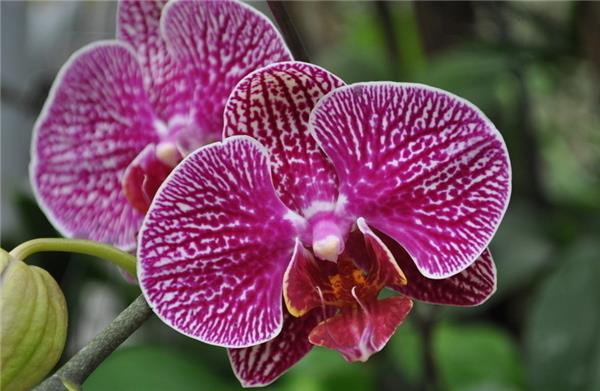
Caring for Phalaenopsis orchids and making them bloom more is a delicate task. New Phalaenopsis plants must be grown for 3 [years?] before they can form flower buds and produce brilliant flowers. The differentiation and formation of Phalaenopsis orchid flower buds is mainly affected by temperature. It requires both a certain accumulated annual temperature and a short period of low-temperature treatment. After entering autumn, a low nighttime temperature of 15-18°C is the condition that ensures flower bud differentiation. Treating the seedlings with low temperature for 18 hours a day, continuously for one and a half months, will allow many flower buds to form. After the flower buds form, the nighttime temperature can be kept between 18-20°C, and after 3-4 months they can bloom.