How to Propagate Snake Plant 'Laurentii'? Detailed Cutting Method Explained
In nature, there are many plants that purify indoor environments and absorb harmful gases, and the Snake Plant 'Laurentii' (Sansevieria trifasciata 'Laurentii') is one of them. The Snake Plant 'Laurentii' has a very strong ability to purify the environment and has gradually become the eco-friendly plant of choice for modern people. So do you know the cultivation methods and precautions for Snake Plant 'Laurentii'? Let's find out together!
I. Snake Plant 'Laurentii' Cuttings
Snake plant cutting propagation method. Cut mature leaves (over one year old) horizontally into small sections of about 8 cm (longer is also fine), air-dry them in the shade for 1 to 2 days, then insert them upright into clean river sand (or perlite, vermiculite), inserting 3 cm to 4 cm deep. When taking cuttings, be careful not to insert them upside down. After inserting, maintain a certain humidity; when the cutting medium is slightly dry, spray water with a fine-nozzle watering can, but it should not be too wet to avoid rotting, and spraying with New High Lipid Film can prevent pathogen infection, enhance the intensity of photosynthesis, and improve the survival rate, then place in a location with scattered light and air circulation.
In summer, the cuttings can grow adventitious roots in about one month, after which new shoots sprout from their base. Once the new shoots grow leaves, they can be transplanted into pots together with the cuttings. Cuttings taken in other seasons take relatively longer to root. As long as the temperature is between 15°C and 25°C, cuttings can be taken at any time. For snake plants whose roots have already rotted, if the upper leaves are not rotten, they can still be cut off for cuttings and will equally survive.
II. Cultivating Snake Plant 'Laurentii'
Soil Planting
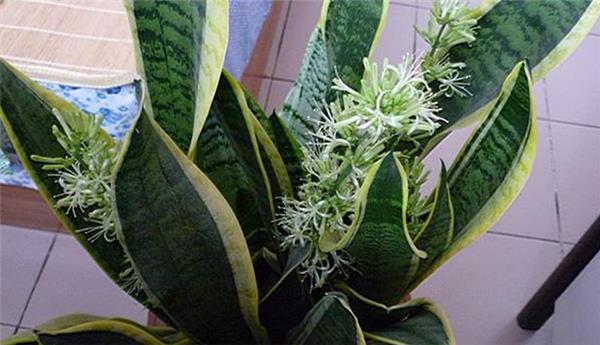
For potted Snake Plant 'Laurentii', it is best to use clay pots for planting; a plastic pot or porcelain pot can be placed outside the clay pot for ventilation, breathability, and an attractive appearance. Snake Plant 'Laurentii' prefers loose, breathable, well-draining soil. You can mix leaf mold, loam or garden soil with an equal amount of coarse sand, plus a little decomposed barnyard manure, and mix evenly to make nutrient soil.
Pest and Disease Control
The main pests and diseases of Snake Plant 'Laurentii' are scale insects, rot disease, and sunscald. Scale insects harm the plant's leaves and cause them to necrose, so timely control should be noted to prevent the plant from dying. If rot disease occurs, the spray coating should be replaced in time and liquid medicine sprayed. When sunscald is found, ventilation should be strengthened or water introduced to lower the temperature, and appropriate shading should be provided during high-temperature seasons.
Companion Planting
When planting Snake Plant 'Laurentii', some plants can be planted around it as companions, but the characteristics of the companion plants chosen should be basically similar to those of Snake Plant 'Laurentii', which makes management easier, and the whole pot of companion planting complements each other better, just right. Companion planting can fully unleash creativity, effectively improving ornamental value while also increasing the fun of planting.
III. What to Do If the Snake Plant's Roots Rot
Although snake plants are easy to grow, some flower lovers still encounter root rot in snake plants, and the cause of root rot in snake plants is mostly due to overwatering. Because the root system of snake plants is extremely underdeveloped, they are often planted shallowly, and when flower lovers water too much, the potting soil cannot evaporate it in time, and over time this leads to root rot in snake plants. The correct way to water snake plants is to water as little as possible, and to judge the amount of watering according to the drainage condition of the potting soil, so as to avoid root rot to the greatest extent possible. If the snake plant's roots have rotted, it should be pulled out in time, the rotten roots cleaned, then replanted in loose plain soil and placed in a shaded area for management and care.
In addition, there is another situation: the occurrence of disease can also cause root rot in snake plants. When we newly plant snake plants, we must subject the cultivation medium to high-temperature or chemical sterilization and disinfection. If the snake plant's roots rot or the stem base rots, promptly water with 50% thiophanate-methyl, sulfur suspension concentrate at 700 times dilution, or 50% carbendazim wettable powder at 500 times dilution.
After reading through this article, everyone has surely discovered that cultivating Snake Plant 'Laurentii' is very simple; it is not picky or delicate, and it can purify the air and beautify the environment. Hurry and buy a pot to grow at home and take good care of it!