How to grow Peperomia obtusifolia? A detailed guide to growing Peperomia obtusifolia
The leaves of Peperomia obtusifolia are emerald green and glossy, the plant form is neat, and it is relatively shade-tolerant and small and lovely. It is often grown in white plastic pots or white porcelain pots and placed on coffee tables, display cabinets, curio shelves or office desks, where it is very beautiful, fresh and pleasing to the eye, with a distinctive elegance. So how do you grow Peperomia obtusifolia? Below we take you through it.
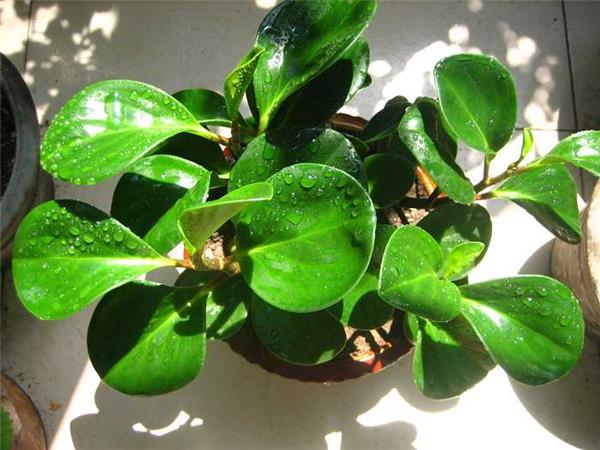
How to grow Peperomia obtusifolia
Peperomia obtusifolia is suited to a growing medium with a relatively high humus content. The potting soil can be mixed from 4 parts peat soil or leaf mold, 2 parts sawdust, 1 part perlite or river sand, and 3 parts garden soil. During the growing period, sufficient air humidity must be ensured. In hot seasons, potted plants should be placed in a ventilated, shady spot and avoided direct sunlight. At the same time, note that more watering is needed, and the leaves can be misted to keep the foliage emerald green. Peperomia has a relatively strong drought resistance; too much watering easily causes root rot. Each watering should be on the sparing side rather than excessive, but the potting soil should be kept moist at all times.
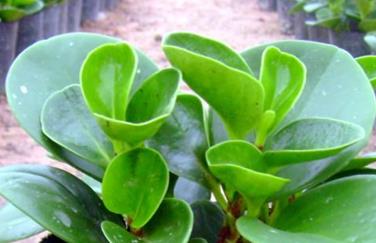
Generally, the growing medium can be made by mixing leaf mold, river sand and a small amount of decomposed organic fertilizer, or a better option is to use a mix of peat soil and perlite. It likes semi-shade or scattered light; apart from winter, when it needs sufficient light, other seasons require a little shading, especially summer. In semi-shade, the leaf color is brighter and the gloss is better, especially for variegated varieties, which need slightly more sunlight. It likes a warm environment. It likes a moist growing environment; under conditions of high humidity it grows luxuriantly and the leaf color is vivid. Maintaining relatively high air humidity is extremely beneficial to the plant's growth. It likes water relatively much and does not tolerate drought. It is best to water with diluted fertilizer liquid instead of clear water; the fertilizer should be mainly nitrogen fertilizer and potassium fertilizer, with phosphorus fertilizer secondary.
For pruning Peperomia obtusifolia, for newly propagated young seedlings, pinch out the growing tips when the seedlings are about 9 cm tall to increase the number of branches, so the plant form is fuller and the ornamental value is higher. For large plants, pruning is generally based on growth vigor; cut back leggy branches, which can be used as cuttings material and root easily, and can be inserted in clean river sand or vermiculite, or directly inserted into sandy soil. Propagation can also be done by leaf cuttings and division. Leaf cuttings need to have a leaf stalk and be inserted upright or slightly slanting into river sand, keeping the medium moist and the air humidity relatively high.
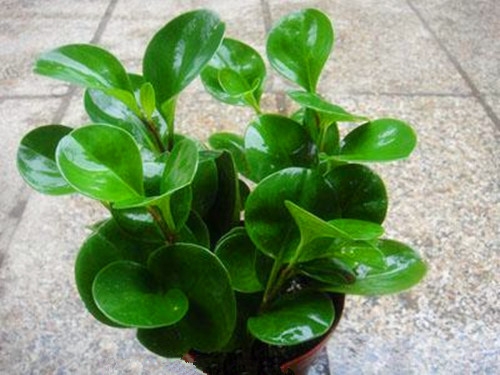
Peperomia obtusifolia should be watered sparingly, and avoid using water that is too cold; it is best to bring the water temperature close to room temperature. From May to September, fertilizer can be applied once every 2 to 3 weeks. In spring and summer, potted plants should be placed in semi-shade; in winter they can be placed in a sunny spot, but continuous direct sunlight should also be avoided. The overwintering temperature should not be lower than 10°C. To keep the leaves emerald green, generally repot or renew once every 2 to 3 years. When the plant is about 10 cm tall, the growing tips can be pinched appropriately to encourage side branches to sprout and keep the plant form full.
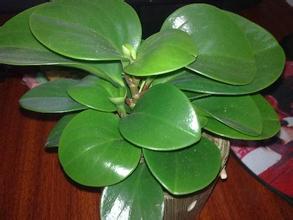
Points to note when growing Peperomia obtusifolia in summer
1. Strengthen air convection so that the heat inside the plant can be released.
2. Place it in semi-shade, or give it 50% shade.
3. Mist it appropriately, 2 to 3 times a day.