How to Grow Haworthia fasciata and Solutions for Yellowing Leaves
Haworthia fasciata, like most succulents, is a plant that dislikes excess water and tolerates drought, so it is very easy to keep alive. The plant's shape is similar to that of aloe, but its leaf surface is dotted with horizontal white stripes, making it easy to tell apart.
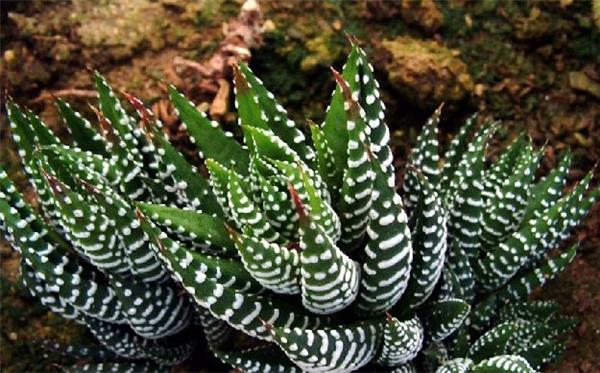
I. Ecological Habits of Haworthia fasciata
It prefers a warm, dry environment with plenty of sunlight. It fears low temperatures and dampness. A fertile, loose sandy loam is ideal. It tolerates drought and requires well-drained, nutrient-rich soil. It adapts well to temperature, with the optimal growing temperature between 20-30°C; in winter it needs to be kept above 10°C to overwinter, and below 5°C it enters a dormant state. In winter it needs plenty of sunlight, but if the light is too intense, the dormant leaves will turn red. It cannot be kept in shade for long periods, otherwise not only will its growth be stunted, but the stripes will gradually become dull. In summer it should be kept in a semi-shaded environment, avoiding strong light to prevent scorching. In winter it needs sufficient light; insufficient light easily causes leaf degradation and shrinking, seriously affecting normal growth. Haworthia fasciata does not tolerate high temperatures, so in summer it should be shaded appropriately, but if the light is too weak, the leaves will degrade and shrink.
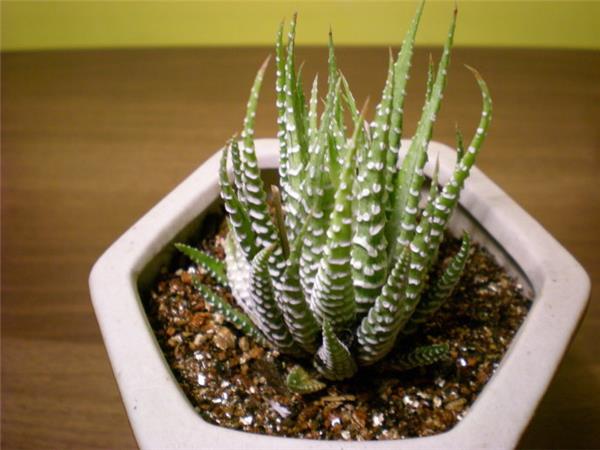
II. How to Grow Haworthia fasciata
Soil: Haworthia fasciata is not very demanding about soil, as long as it is fertile and loose. Because its root system is relatively shallow, a shallow pot is sufficient, and it does not need to be planted too deep in the soil.
Water: Haworthia fasciata does not need much water; keeping the soil moist is enough. In winter and summer, Haworthia fasciata is in a semi-dormant state and absorbs less water, so watering can be reduced appropriately; otherwise it easily leads to root rot or leaf shrinkage.
Sunlight: In summer, Haworthia fasciata can be moved indoors and placed under a glass window, where it can receive sunlight while being protected from withering caused by excessive exposure. Conversely, in winter it should be placed somewhere that receives sunlight (a bright room is sufficient) to ensure it gets plenty of sunlight.
Temperature: The optimal growing temperature for Haworthia fasciata is between 15°C-32°C. It fears both high heat and low cold. In winter it may be placed indoors; keeping it outdoors below 10°C is also unfavorable for its growth, and if the temperature drops below 7°C it will enter a dormant state, while below 4°C it will directly freeze and damage Haworthia fasciata.
Fertilizing: In general, it is not advisable to give Haworthia fasciata too much fertilizer. Haworthia fasciata does not like fertilizer; at most, fertilize it 1-2 times each spring.
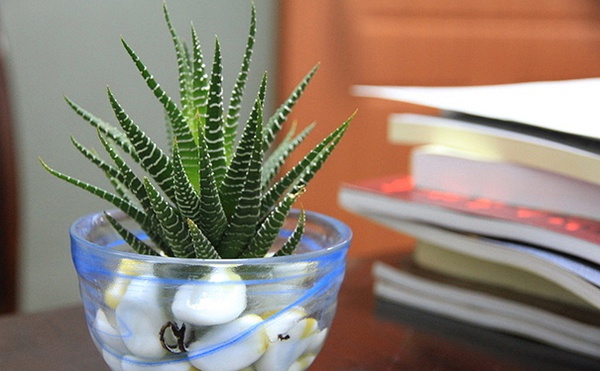
III. What to Do When Haworthia fasciata Leaves Turn Yellow
Reasonable watering: Haworthia fasciata does not like water, and both overwatering and excessive dryness are among the causes of yellowing leaves, so watering must be done reasonably when caring for Haworthia fasciata. During the growing season, keeping the potting soil moist is enough, but do not water too much, lest the potting soil become too wet, causing root rot and yellow leaves; nor water too little, causing the leaves to lack water and turn dry and yellow.
Appropriate light: Light is also one of the factors behind yellowing leaves in Haworthia fasciata. Haworthia fasciata likes a semi-shaded environment. If the light is too strong, especially during dormancy, the leaves will turn yellow and red; too weak light will also cause the leaves to turn yellow. Therefore, Haworthia fasciata is suited to being placed somewhere with plenty of diffused light, and if the sun is rather intense, shade it in summer.
Correct fertilizing: Haworthia fasciata does not like fertilizer. Some people fertilize it to make it grow better, but if the fertilizer is too concentrated it will also cause Haworthia fasciata to turn yellow. Haworthia fasciata only needs 1-2 applications of dilute fertilizer each spring to meet its needs; no extra fertilizer is required.
Disease treatment: Haworthia fasciata can suffer from root rot, and after root rot occurs the leaves will also begin to slowly turn yellow. So when Haworthia fasciata turns yellow, check whether root rot has occurred. If so, the rotten roots can be cut off and the plant replanted, or it can be sprayed with a 1500-fold dilution of 65% zineb wettable powder.
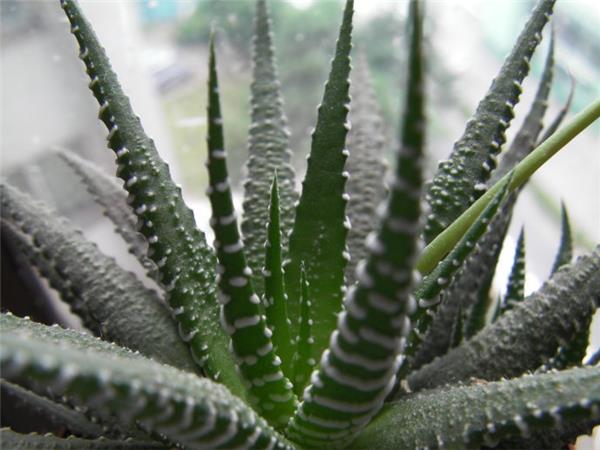
The Haworthia fasciata plant is relatively short, suitable for small pot cultivation, so it is very suited to being placed on office desks and similar spots, where it can play some role in radiation protection and also relieve eye fatigue, making it especially suitable for office workers to grow.
It can also relieve eye fatigue, so it is especially suitable for office workers to grow.