The Benefits and Uses of Catalpa Leaves and How to Brew Them as Tea
Catalpa leaves really are a very ordinary-looking tree leaf. As far as the catalpa tree is concerned, it is mainly its flowers that have ornamental value. But although catalpa leaves have little ornamental value, they do have medicinal value.
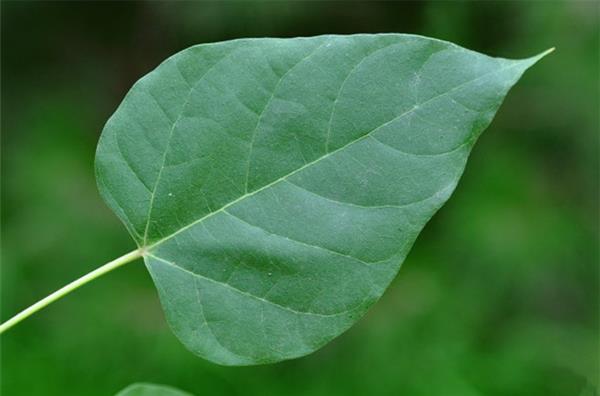
I. The Benefits and Uses of Catalpa Leaves
1. They have the benefits of reducing swelling and drawing out toxins, and of discharging pus and promoting tissue regeneration.
2. They are mainly used to treat swollen sores, carbuncles on the back, scrofula, white ringworm, and similar conditions.
3. To treat toxic swellings regardless of whether they are hard or soft: take ten layers of catalpa leaves and spread them over the swelling, then wrap with old silk fabric, changing three times a day; the toxic qi should flow out layer by layer as water into the leaves. In winter, take dried leaves, soak them in salt water for a long time, and then use them.
4. To treat scrofula and fistula sores: make a decoction from catalpa leaves alone. Around the autumn equinox, at dawn, pick 15 jin of leaves, add one dan of water, and boil in a clean cauldron until three dou remain; then transfer to another pot and boil down to seven or eight sheng; then transfer to another pot again and boil down to two sheng. This completes the decoction, which is then placed in a clean vessel. For each patient, first take half a ge of sesame oil, one fen of wax, and about one chestnut's worth of butter, and melt them together to the consistency of face cream; then take seven apricot kernels and a little fresh ginger, grind them together finely, add two qian of rice flour, put everything into the ointment, and stir until uniform. First apply this to the sore. After two days, wipe it off, then use a fine comb to spread the catalpa decoction evenly over the sore until it is fully covered, and still wrap it with soft silk fabric. Change once every two days: wipe off and apply new medicine. After no more than five or six applications, if it has already formed a head, tissue will regenerate and it will heal flat; if it has not yet ulcerated, it will disperse internally. After recovery, one must be careful for more than half a year.
5. To treat moxibustion sores that do not heal for a long time, with itching, pain, and yellow fluid discharge: pound catalpa leaves and sift them into a powder, then apply to the sore.
6. To treat sores on children's heads with no hair growth, as well as white ringworm: pound catalpa leaves into juice and apply to the sores.
7. To treat eye opacities in children: take three liang of catalpa leaves, pound them thoroughly, wrap in paper, then wrap again thickly with mud, and place over a fierce fire. When the mud is dry, take it out, remove the mud, add a little water, then take the juice, place it in a bronze vessel, and simmer slowly over low heat until it becomes like thin syrup. Store it in a porcelain box and apply one mung-bean-sized amount once a day.
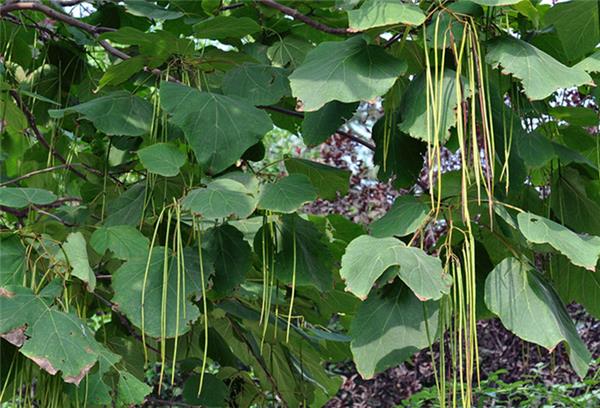
II. The Medicinal Value of Catalpa Leaves
[Source] From "Supplement to the Compendium of Materia Medica." 1. "Compendium of Materia Medica": The catalpa is an important medicine in external medicine, yet few people in recent times know this. Ge Changzhi's "Yunyu Yangqiu" says that someone suffered from a festering carbuncle on the back and could not be cured despite countless treatments. A doctor gathered catalpa leaves and boiled them into a paste, applied it externally, and internally made small pills with mica paste for the patient to take. After taking four liang, the patient recovered within a few days. Fan Wang of the Eastern Jin, a famous physician, also praised the power of catalpa leaves in treating sores and swellings, so it is clear that catalpa has the ability to draw out toxins and discharge pus.
[Origin] The leaf of the Bignoniaceae plant catalpa. Latin plant and animal mineral name: Catalpa bungei C. A. Mey.
[Harvesting and Storage] Pick in spring and summer; use fresh or dry in the sun.
[Nature and Flavor] Bitter in flavor; cool in nature.
[Usage and Dosage] External use: appropriate amount, pound into juice and apply; boil into a paste and apply; or grind into powder and sprinkle on.
[Various Commentaries] "Supplement to the Materia Medica": Pound and apply to sores and swellings; it can also be boiled into a decoction to wash pus and blood. In winter, take dried leaves and rub them in hot water before use.
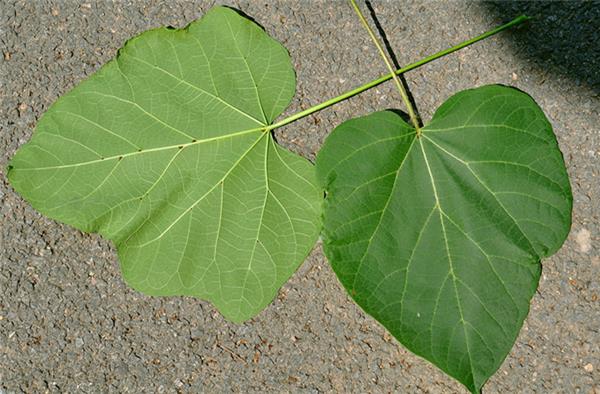
III. An Introduction to Catalpa Leaf Tea
1. Catalpa leaf tea emphasizes drinking in big gulps; lifting the neck and letting the Adam's apple move greedily is the truly authentic way. It is not as rich as jar-brewed tea, which must be savored slowly. Catalpa leaf tea comes from the catalpa tree. Catalpa trees are common in the north. In front of eaves, beside ditches, on cliff edges - wherever there are signs of human habitation, you can see catalpa trees.
2. Han Yu of the Tang Dynasty praised it in his poem "Catalpa Tree": "How many years did it take to grow into a great tree? One day it is bound and trapped by long vines. Who will remove the green gauze canopy for it, and watch it put forth countless layers of high flowers?" Another poem says: "Only five catalpa trees in the courtyard, their fragrance spreading within ten paces."
3. Every year in the ninth lunar month, after the first black frost, the catalpa leaves are killed into a full crimson red. This is the best season to pick catalpa leaves. For the finest catalpa leaves, choose the tips of branches facing the sun.
4. The roasting process for catalpa leaf tea is as simple as blinking. Use a large-mouthed iron wok, which heats easily. At this point, spread the catalpa leaves evenly in the iron wok, lower the heat, and roast patiently for a while to evaporate the moisture in the leaves. Then thread them together with hemp string and hang them under the eaves in a cool place. When you smell them, a faint scorched sweetness drifts out.
5. Put in three or four catalpa leaves and pour in boiling water. Before long, a faint red color appears, with a clear, cool aroma and a hint of scorched sweetness.
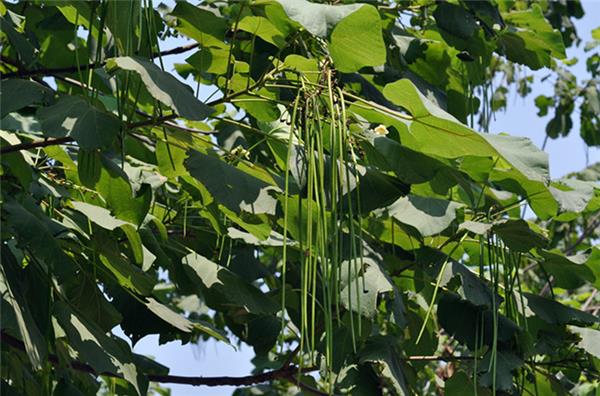
It seems that although catalpa leaves are unremarkable in appearance and look little different from ordinary leaves, hidden beneath their weak presence is a little thing of great value. If you also like this little thing, go ahead and try growing a catalpa tree yourself.