How to prune a Jade Plant? Detailed pruning methods
The Jade Plant (Portulacaria afra) originates from the arid regions of South Africa. Also known as the purslane tree, green jade tree, small-leaf purslane, and ginkgo wood. The Jade Plant has succulent stems, small leaves that are obovate, and leaves that closely resemble purslane; the leaves are simple and alternate, without petioles, the stem nodes are relatively short, the old stems are light brown, and the new growth is tender green, after which the stems turn dark red. It branches abundantly and densely, giving a sense of rugged antiquity. It can also be made into an old-stump bonsai.
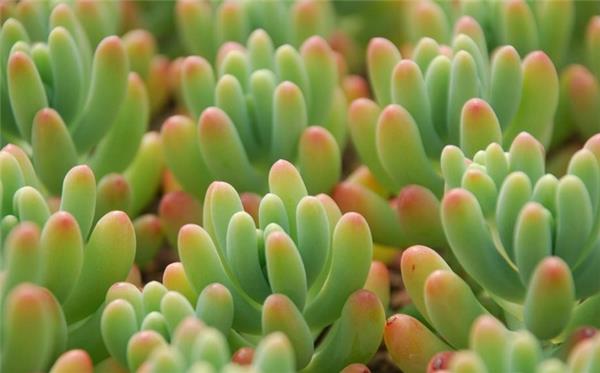
I. Pruning a Jade Plant
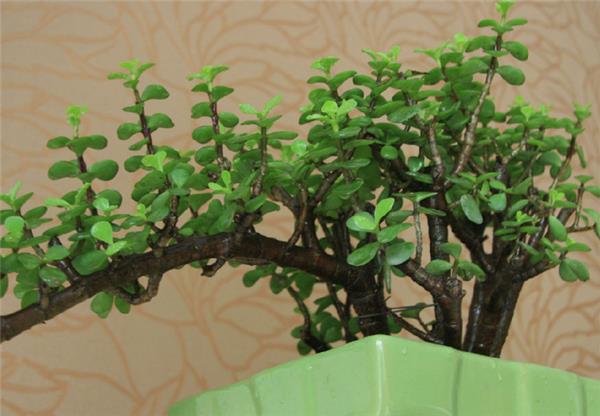
A Jade Plant bonsai often grows many new branches, and to keep it looking attractive, it should be pruned. How to prune can be determined by your preference for the shape of the tree bonsai. Usually it can be pruned into a natural form, with the branch pads trimmed into cloud-like shapes, like a miniature of a tree in nature. It can also be pruned into pads that are slightly higher in the middle, of varying sizes, with an outer outline like a melon-seed shape, which looks quite elegant visually. Avoid pruning it into a round shape, with one clump after another looking like one or several balloons hanging on a bamboo pole, which appears very stiff, even tacky. When pruning, all clustered branches, crossing branches, inward-growing branches, overlapping branches, parallel branches, and leggy branches must be cut away. Branches known as "crown-center" branches (that is, branches extending straight out and pointing right at a person's chest) should also be cut away. In some special cases, one or two branches can also be selectively kept as needed to perfect the shape. Especially within the first year or two after the shape has just been completed, you will often find that the original shape has imperfections, and if suitable new growth can make up for them, that is truly a welcome stroke of luck.
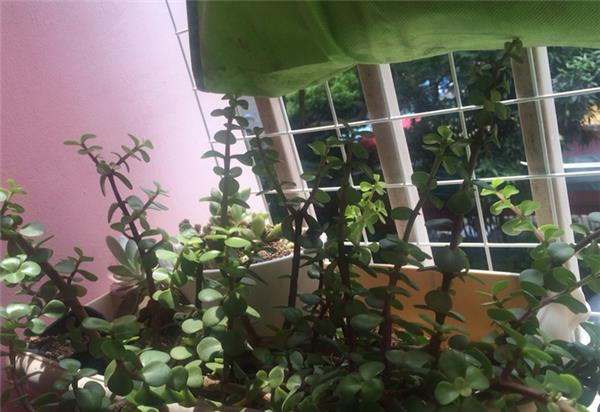
II. Points to note when growing a Jade Plant
In winter, place it indoors in a spot with ample sunlight, stop fertilizing, control watering, and keep the temperature preferably above 10°C; at around 5°C the plant will not die, but a large number of leaves will drop. Repot once every 2 to 3 years in spring; the potting soil can be a sandy soil of medium fertility with good drainage and aeration.
When repotting, give the plant one heavy pruning, cutting away weak branches and other branches that affect the tree's shape, and also cut away part of the root system, remove 1/2 to 1/3 of the original soil, and replant it with fresh growing medium.
1. Scatter a few soybeans into the growing soil; this can improve the soil and also release nitrogen fertilizer;
2. Remember not to keep it indoors for a long time; the soil is best mixed with things like sawdust and decomposed charcoal;
3. Pay attention to observing and recording when watering; the root system is fleshy, and too much water easily causes rot;
4. In winter, keep the room temperature no lower than 10 degrees, and it can overwinter safely;
5. Give it plenty of sun, but the sunlight must not be too intense; about three hours a day is enough.
III. Key care points for growing a Jade Plant
1. Watering: During the growing season, water by the rule of "do not water until dry, and when you water, water thoroughly." Avoid water accumulating in the pot, otherwise it will cause root rot.
2. Nutrient supply: During the growing season, apply a dilute, mainly nitrogen-based fertilizer solution once every 2 weeks. Suitable growing temperature: 20-28 degrees.
3. Pruning: Because of its strong sprouting ability, it should be pruned and its buds pinched frequently to keep the tree shape elegant.
The most effective biological purifier: through photosynthesis, it can absorb carbon dioxide and release oxygen, and it plays an important role in beautifying the home.
Placement: It is very suitable for growing on an outdoor balcony. Although it will certainly survive if grown indoors all year round, the internodes will elongate and the leaves will become thinner, and it will lose that curled, rugged posture. In winter, place it indoors by a window for care.
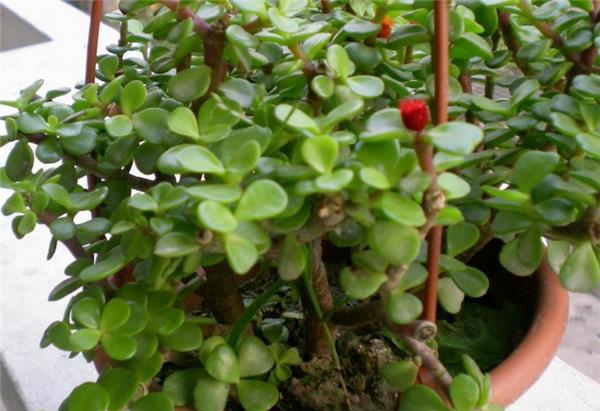
Through the above introduction to pruning a Jade Plant, the points to note when growing a Jade Plant, and the key care points for growing a Jade Plant, we have gained enough understanding of growing a Jade Plant. The Jade Plant is often grown as a potted plant for viewing; it is simple yet full of charm, and is a flower loved by many gardening enthusiasts.