How to Grow Anthurium? A Detailed Guide to Anthurium Cultivation Methods
Anthurium, also known as flamingo flower, attracts the attention of many flower lovers with its outstanding form. Many growers want to know how to grow anthurium and what to pay attention to when cultivating it. I have gathered some knowledge about the cultivation methods and precautions for anthurium, and now I am sharing it with everyone.
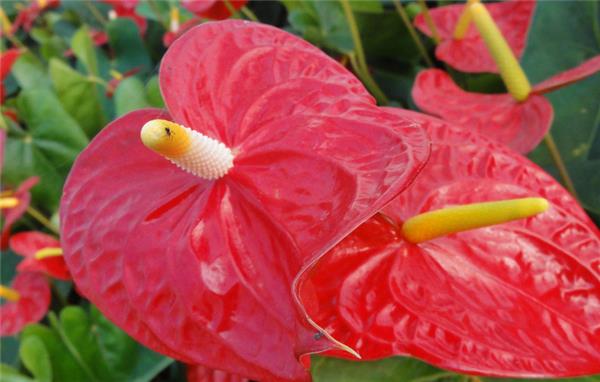
I. Anthurium Cultivation Methods
1. Soil
Anthurium is suited to growing in loose, fertile, well-drained sandy soil, so when choosing potting soil for anthurium, you can use a mix of leaf mold, moss and other materials.
2. Light
Anthurium likes to grow in a semi-shaded environment and fears strong light. Direct strong light will cause leaf scorch. So when growing anthurium, pay attention to sun protection in summer, and in winter be sure to supplement light appropriately. Normally when growing anthurium, you can place it in a bright indoor spot without direct sunlight.
3. Temperature
The suitable temperature for anthurium growth is 20-28°C; both high and low temperatures are unfavorable for its growth. Therefore, when growing anthurium, pay attention to controlling indoor temperature and avoid placing it in an environment that is too cold or too hot.
II. Anthurium Propagation Methods
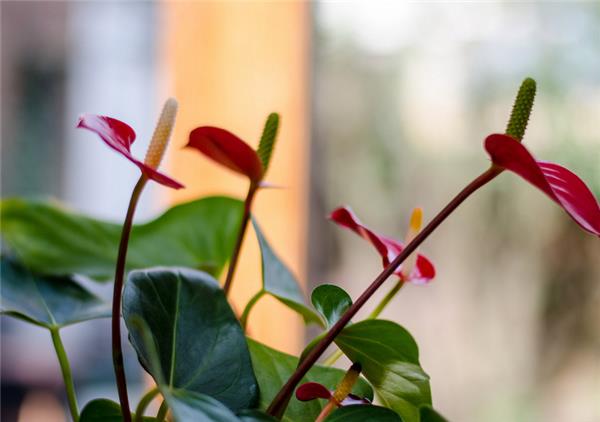
Anthurium is mainly propagated by sowing, division and tissue culture.
(1) Seed propagation: because natural pollination is poor, if seeds are to be collected, excellent mother plants should be selected for artificial pollination; the seeds mature 8 or 9 months after pollination. Seeds should be sown as soon as they are collected; when sowing, the plant spacing is 1 cm, and covering with soil is not necessary. After sowing, shade and keep moist, maintain a soil temperature of 25°C, and germination can occur in about 3 weeks; after leaves develop, transplant into seedling pots. Seedlings grown from seed flower after 3-4 years.
(2) Division propagation: division can be done by directly separating the tiller buds at the root crown of an adult plant. For large mother plants, first cut and wound the division site, wrap it with wet moss, and divide after buds sprout. For weaker mother plants, first remove the leaves on the old stems, then bury them with a light substrate to keep them moist; protect the dormant buds during the operation, maintain a soil temperature of 25-35°C, and divide after new roots and new leaves sprout.
(3) Tissue culture: use leaves or young petioles as explants; after inoculation, callus tissue forms in 20-30 days, and differentiation from callus to adventitious buds takes 30 or 60 days. It can flower only in the third year after planting.
III. The Value and Uses of Anthurium
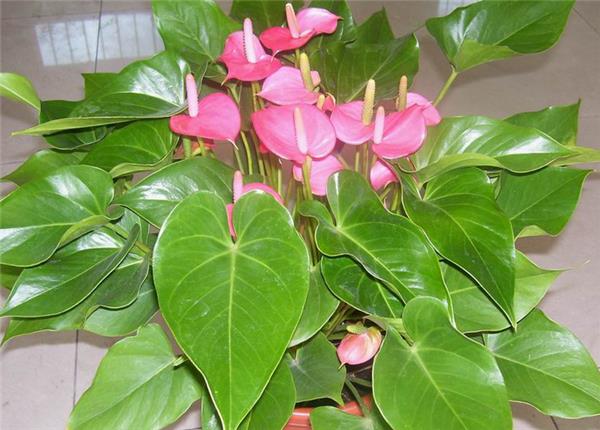
Clever household use of anthurium: it absorbs benzene and trichloroethylene, which are harmful to the human body, and has a healthy air-purifying effect.
When Araceae flowers bloom, the flowers are slightly toxic, so it is best to move them outdoors to grow. Anthurium, peace lily, ruby and emerald are all Araceae flowers. The representative of Euphorbiaceae is poinsettia, also called Christmas flower; this flower is also toxic, but there will be no problem if it is not eaten by mistake. Wash your hands every time you prune the branches and leaves; its toxicity mainly comes from the sap, and with a little care there is no problem.
Ornamental value
Its flower is unique, a spathe, with bright and gorgeous color and rich colors; it is a precious flower worldwide. The flowering period is long; as a cut flower in water it can last up to 1.5 months, and the cut leaves can be used as matching foliage for flower arrangements. It can be grown as a potted plant, and a single flowering period in a pot can last as long as 4-6 months. It can bloom year-round.
Economic value
Anthurium is an important tropical cut flower, with a spadix inflorescence; its spathe is large, thick and waxy, and its colors include red, pink, white, green and bicolor. Its colors are bright, its shape is unique, its application range is wide, and its economic value is high. It is currently a high-grade tropical cut flower and potted flower with fast global development and relatively large demand.
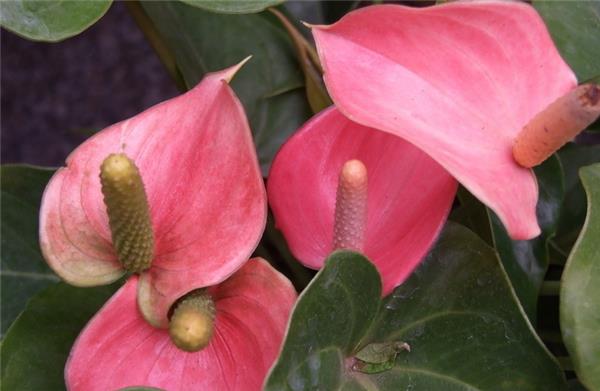
In order to inject a natural atmosphere into living rooms, people use some plants as decoration. This not only lets us get close to nature and adjust our mood, but one important reason is also to purify indoor air. Anthurium's emerald leaves, ready to drip, can also improve indoor air quality. Its scarlet, brilliant spathe and its spadix adorned like gold and jade add unique charm and make it endlessly fascinating.