Is red berry (Surinam cherry) the same as red fruit? Points to note when growing Surinam cherry
Seen from a distance, the Surinam cherry looks like one small, delicate lantern after another, very appealing. Growing Surinam cherry requires starting from its habits, then caring for it in many aspects such as soil, water and light, so as to ensure a high fruit-setting rate.
I. Morphological characteristics of the Surinam cherry
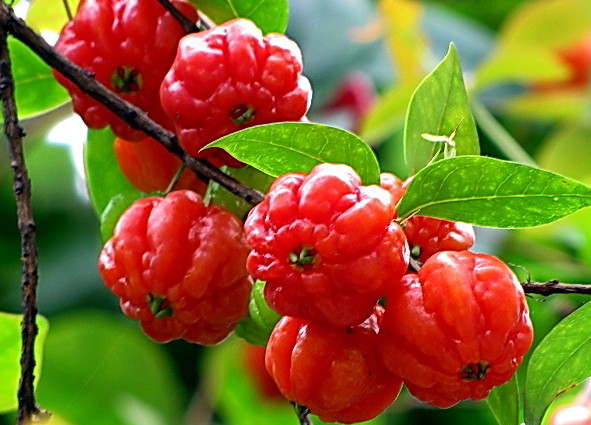
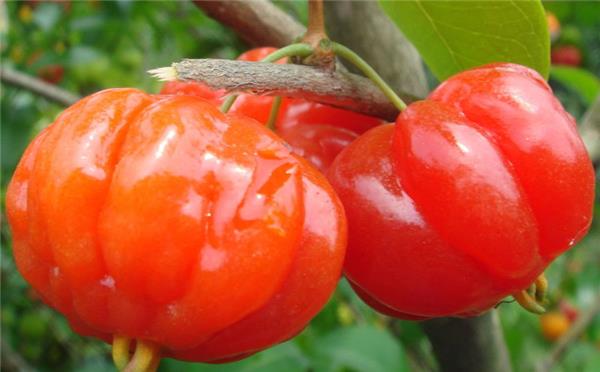
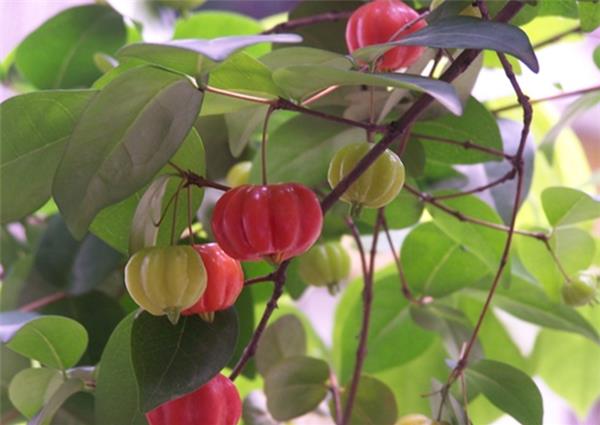
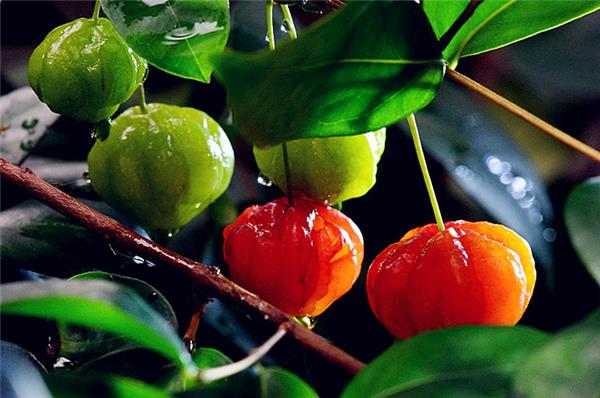
The young branches and leaves of the Surinam cherry are red. The leaves are papery, opposite, ovate to ovate-lanceolate, 3.2-4.2cm long and 2.3-3cm wide, with acuminate apex and rounded or slightly cordate base; the upper surface is green and glossy, the lower surface is lighter in color, both surfaces are hairless, and countless transparent glandular dots are visible when held against the light; the lateral veins join into a marginal vein about 2mm from the leaf margin. The flowers are white, slightly fragrant, solitary or several clustered in the leaf axils, with 1-2 seeds. Shorter than the leaves, with 4 sepals, reflexed outward. The berry is spherical, 1-2cm in diameter, with 8 ridges, dark red when ripe. The flowering period is in spring.
II. Growth habits of the Surinam cherry
It prefers a warm and humid environment, and can grow normally in both sunny and semi-shaded places. It is neither drought-tolerant nor cold-tolerant.
III. Propagation methods of the Surinam cherry
Sowing: The seeds can be taken after the fruit ripens and sown immediately after collection; keep the soil moist after sowing, and seedlings emerge in about 40 days, then are divided and transplanted in the spring of the following year.
Root cutting: Carry this out together with repotting in spring; cut off robust thick roots and use them for cuttings, which have a very high survival rate.
IV. Points to note for potted Surinam cherry
Potted Surinam cherry is different from field-grown plants. Its root system is naturally restricted, and the climatic factor that plays the leading role in affecting its growth and development is temperature, followed by water and light, while soil conditions also have a great influence on it.
A potted Surinam cherry generally begins to bear fruit after three years. The flower buds of the Surinam cherry are mixed flower buds. Trees in the initial fruiting stage generally grow vigorously, with a large proportion of medium and long fruiting branches, and as the tree age increases, they gradually shift to fruiting mainly on short fruiting branches. When the average spring temperature is above 15 degrees, the Surinam cherry blooms one after another; the suitable temperature for flowering is generally 17-18 degrees, and full bloom lasts 8-12 days. Although the Surinam cherry can set fruit by self-pollination, cross-pollination
gives a higher fruit-setting rate, so artificial pollination should be supplemented to increase the fruit-setting rate. Spraying boron at full bloom and spraying urea on weak trees both help increase the fruit-setting rate. In spring, water once every two days to ensure sufficient moisture. When watering during the flowering period, avoid spraying water directly onto the inflorescences, as this will affect the quality of pollination and reduce the fruit-setting rate. After fruit set, when the new shoot growing from the fruit base reaches about 15 cm, pinch out the growing tip to inhibit its growth, so that nutrients flow back and plump up the fruit.
V. Effects and uses of the Surinam cherry
1. One of its greatest uses is for people to view and beautify the environment. In tropical regions this plant is mostly a common plant in gardens, while in northern regions the Surinam cherry is one of the most common potted flowers. This plant can be pruned into a round or conical shape, beautiful and attractive, and wherever it is present it draws the gaze of a large crowd.
2. The Surinam cherry is edible, which is also one of the greatest uses of this plant. The fruit of this plant is like a fruit, slightly sour in taste with plenty of juice; it can be eaten directly, or used as a raw material to process into delicious soft candy for people to eat.
3. The Surinam cherry can provide people with a large amount of nutrients. The fruit of this plant contains a variety of acidic components, which after consumption can help digestion and strengthen the spleen and stomach. In addition, the content of vitamins and amino acids in the Surinam cherry is also high, and once these substances enter the human body they are easily absorbed by all parts of the body, which is especially beneficial for promoting health.
So, isn't the Surinam cherry a very lovely plant? It not only has a lovely appearance, but also lovely effects and uses, so everyone should quickly grow a pot of Surinam cherry at home.