Can Orchids Be Grown in Water? A Guide to Growing Orchids Well
Can orchids be grown in water? Lan cao is actually the orchid. There are a great many varieties of orchids, and they are a very popular indoor flower. Because of their many forms and fine flower shapes, they are hailed as the foremost of indoor flowers. Growing orchids also requires particular attention to technique, because they are a rather delicate plant. The article below explains orchid growing methods in detail.
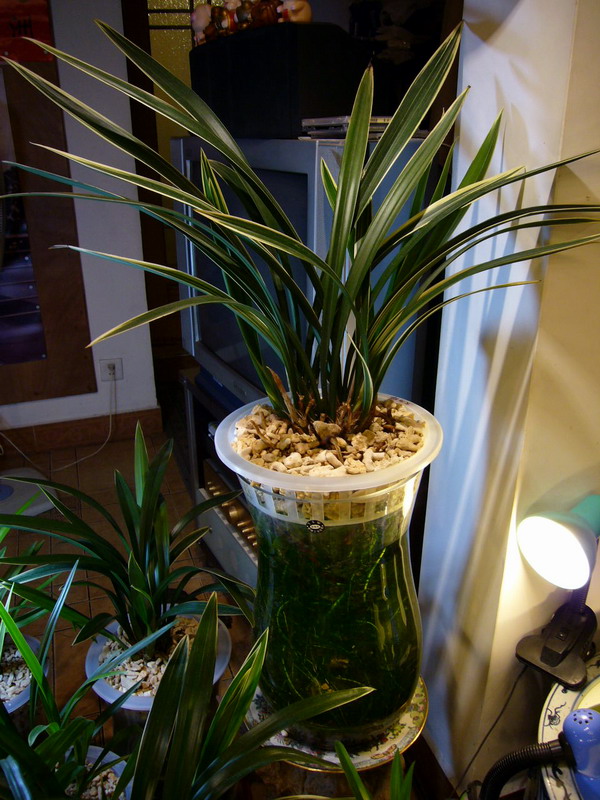
Can Orchids Be Grown in Water?
Yes, they can.
Hydroponic orchid growing is a new cultivation method that uses no soil or other growing medium, but instead soaks the orchid roots directly in water containing a nutrient solution. This method is simple and easy to learn and master. It is mainly divided into 6 steps:
1. Choose a dedicated hydroponic flowerpot. For hydroponic orchid growing, use a dedicated hydroponic pot with no hole in the bottom and a double-layer, inner-outer mesh design, where the outer pot holds the nutrient solution and the inner pot is a square grid mesh with a mesh opening size of 2 cm x 2 cm. The ribs between the mesh openings support the pseudobulbs and hold the fixing material for the orchid plant, such as gravel or sponge.
2. Transplant the orchid plant. Pull up the orchid plant growing in soil, remove rotten roots and old roots. If there are too many roots to fit into the inner mesh, use scissors to cut off some of the roots close to the pseudobulb, then rinse the roots clean with water to remove the mud and dirt sticking to them.
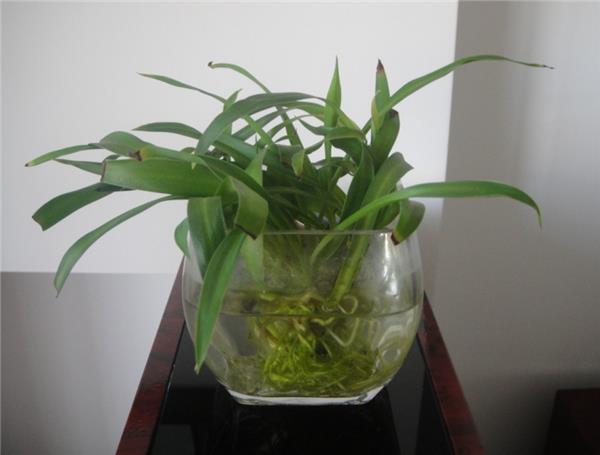
3. Disinfect. Disinfect the orchid plant once before planting it in the hydroponic pot. Immerse the whole plant in a potassium permanganate solution at a concentration of 100 mg/L for 10-15 minutes, then take it out and rinse off the potassium permanganate solution with clean water.
4. Plant it in the hydroponic pot. Divide the roots into 2-3 groups and insert them into 2-3 mesh openings. Use your hand to pull the roots that have passed through the mesh openings slightly, so that the pseudobulb rests tightly against the central cross-shaped ribs between the mesh openings.
5. Fix the orchid in place. Use one hand to hold the orchid plant upright, and with the other hand place clean gravel of 3 cm x 5 cm specification around the plant to fill the inner mesh, then shake it slightly, and the orchid plant will be fixed in the center of the inner mesh.
6. Add the nutrient solution. Rinse the fixing gravel once more with clean water, fill the outer pot with clean water, and add orchid nutrient solution to the water. In this way, the transplanting work is complete.
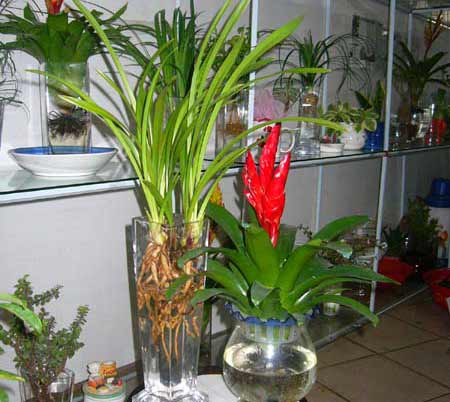
Why can't orchids be grown in ordinary soil?
Let us first analyze the changes in the dry and wet states of the soil after watering: "wet" to "slightly wet" to "moist" to "slightly dry" to "dry". Among these, "wet", "slightly wet", "dry" and "slightly dry" are all unfavorable to orchid root growth. Only "moist" is most suitable for orchid growth. Because ordinary soil stays "wet" or "slightly wet" for too long after watering, exceeding the time orchids can tolerate, tragedy naturally occurs. Therefore, ordinary soil is not suitable for growing orchids.
From this it can be seen that shortening as much as possible the time the growing medium spends in the "wet" and "dry" states and extending the time it spends in the "moist" state is the fundamental goal of orchid cultivation. Whether it is the selection and blending of the growing medium, the choice of orchid pot (the size and texture of the orchid pot also greatly affect changes in the water content of the growing medium), or watering, all revolve around this goal.
From this it can also be seen that the water-retaining or water-draining characteristics of the growing medium itself determine, to a very large extent, the changes in the water content of the growing medium, and even determine the success or failure of orchid growing. It can be said that watering is the external cause determining changes in the water content of the growing medium, while the growing medium is the internal cause determining changes in the water content of the growing medium. To control the water content of the growing medium well, the prerequisite is that the growing medium must be well selected and blended.
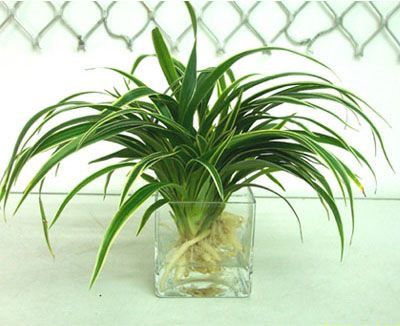
That is all for the introduction to orchid growing methods. This extremely delicate flower, the orchid, must be grown in strict accordance with its cultivation techniques in order to ensure its growth. There are a great many varieties of orchids, and many are precious cultivars. They are hailed as the finest of flowers, and their value is also very high. They often appear in various exhibitions. The beauty of orchids makes countless people proud of them, and growing them indoors can beautify the environment and cultivate both body and mind.