Can Dichondra repens be grown in water? A full breakdown of the water-growing method
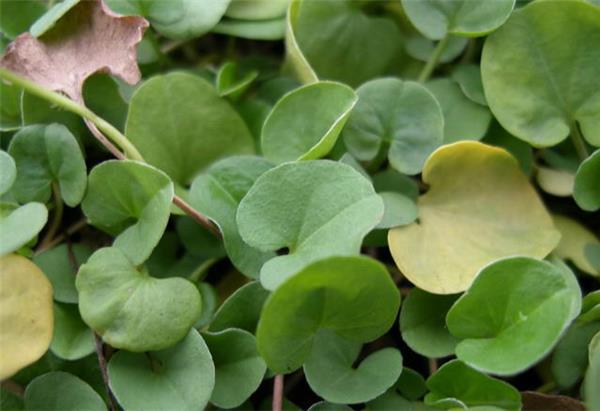
Can Dichondra repens be grown in water? Dichondra repens, also known as American dichondra, is a dicotyledonous lawn grass, a perennial herbaceous plant in the genus Dichondra of the family Convolvulaceae. It has wide adaptability and well-developed fibrous roots, with many stolons; the nodes produce roots where they touch the ground and can form a dense, ornamental lawn.
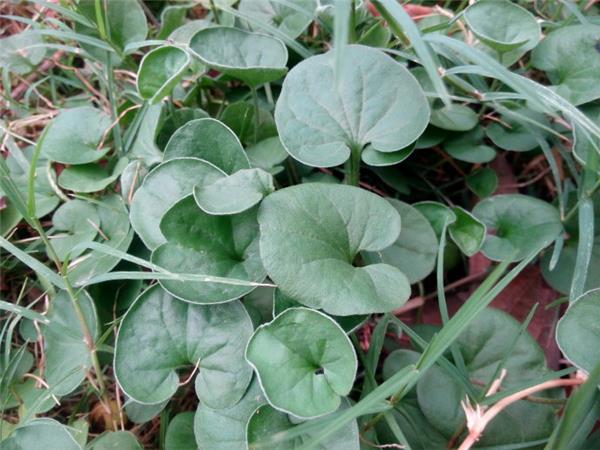
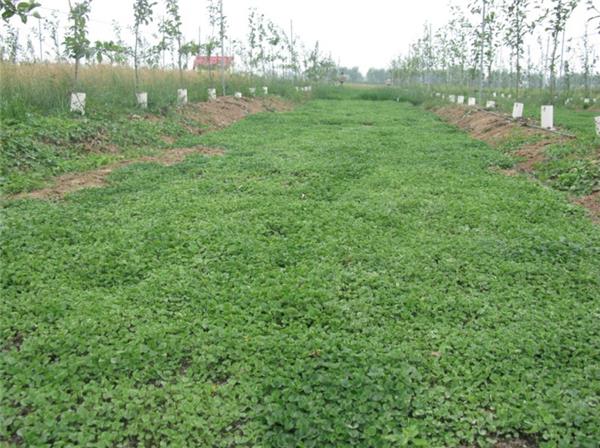
Under suitably humid conditions, the stolons of Dichondra repens grow rapidly and have a very strong colonising ability. These traits determine its characteristic of tolerating extensive management. However, like other lawn grasses, Dichondra repens lawns also have some difficulties in maintenance. The problems encountered in maintaining Dichondra repens lawns mainly fall into four major areas: weed control, disease control, pest control and rational fertilisation.
Can Dichondra repens be grown in water
No
Cultivation techniques for Dichondra repens
Dichondra repens is short in stature with fine leaves; the leaves are neat and elegant, the leaf colour is attractive, no trimming is needed, and it grows fast and forms a lawn in a short time. It is cold-hardy: at -8°C the leaves of Dichondra repens do not turn yellow. It is heat-tolerant: at temperatures reaching 38°C the leaf colour stays fresh green. It also tolerates waterlogging and shade, has strong reproductive capacity, and its green period lasts more than 300 days, staying green almost all year round. However, it is not drought-tolerant and not tolerant of trampling. According to relevant statistics, each square metre of Dichondra repens can absorb 35.7 grams of carbon dioxide per day. The whole plant of Dichondra repens can be used as medicine; it clears heat and drains dampness, and has the function of detoxifying and reducing swelling. The cultivation method is briefly introduced below.
The stem nodes of Dichondra repens have a very strong regenerative capacity; every node can take root and sprout, its creeping and spreading ability is strong, it reproduces quickly and grows fast. Whether for propagation or for planting in place, the ground must be prepared beforehand. Dig the planting site more than 30 cm deep, at the same time break up the clods and pick out bricks, tiles and stones, so that the soil is loose and ready for use.
Dichondra repens can be propagated in two ways: by sowing and by vegetative propagation; its stolons are commonly used for propagation. Because Dichondra repens stolons grow fast, the author generally uses spot-laying, with turf pieces 8 to 10 cm long and 3 cm thick, laid in spots on the planting site, 20 to 25 turf pieces per square metre. After laying, water thoroughly; when there is no standing water on the grass surface, pat it flat with a wooden board so that the turf is in close contact with the soil. The soil in the gaps between grass pieces should be loose and slightly higher than the grass surface, which helps it to form a continuous sheet quickly.
Cultivation management
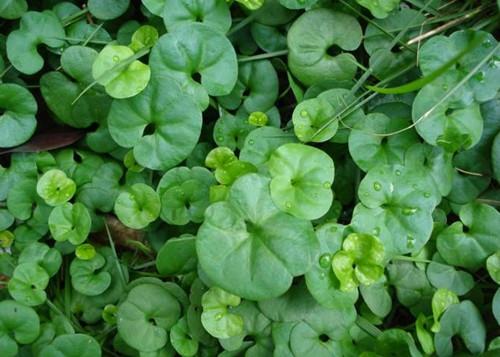
It likes nitrogen fertiliser. Usually, in combination with rain and watering, nitrogen fertiliser should be top-dressed in appropriate amounts; it is best to apply urea at 3-5 kg/mu plus diammonium at 5-10 kg/mu. After the turf has been grown for 2-3 years, because the rhizomes become densely packed together, the soil is prone to compaction, which affects aeration and water infiltration. Depending on the situation, spikes can be used to make holes, or a knife or spade can be used to score lines and cut the grass roots, increasing soil looseness; at the same time, add nitrogen fertiliser and water appropriately, so that the lawn regains its vigour.
Pest and disease control
Dichondra repens lawns have strong disease resistance; only southern blight and a small amount of leaf spot mould occur. The above diseases mostly occur in the high-temperature, high-humidity season from July to August. Using chemicals such as chlorothalonil and carbendazim, sprayed once every 7 to 10 days, can effectively prevent and control the occurrence and development of the diseases.
The larvae of scarab beetles (white grubs) and the larvae of noctuid moths (armyworms, cutworms) are the main pests of Dichondra repens lawns, and must be observed and controlled promptly. During the adult emergence period, take advantage of the adults' phototaxis and chemotaxis by using blacklight lamps, poison bait and poisoned grass to trap and kill them, reducing their egg-laying. For white grubs, use a 50% phoxim 1000-fold solution and spray it on the lawn (or drench it) in the evening; for armyworm and cutworm larvae, use a 40% omethoate 1000-fold solution for spraying control; especially, repeat the spray once the next day after spraying for the best effect.