Can Anthurium Be Grown in Water? A Detailed Guide to Water Culture Methods for Anthurium
A blooming anthurium, with its dazzling scarlet flowers and fresh green leaves, grown in water in a glass bottle looks clear and bright, a delight to the eye. Who wouldn't love a flower like this? The anthurium's flower shape resembles a goose foot, so people often call it goose-foot red, and some also call it Anthurium andraeanum, a plant of the genus Anthurium in the Araceae family. Can anthurium be grown in water?
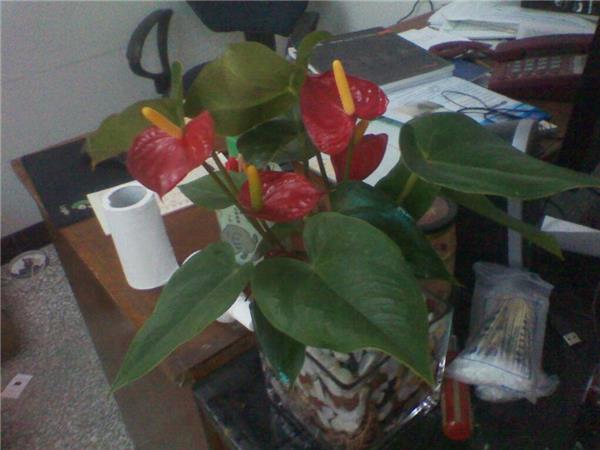
Can Anthurium Be Grown in Water
Anthurium likes warm, humid, semi-shaded environments and is very well suited to water culture. When growing anthurium, pay attention to moisture retention; the anthurium's graceful posture and beautiful flowers are inseparable from water. Growing anthurium in water does not mean adding too much water to the growing container, but rather paying attention to maintaining the humidity of the anthurium's living environment.
Not only should you change and add water for the anthurium, you should also spray water into the room where the anthurium is grown, so that the leaves retain enough moisture. More importantly, you should spray water on the anthurium's leaves. Moisture is the key to the anthurium's fiery red blooms and graceful posture.
How to Grow Anthurium in Water
When growing anthurium in water, half of the root system should be exposed to the air so that the roots can breathe in the air (as shown in the illustration); otherwise, root rot is very likely to occur. The root system of water-cultured plants grows exposed, and after contact with light, the plant cells carry out photosynthesis; the same is true for the roots. It is normal for them to appear green. As long as there is no direct sunlight, healthy root growth can usually be ensured. Not all water-cultured plants' root systems will eventually turn green; green is healthy. For example, some are brown.
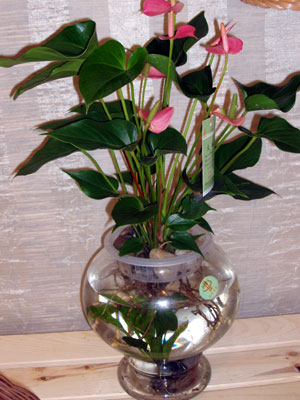
Part of the secondary fibrous roots of the pink anthurium (Pink Champion) appear brown, which is abnormal. Fibrous roots of this color should feel soft to the touch. These are rotten roots, which should be cleaned away promptly, and the frequency of water changes should be increased to control their spread.
It is generally a mistaken idea that the plant can survive simply by being placed in water; because of its strong affinity for water, it can still survive for several months even when placed in water.
The root system of the anthurium breathes very strongly, and placing it directly in water easily hinders its breathing. The best method is to use a substrate, and the best substrate is expanded clay pebbles. Since the anthurium's roots are fleshy roots and the leaves emerge from the roots, the usual method of custom orchid mix + stones + easy mix does not easily produce small leaves. Expanded clay pebbles, however, are light in texture and provide ample space, making it easy for small leaves to emerge. The anthurium I am currently growing in water in the office uses expanded clay pebbles and has been grown for 2 years, each plant bearing 3 to 4 flowers.
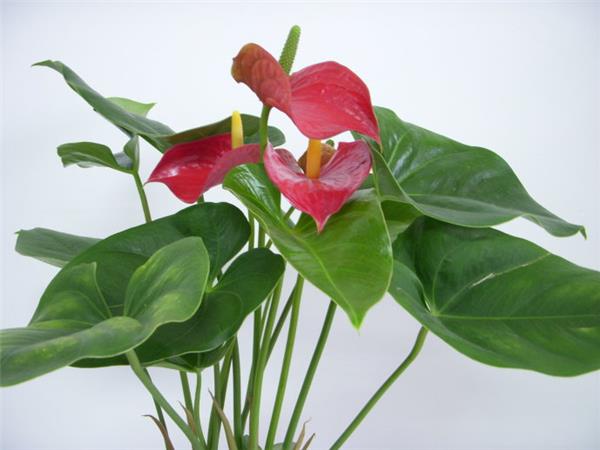
To grow anthurium in water with expanded clay pebbles, first wash the roots clean, trim the old roots and residual roots, and remove the flowers. Then place the plant into the container. Fill it with expanded clay pebbles, then dilute rooting powder in the proper ratio and spray the pebbles damp, taking care that there is not too much standing water below; if there is too much water, pour it out. After a long wait, you will be pleasantly surprised to find the anthurium's thick, white fleshy roots growing on all sides, all clinging to the edge of the container. At this point, congratulations: a water-cultured anthurium is complete, and all that remains is to regularly add nutrient solution and care for its growth.
Is Anthurium Poisonous?
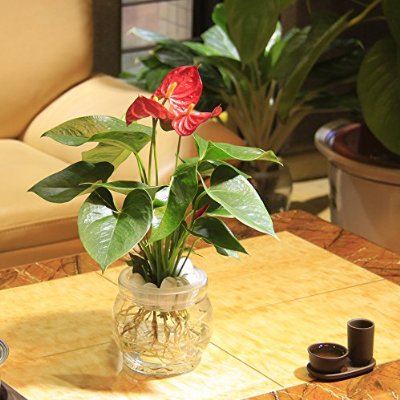
The anthurium, also known as flamingo flower or red flamingo taro, is a plant whose leaves and stems have a peculiar appearance: its leaves are dark green, heart-shaped, thick and tough, and its spadix is long and pointed, in bright red, white or green, surrounded by a red, pink or white spathe; they are all poisonous. This flower is also called Flamingo flower or pigtail grass. After accidentally eating the flower of the red flamingo taro, a person's mouth will feel burning and painful, then it will swell and blister, the voice will become hoarse and strained, and swallowing will become difficult. Most symptoms will lessen over time until they disappear. If you want to relieve the pain, you can choose cool liquids, painkiller pills, or foods such as licorice and flaxseed.