How to grow Agave americana var. marginata? A detailed guide to cultivation methods
Agave americana var. marginata is a perennial evergreen herbaceous plant. It is the leaf of the Agavaceae plant Agave americana var. marginata. Other names: golden-edged lotus, agave, golden-edged false pineapple. It is used for consumptive cough, blood spitting, and asthma. So, what are the uses of Agave americana var. marginata? Let's take a look below.
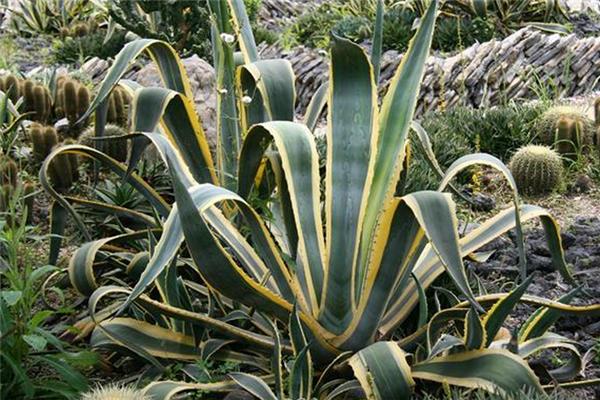
I. Cultivation methods for Agave americana var. marginata
Summer is its growing season. It can be watered once a day. It is not tolerant of concentrated fertilizer, and oily fertilizers should be avoided. It is best to replace the growing medium when repotting each year, and during the growing season water once a month with dilute hoof-and-horn water. To grow agave well, attention must also be paid to its propagation. First, the young shoots growing beside the old plant can be inserted into plain sandy loam, rooting in about 20 days; after the plant has grown for some time, replace the growing medium and it will grow faster. Second, split the old root into shoot blocks with five or six buds, plant them in pots and water lightly.
Generally, new shoots can be divided after growing for two or three years, while old plants can be divided every year. It is drought-tolerant and not waterlogging-tolerant; when potting, be sure to add crushed stone and fine sand as a drainage layer. After bringing it indoors in winter, place it in a bright spot and keep the potting soil slightly moist; the leaves should be misted frequently. During the overwintering period, the plant can also be taken out, the soil removed from the roots, the leaves tied together with string, and hung in a wind-sheltered place away from oil, and it can go a whole winter without watering. It can be moved outside at Qingming the following year. Gradually increase the amount of watering, and it will continue to grow.
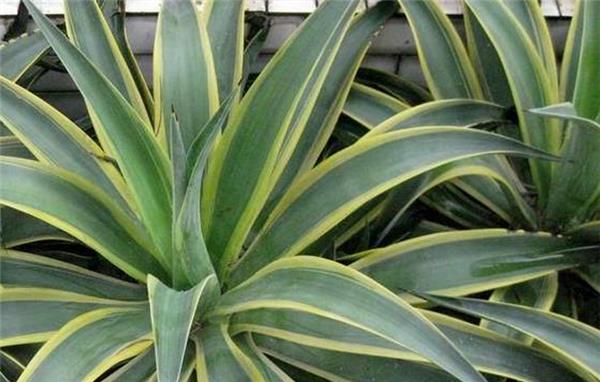
II. Hydroponic cultivation of agave
For hydroponic root viewing, it should often be taken to a sunny place; do not leave it in a dark place for a long time, as otherwise the leaves easily turn white and become thin, thereby losing their ornamental value. In winter, pay attention to keeping it warm; during the day place it by the window in a sunny spot, and at night, in an indoor space without heating, the glass bottle needs to be placed in plastic or a cardboard box. If the leaves turn yellow or droop listlessly, it may be frostbite; at this time some warming measures need to be given. Then place it away from doors and windows, and be sure not to place it in a spot facing north. When changing the water in winter, warm water of 12°C to 18°C can be used. Agave has strong resistance, and as long as attention is paid to management it can overwinter safely.
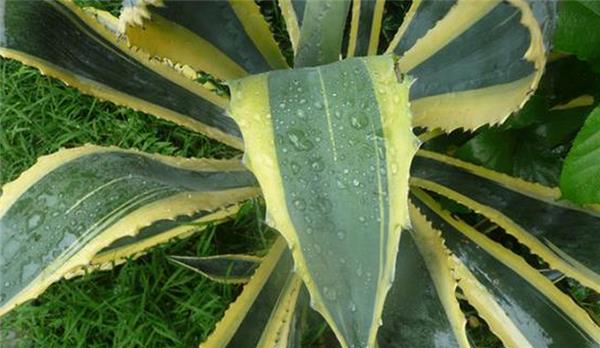
III. Uses of Agave americana var. marginata
Agave americana var. marginata can be used as a medicinal material: the fresh sap of the original species agave (which flows out naturally when the bud scales are cut off at flowering) has mild laxative and diuretic effects. It has certain therapeutic effects on experimental nephritis in dogs. The leaves contain a pungent volatile oil and can be used as a local irritant. The extract of the same genus plant Agave schottii has an inhibitory effect on Walker carcinoma-256, and its active ingredient is a saponin (the aglycone is gitogenin). Agave americana var. marginata has medicinal effects for people in moistening the lungs, resolving phlegm, and relieving cough. It is used for consumptive cough, blood spitting, and asthma.
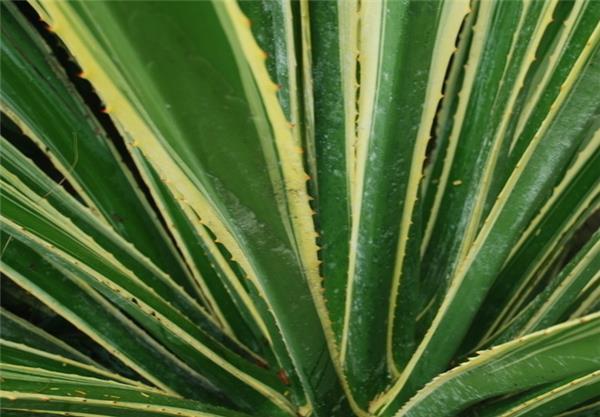
Agave can also purify indoor air: agave has the effect of purifying indoor air at night, mainly because, like cacti, it has the special function of absorbing carbon dioxide and releasing oxygen at night.