How to Grow Tradescantia zebrina? A Detailed Guide to Tradescantia zebrina Cultivation
Tradescantia zebrina gets its name because its leaves look like bamboo strips and it is often grown suspended in hanging baskets. It is a tropical plant that requires a winter temperature no lower than 10 degrees, so friends in northern regions may have never seen it, but it is very common throughout South China, whether in ordinary households or in park landscaping, its presence can be seen everywhere. This herbaceous foliage plant has made a great contribution to beautifying our living environment.
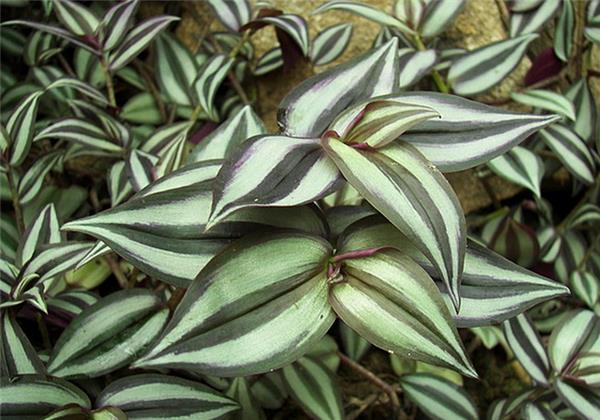
I. Tradescantia zebrina Cultivation Methods
Planting
For the potting soil, a growing medium mixed with leaf mold, garden soil and river sand at 1/3 each is suitable.
Fertilizing
Apply a dilute liquid fertilizer once about every half month, but be careful not to fertilize too much; if too much nitrogen fertilizer is applied, the leaf color will fade.
Watering
During the growing season, keep the potting soil moist and frequently spray water on the stems and leaves to maintain relatively high air humidity, so as to prevent the leaf tips from drying out and scorching.
Temperature and Light
Tradescantia zebrina prefers a semi-shaded environment; in spring and autumn, it is best placed in a spot with bright indirect light indoors, and in summer it should be kept indoors in a well-ventilated place, avoiding exposure to scorching sun. In winter, the room temperature should be kept above 10°C, and watering should be appropriately reduced; if watered too much at this time, the potting soil will remain wet for a long time, which can easily cause root rot and yellow leaves. In winter, it should be placed on a south-facing windowsill so that it can get more sunlight.
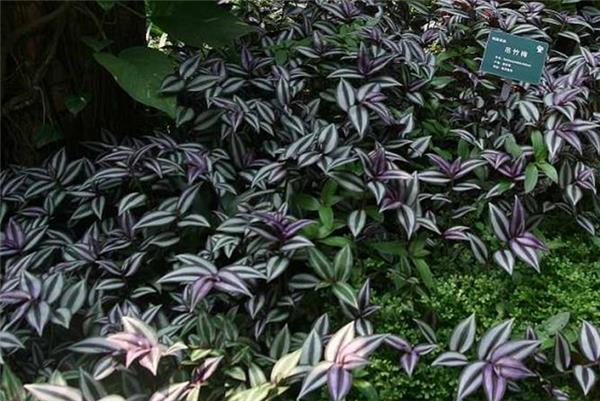
II. Tradescantia zebrina Care
The cutting medium for Tradescantia zebrina is the nutrient soil, river sand, peat soil or other materials used for cuttings. The stems used for cuttings are called cuttings. Cut the stems into 6 cm long sections, each with more than three leaf nodes; the top shoot can also be used as a cutting. For the growing medium, a mix of 40% leaf mold, 40% garden soil and 20% river sand is suitable. During the growing period, keep the potting soil moist and apply a dilute liquid fertilizer or compound fertilizer once about every 15 to 20 days. In spring and autumn, it is best grown indoors near a south window; in summer, it is best placed indoors in a well-ventilated spot with bright indirect light. If light is insufficient for a long time, the stems and leaves tend to grow leggy, the internodes become longer, and it blooms little or not at all. It requires relatively high air humidity; if the air is dry, the leaves often dry out easily and the leaf tips scorch. Therefore, during the growing season, spray water on the stems and leaves frequently to maintain air humidity. To keep its branches and leaves full, when the stems grow to about 25 cm, pinch them back to encourage branching; otherwise the branches will grow thin and long, affecting the ornamental effect.
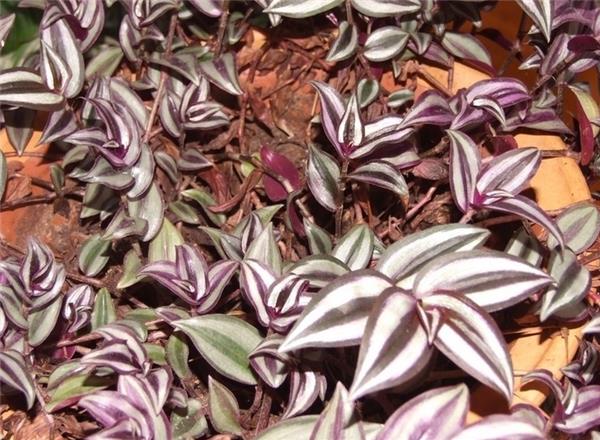
III. The Benefits of Tradescantia zebrina
1. Decorative effect
Tradescantia zebrina grows very quickly; in just one short year, it can grow from sprouting to filling the entire flower pot. It is a small creature with very strong vitality. It is often hung indoors and in courtyards, with branches and leaves trailing and cascading in layer upon layer, which is not only beautiful but also has a distinctive charm. If it is placed on a flower bed or the top of a cabinet and allowed to grow with its branches and leaves hanging down, it will quickly cover the entire surface, forming a green curtain that is very stylish. This is exactly why it is widely loved by people.
2. Freshening the air
Like all green-leaf plants, Tradescantia zebrina grows by absorbing sunlight and carbon dioxide for photosynthesis, so Tradescantia zebrina also has a very good air-purifying effect. Because it grows fast and has lush leaves, it can grow into a large patch with only routine cultivation. Besides decorating your own small yard, it also absorbs a large amount of carbon dioxide and toxic substances. If you live on the first floor and really have such a small garden, then you can also hang it above the window, and before long you will have a green curtain, just like ivy, and from the outside your house will naturally look clear and full of spring vitality. Looking out from inside, the green "curtain" not only blocks the glaring strong light but also forms a green barrier, keeping dust, PM2.5 and other particles in the air all outside the door.
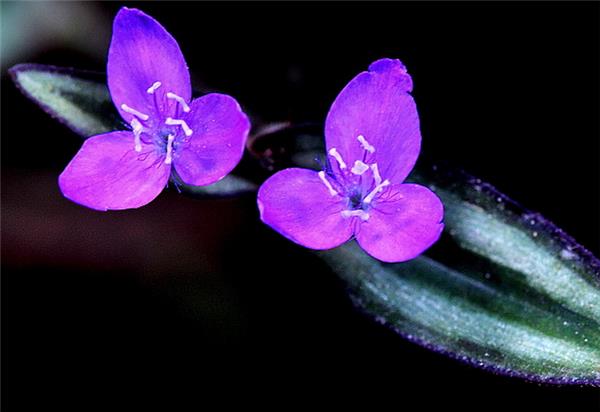
Tradescantia zebrina is a very common foliage plant. Because of its strong adaptability, it can grow almost anywhere, and in some places it has become wild or semi-wild, but Tradescantia zebrina still has its own unique charm when used to decorate and accent a home. The cultivation methods for Tradescantia zebrina are introduced here, and I hope they are helpful to everyone.