How to grow a billbergia? These care methods you need to master
The billbergia is a perennial herbaceous plant and a houseplant introduced in recent years. Both the flowers and leaves of the billbergia are highly ornamental, and planting it on a balcony, in a living room or other places can serve a good decorative purpose. Below is an introduction to billbergia information and how to grow a billbergia, along with some beautiful billbergia pictures for you to enjoy.
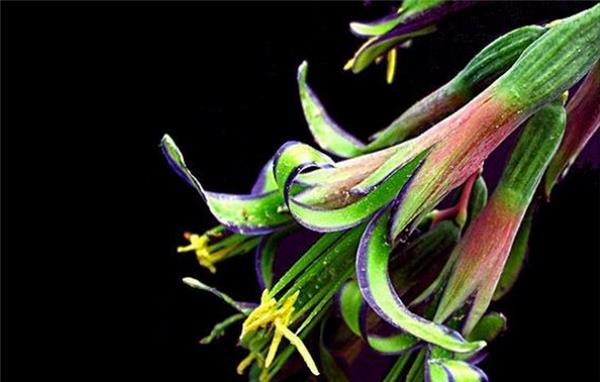
I. How to grow a billbergia
1. Soil: The billbergia does not have high soil requirements; a slightly acidic sandy loam rich in humus with good drainage and aeration is best, but calcareous soil should be avoided.
2. Light: The billbergia likes a semi-shaded environment, so when growing it, place it in a bright spot indoors. In summer, take care to shade it appropriately; in winter, supplement light appropriately and place it near a south-facing window. In other seasons, you can give the billbergia appropriate direct sunlight, which helps it form flower buds.
3. Temperature: The billbergia likes a hot and humid environment, and its most suitable growing temperature is 18-30°C. When summer temperatures are very high, do a good job of ventilating and cooling. In winter, make sure the growing environment stays above 15°C. In addition, during the billbergia's flowering period, place it in a cooler spot and let the potting soil dry out slightly, which can extend the billbergia's flowering time.
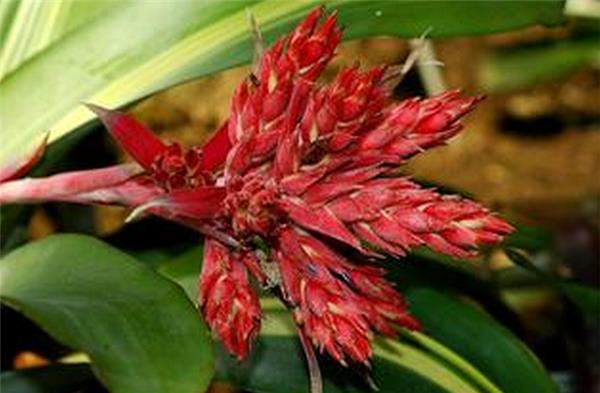
II. Tips on how to grow a billbergia well
To grow a billbergia well, you must first become familiar with its growth habits: it likes a warm, humid, semi-shaded environment, is not cold-tolerant and is slightly drought-tolerant. It requires relatively high air humidity, dislikes direct strong light, and its optimum growing temperature is 20-28°C.
When growing a billbergia at home, during the day place the potted plant at a south-facing sunny window indoors so it can fully receive sunlight. In severe winter, pay attention to the indoor temperature, because the billbergia is not cold-tolerant, so take good measures to protect it from the cold and keep it warm.
When temperatures rise in spring, after repotting and changing the soil in April, move it outdoors under a shade shed to spend the summer. The potting soil should be loose, fertile and slightly acidic; generally, 1 part leaf mold, 1 part garden soil, and half a part each of rice husk ash and barnyard manure soil can be mixed and used. If misting equipment is available and relatively high air humidity can be maintained regularly, using well-drained, acidic peat soil as the potting soil is even more suitable.
In summer, when the temperature exceeds 30°C, the plant enters a semi-dormant state and cannot be exposed to strong sunlight, so it is best to place it under a shade shed for the summer. To increase air humidity, you can spray the ground with water several times regularly, which helps prevent heatstroke and lower the temperature.
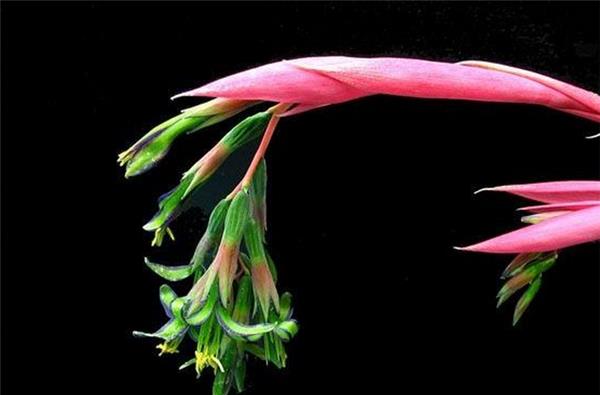
III. Growing a billbergia in a pot
Usually, equal parts of garden soil, leaf mold and river sand mixed with a small amount of base fertilizer are prepared as the growing medium, or bitter medicine, sugarcane roots, bark chunks and the like can also be used as potting substrate. It is an epiphytic plant with few roots, so when potting, the pot should not be large or deep; it only needs to fit the plant with some space around it. March to October is its main growing period, and you must ensure it receives sufficient water and relatively high air humidity, but the potting soil must not be overly wet.
Besides watering to keep the soil moist, you can also pour water into the central cup of the plant, or spray water around the plant to maintain relatively high air humidity; at the same time, wipe the leaf surface with a soft cloth to keep the leaves clean and shiny. It does not have high fertilizer requirements; generally, apply liquid fertilizer 1-2 times a month during the vigorous growing period. When fertilizing, not only should the liquid fertilizer be applied to the potting soil, but foliar spraying should also be done, and the liquid fertilizer should be poured into the center of the leaf rosette (because its center has a stronger absorption capacity).
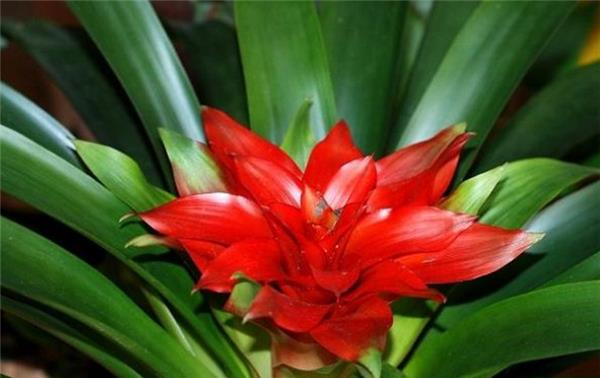
That is roughly all the billbergia information. I believe that through the introduction of billbergia growing methods and pictures, you have gained some understanding of how to grow a billbergia. There is another trick to growing a billbergia well: always keep water in the leaf cup. If the potting soil is moist, the plant grows well; if the leaf cup lacks water, the plant easily wilts.