How to grow a Crinum lily properly? Detailed guide to cultivation methods
The Crinum lily's flowers and leaves are beautiful and lovely, its flowers are fragrant, and its fruit is nearly spherical. The Crinum lily is very suitable for accenting halls, gardens and other places, and is very commonly seen in formal meeting rooms, luxurious hotels and similar places. So how do you grow a Crinum lily? Below is an introduction to the cultivation methods for the Crinum lily.
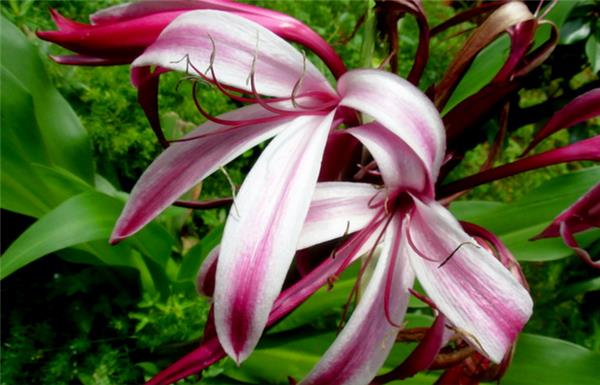
I. Cultivation methods for the Crinum lily
1. Temperature: The Crinum lily likes warmth, and its optimum growing temperature is 22-28°C; it is not cold-tolerant. In winter, the ambient temperature should be kept above 5°C during cultivation. The Crinum lily is tolerant of high temperatures; high temperatures not only do not affect the growth of the Crinum lily, but also favour flower bud differentiation.
2. Light: The Crinum lily likes a semi-shaded environment and avoids direct strong sunlight. Scorching sun exposure will scorch the leaves of the Crinum lily, making the leaves turn yellow and dry up, affecting the growth and ornamental value of the Crinum lily. From May to September, the Crinum lily should be shaded, but it must not be too shady either, otherwise it will affect the growth and flowering of the Crinum lily, and in severe cases will cause the Crinum lily not to bloom; in addition, if the growing environment of the Crinum lily is too shady, the leaves of the Crinum lily will become longer, and the leaf surfaces of variegated Crinum lily varieties will fade and turn green, which detracts from their ornamental value.
3. Watering: The Crinum lily likes a humid environment, is slightly tolerant of moisture, and is not tolerant of drought. During the growing period, water promptly when the potting soil is dry, keeping the potting soil moist. If the potting soil is too dry, especially if it is too dry before and after flowering and during the flowering period, it will have an adverse effect on flowering. But it dislikes excessive moisture and waterlogging, otherwise the root system will rot. In winter, watering should be moderated, keeping the potting soil in a relatively dry state, to help the plant overwinter safely.
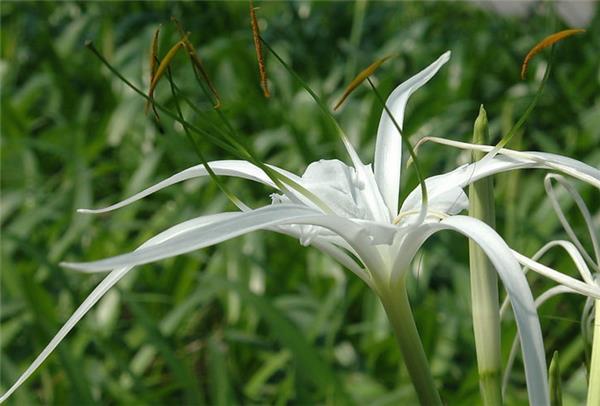
II. Points to note when cultivating the Crinum lily
1. Use a large pot and plant deeply: In order to satisfy all the nutrients the Crinum lily needs during its growing period, when cultivating it we should choose a large flower pot and plant it deeply, so as to retain water and soil for it and provide for its root development.
2. Water and fertiliser management: When the Crinum lily is in its normal growing period, generally from May to September, it can be watered an appropriate amount every day, and the principle of watering when dry and letting it dry between waterings should be followed. Of course, every 7 to 10 days it can also be given a fertiliser solution made by fermenting oil cake residue with black vitriol (ferrous sulfate); its concentration should also go from weak to strong first, and fertilisation should stop when winter sets in.
3. Remove adventitious buds: When the Crinum lily is in its peak growing period, adventitious buds always tend to grow frequently around its rhizome. In order to ensure its upright plant shape and neat rhizome, so that the whole plant grows normally, the adventitious buds should be removed promptly.
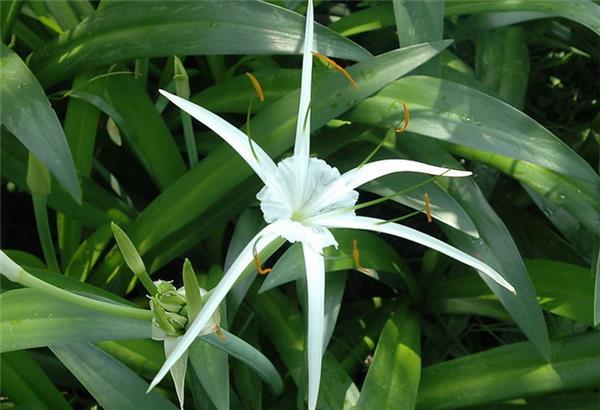
III. Solving leaf spot disease in the Crinum lily
[Symptoms] The pathogen occurs on the leaves. The spots are initially small brown spots surrounded by a faded halo, expanding to become round, oval or irregular, with dark brown edges and a yellow-white to grey-brown centre; in the later stage black granular bodies appear in the spots, namely the pathogen's pycnidia. When the disease is severe, the spots often merge into one patch, and the leaves wilt, dry up and die.
[Disease pattern] The pathogen overwinters on the diseased plant debris. The following spring, as the warmth rises, the pycnidia germinate and begin to infect. Infection generally mostly enters through wounds. Weak plant growth, excessively high temperature, high humidity and poor ventilation favour the occurrence of the disease.
1. Strengthen cultivation management, remove diseased debris, apply more phosphorus and potassium fertiliser, pay attention to reasonable watering, avoid dampness, and in greenhouses pay attention to ventilation and light transmission, prompting the plant to grow robustly and improving disease resistance.
2. In the early stage of the disease, spray 75% chlorothalonil 500x solution, or 75% mancozeb 500x solution; after storage in the cellar, spray 0.5% Bordeaux mixture or 50% carbendazim 1000x solution.
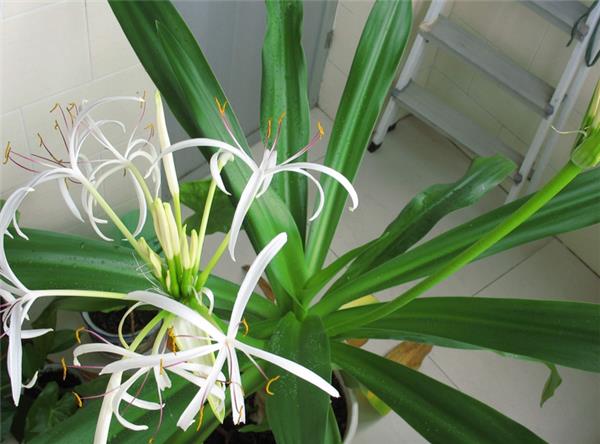
Summary: After this introduction to the cultivation methods for the Crinum lily, you should have gained some understanding of how to grow a Crinum lily, so next, why not try it yourself and see whether you can grow a beautiful Crinum lily?