How to Grow Aspidistra? Detailed Guide to Care Methods and Precautions
Green plants play a fairly important role in our home life. They not only serve as good decoration but also help us purify the air and absorb toxic gases. But do you know how to grow Aspidistra? Here we introduce the care methods and precautions for Aspidistra, as well as Aspidistra pictures, hoping to help everyone understand Aspidistra better.
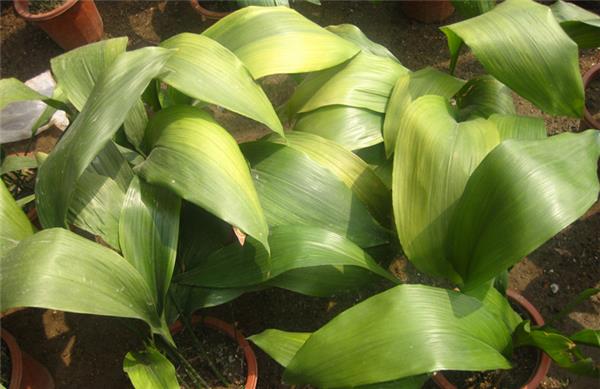
I. Aspidistra Care Methods
1. Ventilation: Indoor stuffiness and poor ventilation can easily cause damage from pests such as red spider mites, scale insects, aphids, and whiteflies. Especially in summer, when high temperatures and humidity combine with poor ventilation, it can also lead to powdery mildew, brown spot disease, and rot. Therefore, in summer the plant should be placed under a well-ventilated shade frame for care. When caring for it indoors in winter, on clear days the windows should be opened at noon for ventilation and air exchange.
2. Fertilizing: For plants grown for green foliage, nitrogen fertilizer should be the main type, with a nitrogen, phosphorus, and potassium ratio of 3:1:1; for foliage plants whose leaves have markings or variegated spots, nitrogen fertilizer must not be excessive, otherwise the colored parts of the leaves will decrease, and the nitrogen, phosphorus, and potassium fertilization ratio should preferably be 1:1.5:1.5. In terms of application amount, "rather less than more" - excessive fertilization can easily "burn the roots," causing the plant's leaves to turn yellow or wilt and die. Generally, applying 1-2 times of dilute fertilizer solution during the growing season is sufficient. During the dormant period, fertilization should be stopped and only clear water given. Fertilizing should preferably be done on clear evenings; before fertilizing, the potting soil should be somewhat dry, and it is best to loosen the soil once. On the morning of the second day after fertilizing, water again with clear water to prevent the effective components in the fertilizer solution from accumulating on the surface of the potting soil without seeping down with the water. When watering with liquid fertilizer, also be careful not to splash fertilizer droplets onto the leaves, so as not to contaminate the leaf surface.
II. Precautions for Growing Aspidistra
1. During the growing season, Aspidistra should be watered thoroughly to keep the potting soil consistently moist, and the leaves should also be sprayed with water frequently to increase humidity, so as to encourage budding and the growth of new leaves; after late autumn, the amount of watering can be appropriately reduced.
2. During the vigorous growth period in spring and summer, apply liquid fertilizer 1-2 times per month to ensure the leaves remain fresh and bright. It can be grown year-round in a bright indoor space, but whether indoors or outdoors, it must not be placed in direct sunlight; even short periods of direct sun exposure can cause leaf scorch and reduce its ornamental value.
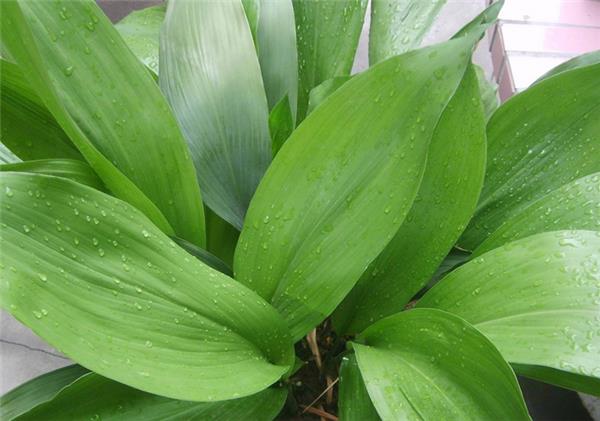
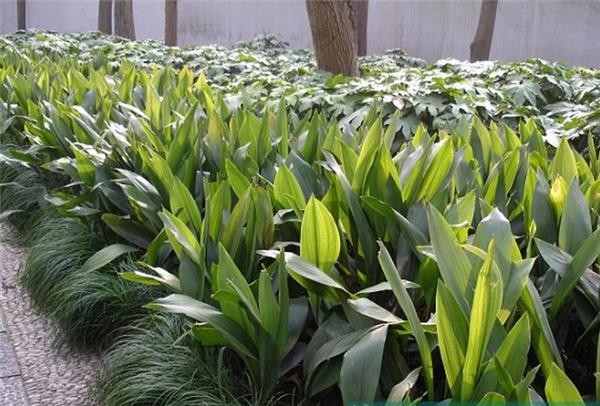
Aspidistra has upright, neat leaf shapes and deep green, glossy leaf color, with an elegant, understated yet graceful posture; at the same time, it grows vigorously, has strong adaptability, and is extremely shade-tolerant, making it an excellent shade-loving foliage plant for indoor greening and decoration. It is suitable for placement in homes and offices. It can be enjoyed on its own; it can also be arranged together with other flowering plants to set off the brightness and beauty of other flowers. In addition, Aspidistra is also an excellent foliage material for modern flower arranging.
III. What to Do If Aspidistra Leaves Turn Yellow
1. Too much watering
Overwatering is one of the important reasons for yellowing leaves in Aspidistra. Aspidistra prefers a warm, humid, semi-shaded environment. During the growing season it needs thorough watering to keep the potting soil consistently moist, and the leaves should also be sprayed with water frequently to increase humidity, so as to encourage budding and the growth of new leaves. However, too much watering affects root respiration and thus causes the leaves to turn yellow.
Solution: Water Aspidistra according to the principle of "water when dry, stop when wet." Do not overwater, but do not underwater either. During the growing period it needs sufficient water to keep the potting soil moist, while after autumn the amount of watering can be appropriately reduced.
2. Insufficient light
Aspidistra is extremely shade-tolerant; even in a dark room it can remain ornamental for several months. However, being in too dark a place for a long time is not conducive to the budding and growth of new leaves in Aspidistra. When kept in a dark place with too little light for a long time, the leaves of Aspidistra will turn yellow.
Solution: If Aspidistra is placed in a dark room, it is best to move it at intervals to a place with bright light for a period of care, to benefit its growth and ornamental value. Especially during the period from new leaf budding to the new leaves reaching maturity, it must not be placed in too dark a spot.