How to plant lily of the valley? Learn the correct planting method
Different plants have different cultivation methods, which can be seen especially in the details. Many plants have different requirements for light, water and soil, and lily of the valley is the same. Next, let us take a look at how to plant lily of the valley, and also enjoy some beautiful pictures of lily of the valley!
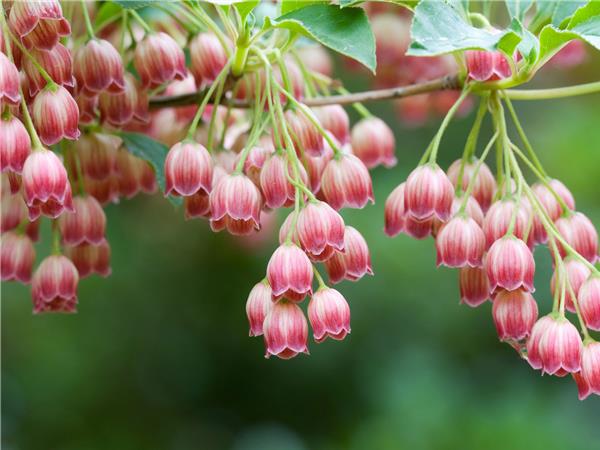
How to plant lily of the valley
It is propagated by dividing the rhizome and the small bulbs at the ends of the rhizome. Both spring and autumn are suitable, and November is best. There are buds of different sizes on the rhizome. After the above-ground part withers in autumn, dig up the rhizome, cut off each terminal bud with a section of rhizome and plant it, and it will become a new plant.
The plump buds will bloom in the spring of the following year after division, while the smaller ones need to wait 1 year before blooming. In autumn, wash the seeds out of the red-ripe berries and sow them directly in an open seedbed; they will sprout in the spring of the next year.
Lily of the valley is a plant that likes a semi-shaded, moist and cool environment, is resistant to cold, and dislikes heat. As long as there is suitable shady conditions, it will multiply rapidly by spreading rhizomes. Shade and moist, fertile soil are important conditions for successful planting. Soil containing humus and sandy soil is ideal; this kind of soil is both fertile and well-drained.
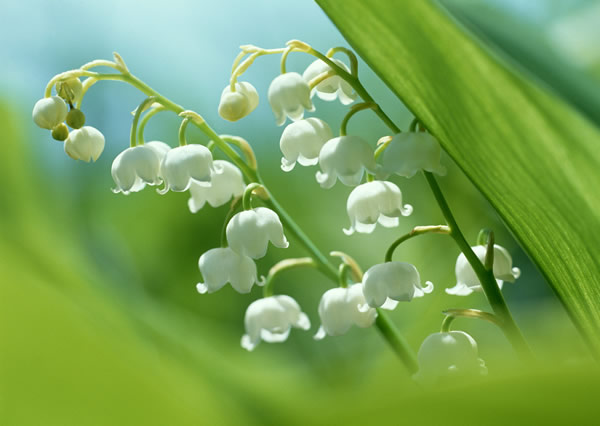
The rhizomes or sprouts are often cut into sections in spring and autumn, planted separately, and propagated by division. The planting site is best with deeply plowed, fertile soil. After 3 to 4 years, change to another plot and replant, or rotate with other flowers.
During the growing period, the soil around lily of the valley should often be kept loose and moist. Apply fully fermented topdressing once each in early spring and late autumn. After 10 to 15 days, gradually move it toward the light, raise the room temperature to 20°C, keep the bottom temperature at 22°C, and increase watering and topdressing; after 3 weeks it can bloom.
When planting, cover with more than 5 cm of soil, and water thoroughly after planting. After sprouting in spring, apply topdressing once every 15 days, and pay attention to watering in dry weather. After the flower stems are drawn, stop fertilizing; after the flowers fade, cut off the flower stalks promptly, then apply topdressing 1 to 2 more times. After the above-ground part withers in late autumn, cover with leaf mold and cow dung to protect the rhizome and its dormant buds for overwintering in the open field.
Cultivation
(1) Open-field cultivation
In early spring, remove the covering from the new sprouts and loosen the soil. During the growing period, supplement water appropriately and fertilize once every half month, mostly with dilute cake fertilizer water or compound liquid fertilizer. After fertilizing, remove weeds. After the flowers fade, in order to promote rhizome growth, apply an appropriate amount of fertilizer again to ensure the growth of dormant buds.
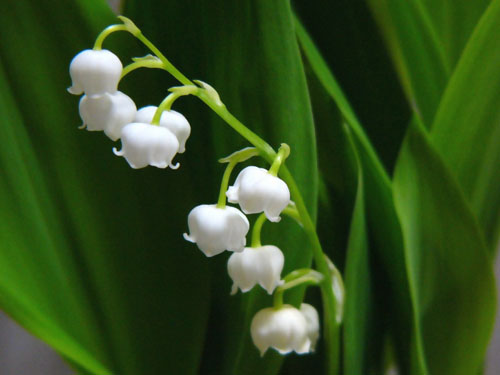
(2) Forcing cultivation
The specific method of forcing cultivation is to cut off the rhizome and place it indoors; after about 2 weeks, carry out forcing cultivation. If the flowers are watered appropriately and then placed in a dark place, kept at low temperature, and moved into sunlight after half a month, they can bloom earlier.
The flower language of lily of the valley
In France, lily of the valley is a symbol of purity and happiness. Every year on May 1, French people give each other lily of the valley to wish each other a year of happiness. The recipient usually hangs the flowers in a room to keep for the whole year, symbolizing that happiness stays forever.
As with the sorrowful legend of the birth of lily of the valley, the happiness of lily of the valley comes especially hard, and is accompanied by a faint sorrow of fate. The waiting of lily of the valley is like the faint sigh of stars in the wind, vast and serene, sensed only by those who care; the temperament of lily of the valley is as pure and translucent as the faithful and gentle belief in love of a woman in the wind, which can be tasted only with focused attention.
If you cannot catch the faint fragrance of lily of the valley, light as the sigh of stars, from the night wind, how can you follow the scent to the valley where lily of the valley blooms? If you do not guard it with all your heart, how can you happen to reach it just at the time of lily of the valley? The waiting of lily of the valley is only for the most attentive person, and the music of lily of the valley lightly tapped by the wind is heard only by those who love
it most. In order to obtain true love, lily of the valley waits in the lonely valley for its own spring to come... Lily of the valley blooms only with the spring breeze of May, and its flower language is the return of happiness.
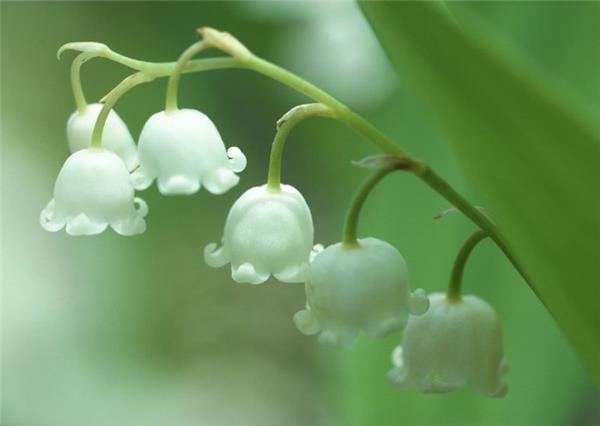
Is lily of the valley poisonous?
All parts of lily of the valley are poisonous, especially the leaves, and even the water in which the fresh flowers are kept can be poisonous. After poisoning, the face becomes flushed, with tension and irritability, headache, hallucinations, erythema, dilated pupils, vomiting, stomach pain, nausea, slowed heartbeat, heart failure, coma, and in severe cases it can even cause death. After poisoning, symptoms appear immediately, and the person should be sent to the hospital for treatment promptly.