What are the benefits of Peperomia? A detailed explanation of its main effects and uses
Green plants play a relatively important role in our home decor. They can not only decorate the home and add vitality to it, but also help us absorb toxic gases and purify the air. So what are the benefits of Peperomia? Today we will learn about them, enjoying pictures of Peperomia while we do.
I. Benefits of Peperomia
Decorative effect
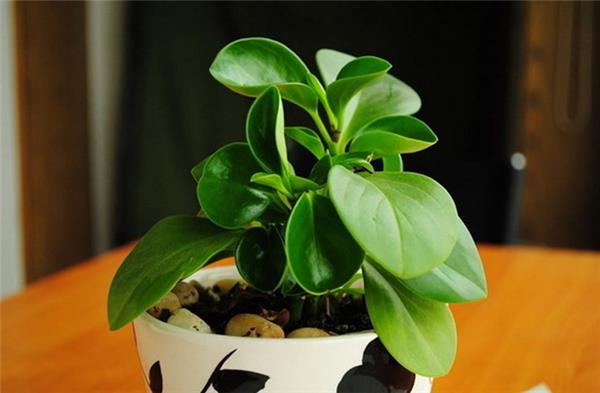
Placing Peperomia indoors can decorate the home and is very fresh and natural. The Peperomia plant is small and lovely, suitable as a small potted plant. Growing Peperomia in a white plastic pot or white porcelain pot, with emerald green leaves and a white flower pot, is very elegant and delicate. Placed on a coffee table, decorative cabinet, curio shelf, or office desk, it is very beautiful; or let the branches spread and hang down, suspended in front of an indoor window or in the bathroom, and it is also very pleasing to the eye.
Purifying the air
Peperomia can purify harmful gases in the air such as formaldehyde, xylene, and secondhand smoke, and can also absorb electromagnetic radiation produced by computers and mobile phones, playing a certain positive role in protecting the safety of the home air environment. Keeping a pot of green plants indoors can also rest the eyes and reduce eye fatigue.
Medicinal value
Peperomia can be used medicinally. According to traditional Chinese medicine principles, Peperomia taken internally can dispel wind and remove dampness, relieve cough and eliminate phlegm, and is used for rheumatic muscle and bone pain, pulmonary tuberculosis, bronchitis, asthma, whooping cough, pulmonary abscess, infantile malnutrition, and dysmenorrhea. For external use, it can treat bruises and fractures, so Peperomia is an important part of Chinese herbal medicine.
II. How to grow Peperomia
Peperomia grows in loose, fertile, well-drained sandy soil and is not suitable for growing in clay. The usual mixing medium for Peperomia is leaf mold, river sand, and a small amount of decomposed organic fertilizer mixed together. Peperomia likes semi-shade. Apart from needing sufficient light in winter, it needs a little shading in other seasons. It is suitable for growing in offices, where the light from incandescent lamps is just right. If placed in a shaded environment, it tends to grow leggy, with longer internodes, reducing its ornamental value. The suitable growth temperature for Peperomia is between 20-30°C. In winter, the temperature is best kept above 10°C; below 10°C it will stop growing.
Peperomia grows luxuriantly in high-humidity environments, with brightly colored leaves. When the temperature is high, increase leaf spraying or sprinkle water in the growing environment to maintain relatively high air humidity, which is extremely beneficial to plant growth. Peperomia can also adapt to short periods of dry environment, but not for long. When the temperature is above 18°C, a small amount of fertilizer is needed. When the temperature is below 18°C or above 30°C, it is best to apply less fertilizer. Fertilization is best done in small amounts and multiple times. The fertilizers are mainly nitrogen fertilizer and potassium fertilizer, with phosphorus fertilizer secondary. Irrigating with diluted fertilizer solution instead of clear water is best. It is not tolerant of raw fertilizer or concentrated fertilizer, and fertilizer damage is very easy to cause. Fertilizer solution can also be sprayed on the leaves for fertilization, with good results.
III. Care of Peperomia
Fertilization: When the temperature is above 18°C, a small amount of fertilizer is needed. When the temperature is below 18°C or above 30°C, it is best to apply less or no fertilizer. Fertilization is best done in small amounts and multiple times. Irrigating with diluted fertilizer solution instead of clear water is best. It is not tolerant of raw fertilizer or concentrated fertilizer, and fertilizer damage is very easy to cause. Fertilizer solution can also be sprayed on the leaves for fertilization, with good results. The fertilizers are mainly nitrogen fertilizer and potassium fertilizer, with phosphorus fertilizer secondary.
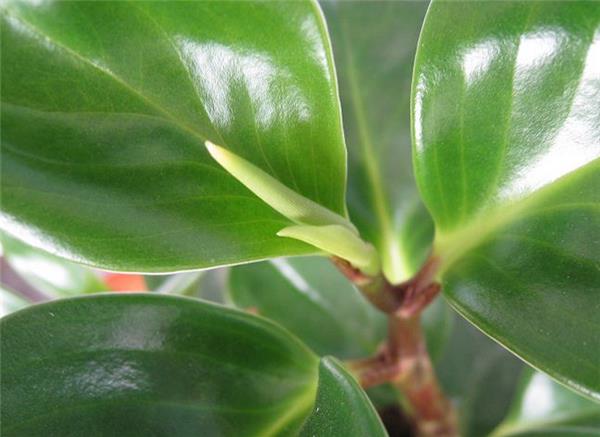
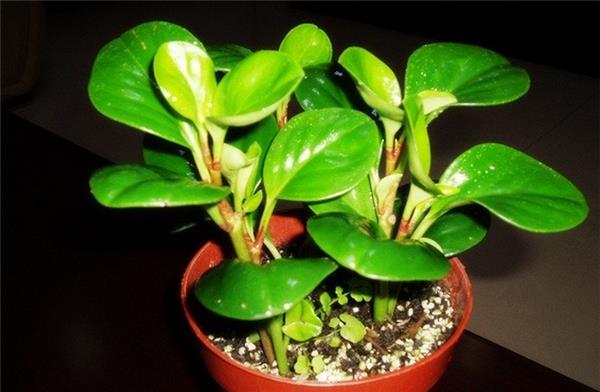
Pruning and propagation: For newly propagated young seedlings, when the seedling height is about 10 cm, pinch off the growing tips to increase the number of branches; this makes the plant shape fuller and its ornamental value higher. For large plants, pruning is generally based on growth conditions. Cutting back leggy branches can provide cuttings material. They root easily and can be inserted in clean river sand or vermiculite, or directly inserted into sandy soil. Propagation can also be done by leaf cuttings and division. The environmental temperature generally required for propagation is between 20-25°C. For leaf cuttings, a leaf with a petiole is needed, inserted upright or slightly tilted in river sand, with the insertion depth being 1/4-1/3 of the petiole. Keep the medium moist and the air humidity relatively high, and roots and adventitious buds will form in 2-3 weeks. After the small buds grow a little larger, they can be transplanted.
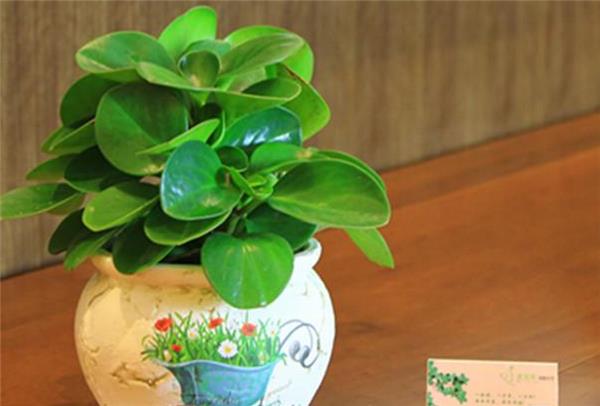
Peperomia leaves are emerald green and glossy, with a naturally charming luster. It is one of the small potted plants used to decorate the home. That is all for the introduction to the benefits of Peperomia, and I hope it is helpful to everyone.