How to grow white lotus sunflowers? Detailed planting methods
The white lotus sunflowers mentioned here are two kinds of flowers, one is Portulaca grandiflora (moss rose) and the other is the large-flowered purslane. I won't go into the differences; gardening enthusiasts usually call both of these white lotus sunflowers. Let me focus on sharing a bit of my experience. How do you grow white lotus sunflowers?
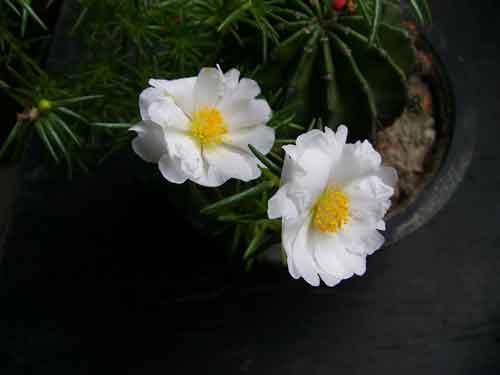
How to grow white lotus sunflowers
Sowing
White lotus sunflower seeds are extremely tiny, about 8400 seeds per gram. They can be sown in spring, summer and autumn. Seedling trays are often used for sowing. After sowing, you can cover with a little bit of soil, or leave them uncovered. The germination temperature is 21-24°C, and seedlings emerge in about 7-10 days. The seedlings are extremely thin and weak, so if a relatively high temperature is maintained, the young seedlings grow very quickly and can form relatively thick, fleshy stems and leaves. At this point the young seedlings can be directly potted, using pots about 10 cm in diameter, planting 2-5 plants per pot, with a high survival rate and rapid growth.
Cuttings
White lotus sunflowers are very easy to propagate from cuttings. In summer, use the cut shoot tips as cuttings; wilted stems can also be used. After rooting, flower buds appear right away. Transplanted plants do not need to be moved with soil, and during the growing period they do not need frequent watering.
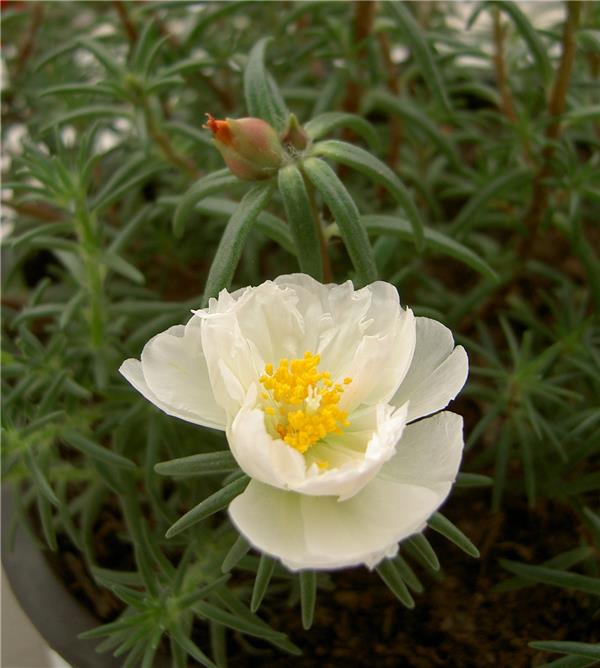
Winter management of white lotus sunflowers: in winter, move the white lotus sunflowers indoors to a spot that receives sunlight and let the potting soil stay on the drier side, and they can overwinter safely. After Qingming the following year, the pots can be placed outside the window. If a cold snap arrives, they still need to be brought back inside for care.
Daily care:
White lotus sunflowers are best kept in a sunny environment. If the light is weak, they will grow leggy, with few flowers or even no flowers. White lotus sunflowers are fairly tolerant of poor soil, so ordinary potting soil is generally suitable. If conditions allow, you can use well-drained sandy soil. Normally, just keep the potting soil at a certain level of moisture. Apply one-thousandth concentration of monopotassium phosphate (or another flowering fertilizer) once every half month, and you can achieve large, vividly colored flowers that bloom continuously.
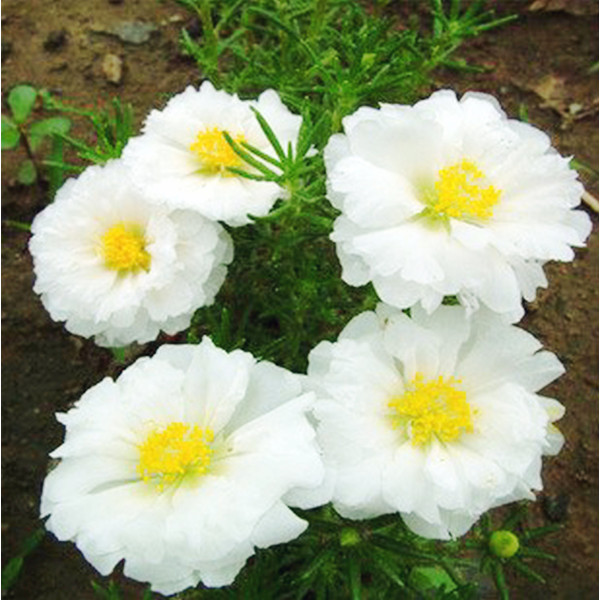
When white lotus sunflowers bloom, they attract many bees to collect nectar, and this is my favorite scene. But there is one problem: after the flowers finish blooming, they set seed. If, like me, you are too lazy to collect seeds, at this point they start blooming less and set seed in large quantities, so you should take decisive action. Either cut a few branches and plant a new pot, and they will rebloom very quickly, which is what I do; or give them a haircut, trim them down to just a few forks, water and fertilize, and they will soon rebloom. Either way, don't throw away the large number of branches left after pruning; they are good stuff. Those without fertilizer can use these for composting, absolutely fast, precise and effective. (Making fertilizer from white lotus sunflowers: find a sealable bottle or jar, lay down a layer of soil, throw the white lotus sunflower branches in, cover with another layer of soil and press it down, water until it is wetter than wet, then seal it and place it in a high-temperature spot in full sun. After some time, black, highly nutritious soil is ready.)
Before white lotus sunflowers bloom, the tender shoot tips they grow are really good stuff. In the past, when rooting some plants was relatively difficult, people would pinch off some tender tips and soak them in water, because these tender tips are full of growth hormones and are very suitable for soaking cuttings to promote rooting. (Those who grow them can give it a try.)
White lotus sunflowers are not afraid of heat; even intense heat won't kill them in the sun. They are not afraid of drought either; let them thirst for one or two weeks, then water them and they recover. Portulaca grandiflora is also not afraid of being waterlogged; three to five days is no problem. But there is one thing they fear most: overwintering, and the cold. If the temperature falls below 10°C, white lotus sunflowers begin to stop growing; below 5°C they will suffer frost damage or freeze to death; above 0°C, if you are lucky, the stems near the roots can still sprout the following year. For overwintering, as everyone knows, water less, move them indoors to a sunny, wind-sheltered spot, ideally inside a south-facing window. Where I am it is fine; it rarely drops below 5°C, so overwintering outdoors is basically no problem, but occasionally they do freeze to death.
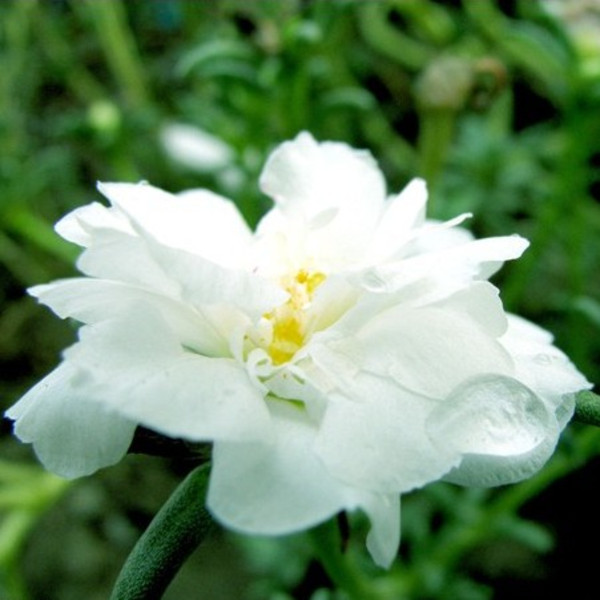
How to care for white lotus sunflowers
Although white lotus sunflowers have very strong vitality, you still need to pay attention to some methods during cultivation.
Soil: White lotus sunflowers have almost no requirements for soil and can grow in almost any soil. However, the most suitable and cheapest soil for white lotus sunflowers is sandy soil with good drainage. You can mix mature soil, yellow sand and rice husk ash in a 3:5:2 ratio, then add calcium superphosphate powder and mix it in.
Light: Light is the most basic condition for the growth of white lotus sunflowers. No matter how excellent the other environmental conditions are, without light they will never be able to bloom. Therefore, during the growing period of white lotus sunflowers, sufficient light must be maintained.
Pests and diseases: White lotus sunflowers rarely suffer from pests and diseases, but they are often harmed by aphids, almond sawflies and globose scale insects. The methods for preventing and controlling these pests are also relatively simple. Before germination, spray generously with a 4000-5000 times dilution of imidacloprid. After germination, use a 4000-5000 times dilution of imidacloprid plus a 2000-3000 times dilution of cypermethrin to kill aphids.
Fertilizing: White lotus sunflowers do not need overly frequent fertilizing. Generally, fertilizing once every half month is enough. You can use one-thousandth concentration of monopotassium phosphate as the fertilizer.
No matter how excellent the other environmental conditions are, without light they will never be able to bloom. Therefore, during the growing period of white lotus sunflowers, sufficient light must be maintained.Pests and diseases: White lotus sunflowers rarely suffer from pests and diseases, but they are often harmed by aphids, almond sawflies and globose scale insects. The methods for preventing and controlling these pests are also relatively simple. Before germination, spray generously with a 4000-5000 times dilution of imidacloprid. After germination, use a 4000-5000 times dilution of imidacloprid plus a 2000-3000 times dilution of cypermethrin to kill aphids.
Fertilizing: White lotus sunflowers do not need overly frequent fertilizing. Generally, fertilizing once every half month is enough. You can use one-thousandth concentration of monopotassium phosphate as the fertilizer.