How to grow Elsholtzia (Mosla chinensis)? Read this one article to understand its effects and functions
Elsholtzia is a plant with many effects. It can treat acute gastroenteritis, abdominal pain with vomiting and diarrhea, headache and fever, etc., with good results. Growing Elsholtzia at home requires suitable conditions, and eating Elsholtzia also needs to be paired with other ingredients to be both tasty and effective.
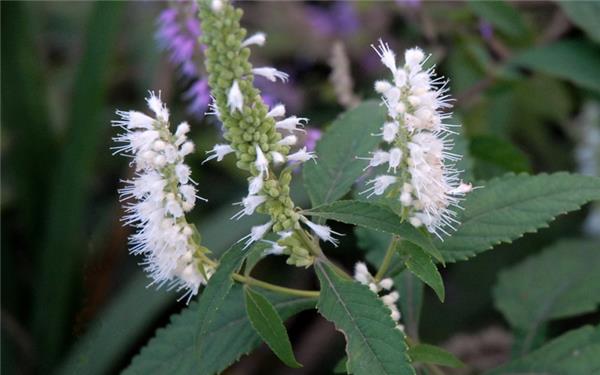
I. Effects and functions of Elsholtzia
Induces sweating and relieves summer heat, harmonizes the middle and resolves dampness, promotes water metabolism and reduces swelling. Mainly for exterior wind-cold in summer; internal damage from dampness; aversion to cold with fever; headache without sweating; epigastric and abdominal pain; vomiting and diarrhea; difficult urination; edema. Used for summer-dampness cold, aversion to cold with fever, headache without sweating, abdominal pain with vomiting and diarrhea, difficult urination.
① Bie Lu: Mainly for cholera, abdominal pain with vomiting and diarrhea, disperses edema.
② Meng Shen: Removes heat wind, sudden cramps, can be decocted into juice and taken at once. Also, the dried powder stops nosebleeds; take it with water.
③ Ri Hua Zi Ben Cao: Descends qi, removes vexing heat, treats vomiting and cold qi.
④ Lu Chan Yan Ben Cao: Cuts off cold damage of the four seasons.
⑤ Ben Cao Yan Yi Bu Yi: Treats summerheat injury, promotes urination.
⑥ Dian Nan Ben Cao: Releases the exterior and eliminates pathogens, treats heatstroke headache, summerheat diarrhea with abdominal and intestinal pain, summerheat-heat cough, induces sweating, warms the stomach, and harmonizes the middle.
⑦ Shi Wu Ben Cao: Boiled and drunk as tea in summer, it can prevent heat diseases, regulates the middle and warms the stomach; holding the juice in the mouth and rinsing removes bad breath.
⑧ Gang Mu: Mainly for beriberi with cold and heat.
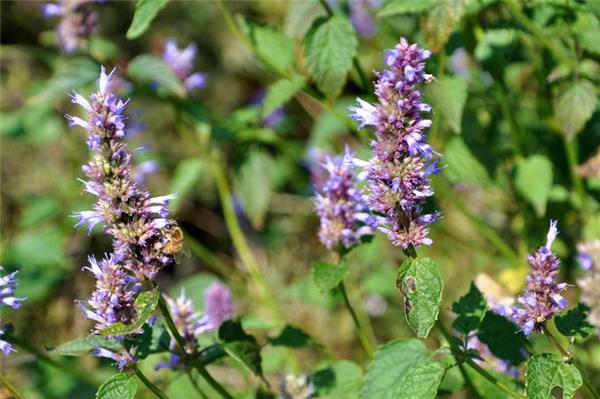
II. How to eat Elsholtzia
① Elsholtzia tea
Ingredients: Elsholtzia 10g, green tea 3g.
Usage: Brew and drink with 200ml boiling water, keep adding water until the taste is weak.
Functions: Induces sweating and relieves summer heat, promotes water metabolism and disperses dampness.
Uses: Heatstroke headache; summerheat diarrhea with abdominal and intestinal pain; summerheat-heat cough; edema; beriberi.
② Elsholtzia drink
Materials: Elsholtzia 10 grams, white hyacinth bean 5 grams, magnolia bark 5 grams, white sugar 20 grams
Method:
Cut the Elsholtzia and magnolia bark into small pieces, fry the white hyacinth bean until yellow and crush it, put them into a thermos cup, brew with boiling water, cover tightly and steep in warm water for 1 [small] health benefit: releases the exterior and clears summerheat, strengthens the spleen and drains dampness. Suitable for preventing and treating summer-dampness cold and air-conditioning disease.
③ Yinchen Xianglu tea
Materials: Artemisia capillaris 25 grams, Elsholtzia 25 grams, reed root 40 grams
Method:
Add water to the Artemisia capillaris, Elsholtzia, and reed root and decoct into a soup, remove the residue and take the liquid. Health benefit: clears heat and moves dampness, promotes urination and reduces jaundice. Suitable for icteric hepatitis.
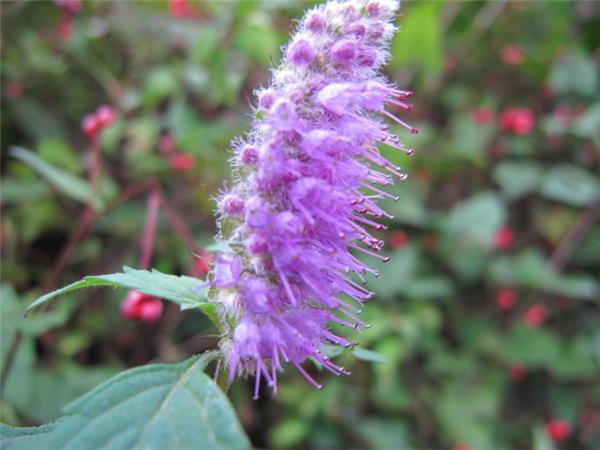 III. Cultivation methods of Elsholtzia
Site selection: Elsholtzia has no strict requirements for soil, and it can be cultivated in general soil, but alkaline soil and sandy soil are not suitable for cultivation. It is afraid of drought, and continuous cropping is not suitable. The previous crop is best as grains, beans, or vegetables. Land preparation: Plow the land 20 cm, apply farmyard manure before plowing, ridge planting with row spacing of 40 cm-50 cm, or make flat beds. Because the seeds are very small, the land must be leveled and harrowed finely.
Sowing: There are two types, direct sowing and seedling transplanting. Suitable sowing methods are drilling or broadcasting. The specific sowing time is determined by the time Elsholtzia goes on the market. For spring sowing, 6 days-8 days before the end of the last frost is best. For balanced market supply, a batch can be sown every 10 days-15 days; for winter market supply, the sowing time should be 80 days-90 days before the first frost period. To achieve full seedling emergence at one time, the soil must be kept at a certain humidity when sowing, the soil covering should be shallow, and it should be compacted.
Field management: Thin the seedlings in time after they emerge evenly, with plant spacing of 2 cm-5 cm; for ridge planting, cultivate and weed in time; for broadcasting and narrow-row drilling, manually pull weeds in time, and chemical herbicides such as prometryn or haloxyfop can also be used to control grass weeds; plots with higher soil fertility may not need topdressing, while those with poor soil fertility should be topdressed once with ammonium nitrate when the seedlings are 15 cm tall. Irrigate appropriately in drought.
Seed harvesting: For seed collection, a seed production field can be set up; or in the production field, select large and robust mother plants, and when the seeds of the upper inflorescences have matured and the lower ones begin to fall to the ground, cut them gently in the morning, place them on plastic to dry for 3 days-5 days, and then thresh. The timing of seed collection is very important. If cut too early, the seeds are not mature; if cut too late, the seeds have all fallen to the ground. Each mu can produce 24 kg of seeds.
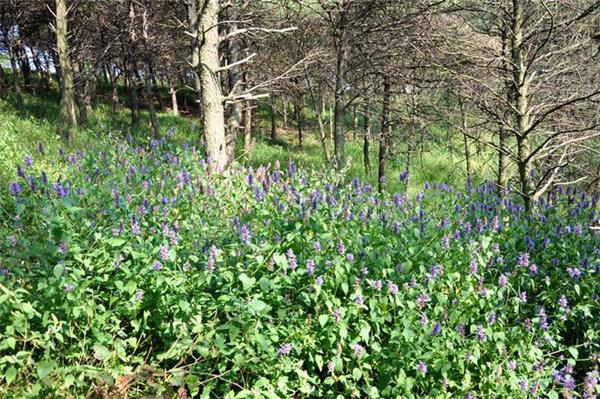
Elsholtzia has many uses. The aboveground part is used as medicine. It can induce sweating and release the exterior, transform dampness and harmonize the middle to relieve summerheat, and also open and diffuse lung qi to promote water metabolism and reduce swelling. Therefore, if people at home have suitable conditions, they can try to learn to grow it through the above introduction.