A complete gallery of money tree pictures to enjoy, and teaching you how to tell money trees apart
The money tree is a tree grown for its leaves and appreciated for its form. Whether kept indoors or grown outside, it is a very good ornamental plant, and the name "money tree" carries great symbolic meaning, so placing one at home also has certain feng shui considerations. As a kind of greenery used as a home accessory, the money tree is not only a fine home decoration, but can also absorb excess carbon dioxide, purify the air, and absorb some of the radiation given off by household appliances, making it a very good indoor plant. Below, let us enjoy a complete gallery of money tree pictures and some information on how to tell money trees apart.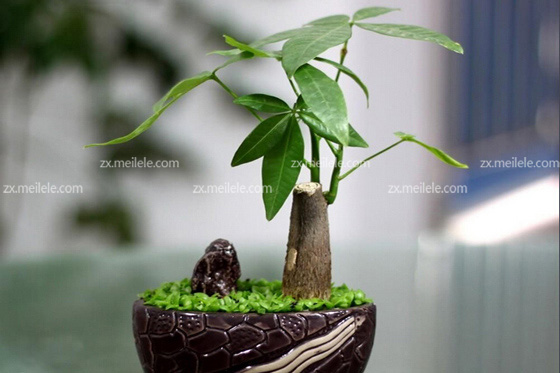
Introduction to the money tree
The money tree is also known as Malabar chestnut, Guava chestnut, Central American kapok, and goose-palm money, and is an evergreen small tree in the kapok family. It is a perennial evergreen shrub that prefers a warm, humid environment with full sun or slight shade. The money tree is a fairly common potted plant; it can be sown when temperatures are above 20 degrees, and its germination rate is very high. Compared with bought cuttings grown in pots, you can sow money trees yourself.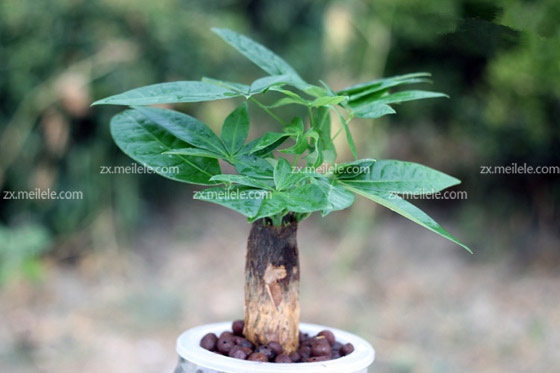
Botanical features of the money tree
The money tree is an evergreen shrub or small tree in the kapok family, genus Pachira. Its plant reaches 8-15 cm in height, with an upright stem. The leaves are large and alternate, with long stalks, palmately compound, with 5-7 leaflets that are oblong to obovate. Its leaflets are 12-15 cm long and about 6 cm wide. The flowers of the money tree are fairly large, with a flower diameter of up to 22.5 cm, with lobed petals in red, white, or pale yellow, and are brightly colored. Because its tree form and leaf shape are unusual, its common name is auspicious, taking the omen of good fortune.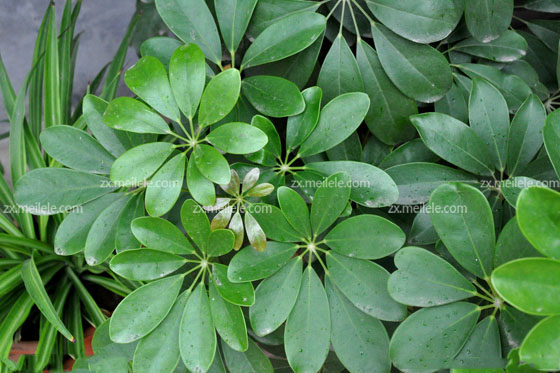
Growth habits of the money tree
The money tree is a perennial evergreen shrub that prefers a warm, humid, or partly shaded environment. Its ideal growing temperature is 20-30°C. In summer, when it is hot and humid, growth is very favorable, and this is also the season when the money tree grows fastest. In winter, its temperature should preferably not fall below 5°C, and is best kept at 18-20°C. It dislikes cold and damp conditions; in a humid environment, the leaves easily develop sunken, ulcer-like frost spots, which spoils their ornamental value. The money tree is suited to a warm, humid, well-ventilated environment; it likes sun and also tolerates slight shade, and grows best in loose, fertile, well-drained soil.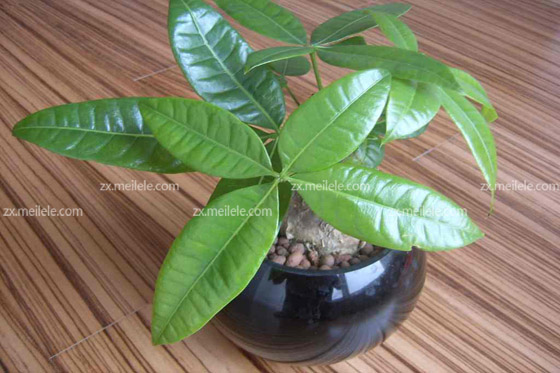
How to tell money trees apart
As for the money tree, there are currently three varieties, and each variety has different characteristics, so they are still fairly easy to tell apart.
1. Taiwan money tree: The Chinese name of this money tree is Malabar chestnut. It originated in Mexico and is widely grown in Taiwan, China; most of the plants cultivated in mainland China are introduced from Taiwan, China. The bark of the Taiwan money tree is green, and the base of the trunk is often swollen. It has palmately compound leaves with 5-9 oblong to narrowly obovate leaflets, leathery and glossy. The cup-shaped flowers are greenish white to yellowish white, rarely pale red. The capsule is 10-30 cm long, with brown spherical seeds 1-2 cm in diameter.
2. Large-leaf money tree: Its original name is Queensland umbrella tree. Its plant reaches 30-40 m tall, with an upright stem, smooth trunk, and few branches. The young shoots are green at first, then turn brown, smooth, and gradually become woody. The leaves are palmately compound, and the number of leaflets varies with the age of the tree: 3-5 when the leaves are young, 9-12 when grown, and up to 16 when it becomes tree-like.
3. The money beauty tree is the Schefflera: It is a species in the angiosperm family Araliaceae, an evergreen shrub. It has many branches and compact stems. The palmately compound leaves have 5-8 leaflets, long ovate, leathery, dark green, and glossy. The inflorescence is paniculate, with small pale red flowers and dark red berries.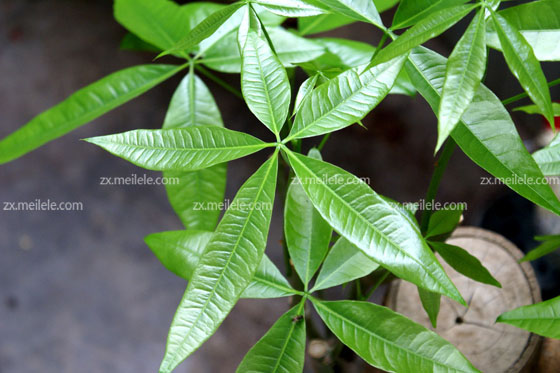
Summary: The above is the editor's introduction to money tree pictures and how to tell money trees apart. After reading the editor's introduction, I believe everyone has a better understanding of the money tree. In fact, the money tree is one of the best plants for home decor; it not only plays a certain role in home feng shui, but can also purify the indoor air to some extent. After reading the editor's introduction, I believe everyone has a better understanding of the money tree. In fact, the money tree is one of the best plants for home decor; it not only plays a certain role in home feng shui, but can also purify the indoor air to some extent.