How to Grow Hyacinths: Cultivation Methods and Daily Care Tips
Hyacinth, also known as Dutch hyacinth or five-color narcissus, is a perennial herbaceous plant of the genus Hyacinthus in the Liliaceae family. The hyacinth's seed is an underground bulb, and its leaves are thick and lance-shaped. When it blooms, the inflorescence is terminal, with a 6-lobed corolla that curls backward. Commonly cultivated varieties come in red, yellow, blue, white and purple, and they are fragrant. Because of the hyacinth's beautiful flowers, many people enjoy growing it. But in the process of growing hyacinths, people run into many problems. Below, let's learn about how to grow hyacinths and what daily care tips to keep in mind.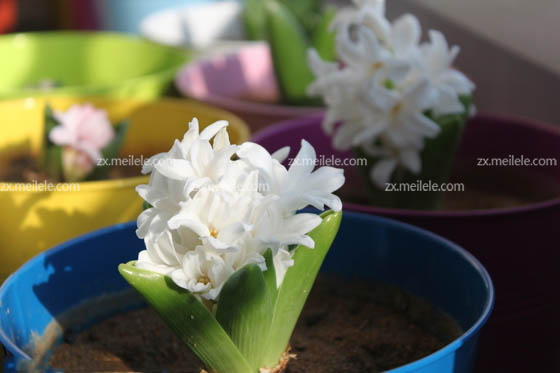
Hyacinth Cultivation Methods: Soil Culture
1. Bulb Disinfection
When planting hyacinths, you must first disinfect and sterilize the bulbs to prevent the bulbs from rotting. The method is: remove the dried outer skin and old roots of the bulb, then soak it for two hours in a pre-prepared potassium permanganate solution for disinfection. After soaking, take it out and let it dry in the shade for later use.
2. Planting
Because the flower buds of the hyacinth bulb have already differentiated and formed, no base fertilizer is needed when planting. Simply plant the bulb directly in the potting soil, with the soil level covering the highest point of the bulb by about two cm.
3. Early-Stage Care
After planting the hyacinth, it can be placed in an environment with a temperature no higher than 10 for root promotion and sprouting. Its sprouting time is generally about 20-30 days. During the sprouting period, watering must follow the principle of watering thoroughly only after the soil has dried out; do not water it arbitrarily.
4. Later-Stage Care
After the hyacinth bulb sprouts, you can appropriately raise the growing temperature of the environment to shorten the time needed for it to bloom. It can be kept at around 15-20°C, which is the best temperature for its growth. If the temperature is below 10°C, its growth will be rather slow; if it is above 25°C, it is likely to fail to bloom.
5. Care During the Flowering Period
The flowering period of the hyacinth is about half a month, and sometimes temperature affects it and causes the flowering period to change; if the temperature is relatively low, the flowering period will be extended. After the hyacinth blooms, it can be moved indoors for growing, and it is enough to give it appropriate light every day.
6. Handling After the Flowers Fade
After the hyacinth flowers fade, you can remove the spent flowers to build up the bulb. In daily management, apply a nitrogen fertilizer about once every two weeks to promote the development of the bulb in the soil. How well the hyacinth bulb is maintained directly affects whether it will bloom again the following year. So after summer arrives, its leaves will gradually turn yellow and wither naturally. At this time, reduce the amount of water given; once the bulb enters dormancy, stop watering and place it in a cool place. Wait until the following year to grow it again.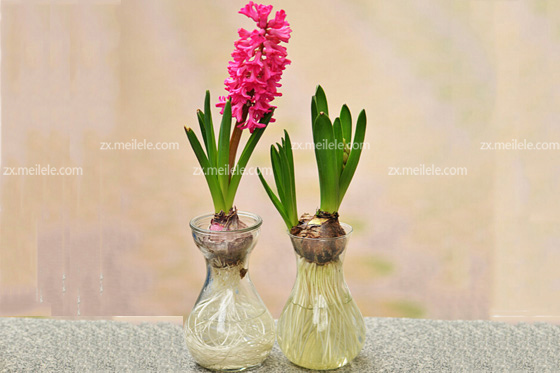
Hyacinth Cultivation Methods: Water Culture
1. First clean the hyacinth bulb, pour clean water into a vase, then place the bulb so that the water surface is 2-5 mm from the bulb's basal plate. As its root system grows, the water level will gradually drop, which encourages its roots to grow neatly downward.
2. The rooting temperature for water-cultured hyacinths is around 9°C, so during the rooting period, place the hyacinth in a dark environment, or wrap the vase with dark-colored paper or cloth to keep out light, to benefit its root growth. At the same time, place the vase in a cool, ventilated place.
3. When the hyacinth's flower buds grow to 5-8 cm, the vase can be placed in a warm environment, with the temperature preferably at 15-21°C.
4. When growing hyacinths in water, it is best to change the water once a week. When changing the water, just pull the hyacinth bulb a small part of the way out of the water-culture vase, and be sure to avoid breaking the roots.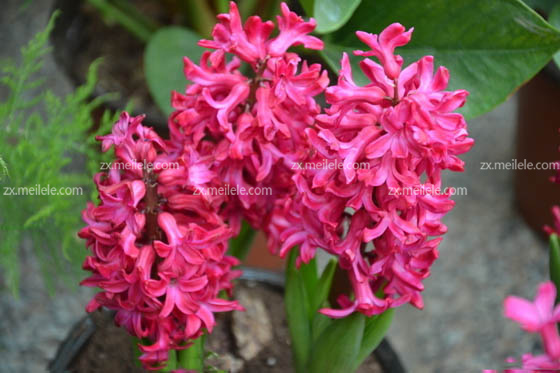
Daily Care Tips for Hyacinths
1. If the hyacinth is grown in water, then the water used to grow it should be changed once a week. If a water-culture nutrient solution is used, replace the nutrient solution every 15-20 days depending on how cloudy it becomes. In any case, keep the water in the vase clean.
2. When the hyacinth bulb is sprouting, it must not be placed in a place exposed to sunlight. After sprouting, it should be placed in bright light with good air circulation to benefit its growth.
3. If the hyacinth is grown in soil, during the planting process be sure to water only after the soil has dried out, to avoid excess moisture causing the bulb to rot.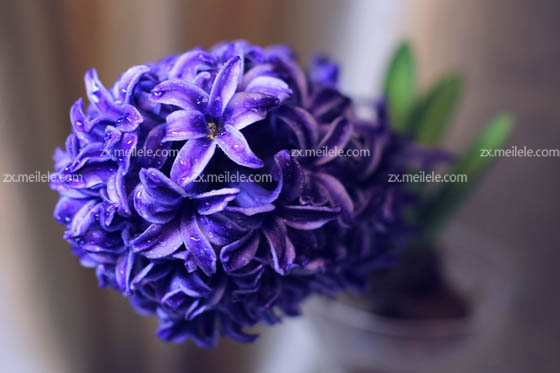
Summary: The hyacinth plant is short and neat, with stately inflorescences, rich flower colors and beautiful blooms. It is one of the famous bulbous flowers that bloom in early spring and one of the plants with great ornamental value. However, the hyacinth bulb is toxic; if eaten by mistake, it can cause symptoms such as dizziness, stomach cramps and diarrhea, so everyone should be careful when planting it. That is all the introduction the editor has brought you above. After reading it, I believe everyone has a better understanding of how to grow hyacinths.
Summary: The hyacinth plant is short and neat, with stately inflorescences, rich flower colors and beautiful blooms. It is one of the famous bulbous flowers that bloom in early spring and one of the plants with great ornamental value. However, the hyacinth bulb is toxic; if eaten by mistake, it can cause symptoms such as dizziness, stomach cramps and diarrhea, so everyone should be careful when planting it. That is all the introduction the editor has brought you above. After reading it, I believe everyone has a better understanding of how to grow hyacinths.