Ivy Picture Gallery and Detailed Guide to Growing It
Ivy is currently the top choice as a vertical greening plant in landscaping. Because of its beautiful leaves and evergreen foliage through all four seasons, planting it beside rockeries or at the base of walls and letting it naturally attach and grow vertically or as ground cover can create a great decorative and beautifying effect on the environment. Today, let us all take a look at how to grow ivy and what it looks like in pictures.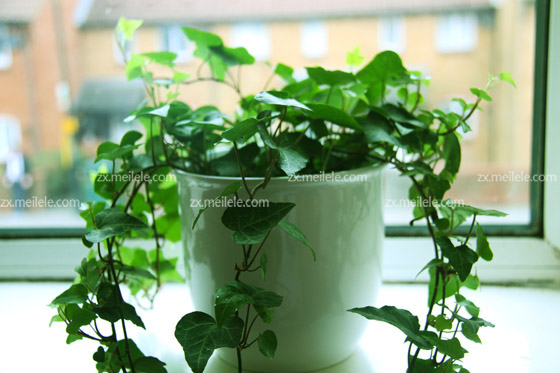
Introduction to Ivy
Ivy is also known by names such as Tugu Teng, Zuantian Feng, Sanjiao Feng, Sangu Feng, and Fenghe Li Teng. It is a perennial evergreen climbing shrub of the genus Hedera in the family Araliaceae, with aerial roots, grayish-brown or blackish-brown smooth stems, and alternate simple leaves; the petioles have no stipules but have scales; the leaves on flowering branches are elliptic-lanceolate, the umbels are solitary and terminal, the flowers are pale yellowish-white or pale greenish-white, the anthers are purple; the floral disc is raised and yellow. The fruit is spherical, red or yellow, the flowering period is September to November, and the fruiting period is March to May of the following year.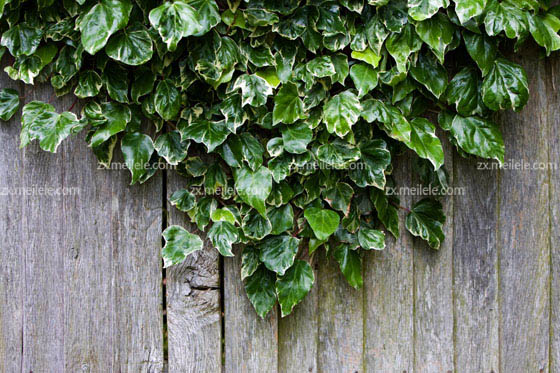
Introduction to the Growing Environment of Ivy
Ivy is a shade-loving vine, but it can also grow in full-light conditions. It grows very well under warm and humid climate conditions, and it is not cold-tolerant. It is not strict about the soil it is planted in, and it prefers moist, loose, and fertile soil, but it is not tolerant of saline-alkali soil. Generally, ivy often climbs on trees at forest edges, beside paths under the forest, rocks, and house walls. In modern plant cultivation, ivy can also be grown in courtyards.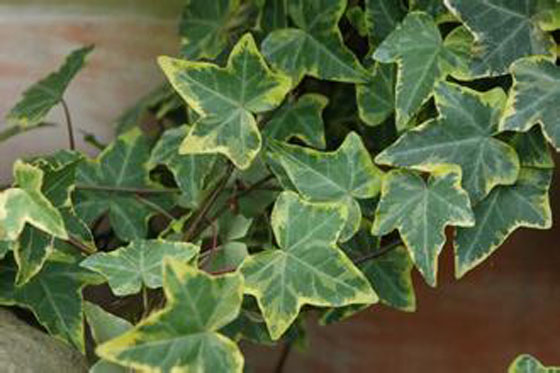
Planting Methods for Growing Ivy
Ivy can only be planted when its vines have stopped growing, and it is best to plant it in late spring and early summer before budding. When planting it, its potting soil is usually a mix of leaf mold, garden soil, and sand. Ivy needs to be repotted once every 1-2 years. Before planting ivy, first place decomposed organic fertilizer at the bottom of the pot as a base fertilizer, and cut off overly long and overly dense roots. After planting, water once thoroughly, place it in a cool place, and after new branches grow, carry out normal management.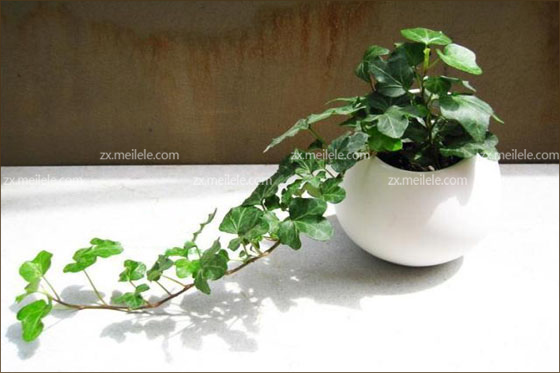
Watering and Fertilizing Methods for Growing Ivy
Ivy is a plant that likes a warm and humid environment. During its growing period, sufficient water must be ensured, and the pot soil should often be kept moist to prevent it from drying out completely. If ivy does not get enough water, it will cause leaf drop. When the air is dry, the air humidity should be increased. In winter, watering should be reduced so that the pot soil where the ivy is planted is on the moist-to-dry side, but water should be sprayed on its leaves to increase air humidity, so as to avoid poor growth and the phenomenon of scorched leaf edges. During the growing period, ivy should be given a dilute organic liquid fertilizer 2-3 times a month. For potted plants that have already grown into shape, fertilizing can be reduced. In winter, fertilizing should be stopped.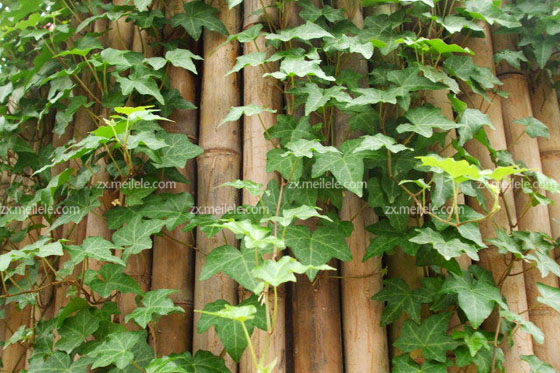
Light and Temperature Methods for Growing Ivy
The best growing temperature for ivy is 18-20 degrees. If the temperature exceeds 35 degrees, its leaves will turn yellow and it will stop growing. In summer, it should be shaded, or placed in a spot with dappled shade, to avoid direct sun exposure. Ivy has relatively strong cold tolerance, and it can overwinter in ordinary indoor homes. In winter, ivy should be placed in a sunny spot indoors to receive more light, with the temperature kept above 3°C, and it can also endure short periods of low temperature of -7 to -8°C. If ivy is grown indoors, it should be placed in a bright spot. Outdoors, in addition to avoiding strong direct sunlight, ivy needs 3-4 hours of direct sunlight every day, especially variegated varieties, which need sufficient light to maintain the brightness of their leaf color. If the light is insufficient and ventilation is poor, and it is kept in a dark place for a long time, its plant will have elongated internodes and grow weaker and weaker.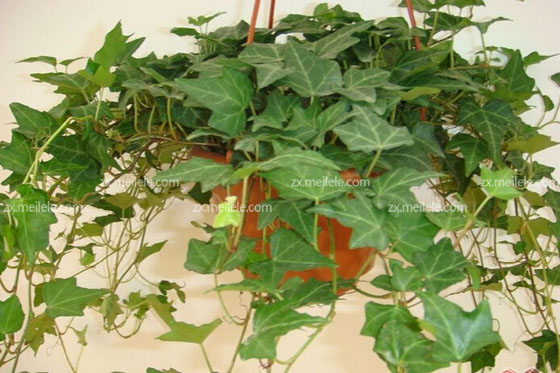
Pruning Methods for Growing Ivy
For newly planted ivy, after budding in spring, it should be pinched and pruned in time. This can promote branching, and it can also be trained on a trellis for shaping, or grown as a hanging potted plant. For ivy plants that have grown for many years, pruning should be strengthened, removing overly dense, thin, weak, and dead branches, to prevent too many vines and cause the shape to become disordered.
Summary: Ivy is now widely used in greening, especially playing a pivotal role in some vertical greening. It can not only achieve greening and beautifying effects, but also play a role in increasing oxygen, lowering temperature, reducing dust, and reducing noise. The above content is the end of the editor's introduction. After reading the editor's introduction, I believe everyone has a better understanding of how to grow ivy. I hope the content introduced by the editor can be of some help to you.