Cultivation Methods and Precautions for Wisteria
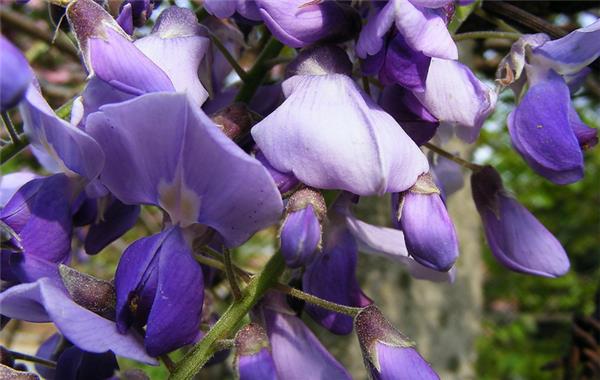
Wisteria is a deciduous climbing, twining large woody vine that blooms in spring, with blue-purple butterfly-shaped corollas; the flowers are purple or deep purple and very beautiful. It is a plant of warm and temperate zones and has strong adaptability to its growing environment. If you want to learn about this plant and know how to cultivate wisteria, then read on.
I. Cultivation of Wisteria
Wisteria propagation methods include sowing, cuttings, layering and division. It has a deep main root and few lateral roots, and does not tolerate transplanting. After collecting seeds, dry and store them; before sowing the following spring, soak the seeds for about 12 hours first, then sow and raise seedlings in an open-field seedbed. After the Beginning of Autumn, thin the seedlings moderately; they can leave the nursery after three years, and when transplanting seedlings it is best to keep the soil ball.
For wisteria propagation, in early spring you can also select vigorous 1-year-old branches and cut them into sections 15 cm to 20 cm long as cuttings; bind several dozen into a bundle, place them upside down first in a moist, wind-sheltered, sunny spot, cover with 10 cm of soil and firm it, then cover with plastic film to keep warm and moist. In early May, dig them out for cutting; the survival rate is very high and the young plants grow quickly. Broken roots cut off when lifting seedlings can also be used for root cuttings. Division propagation should be done in spring when the winter buds begin to swell; when digging up root-sucker seedlings, be sure to dig deeply.
II. Pruning and Care of Wisteria
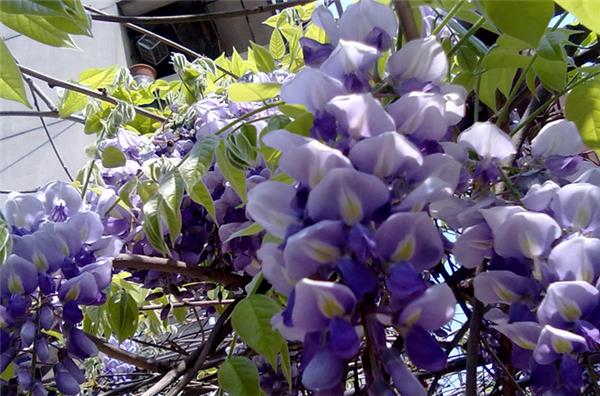
Pruning during the dormant period is mainly to adjust the vine form, fix the direction of growth, thin branches appropriately to make use of nutrient space, and remove some non-flowering branches.
Post-flowering pruning can use heavy pruning of the previous year's branches and removal of excessive buds to lower the height appropriately, ensuring the shrub's form and enough strong branches for the current year's growth. After autumn, before flower bud differentiation, shorten and thin the branches appropriately to help preserve the buds on the lower part of long branches so they differentiate into flower buds.
After leaf fall in winter, carry out a comprehensive pruning of the plant, cutting out dry and withered branches and shortening the current year's branches by 1/3 to 2/3 so that they vary in length and are arranged in a pleasing, staggered way. In winter, move it to a cold room or overwinter it outdoors in a wind-sheltered, sunny spot; as long as the potting soil does not freeze, it can overwinter safely. After sprouting in spring, promptly remove overly dense buds so that nutrients are concentrated in the remaining branches, which favors flowering. Every 1-2 years, before spring sprouting, repot once; when repotting, remove part of the old soil and place some decomposed animal hoof pieces, crushed bone residue and other fertilizers with higher phosphorus content at the bottom of the pot as base fertilizer. The potting soil should be loose, fertile, slightly acidic soil with good drainage.
III. How to Cultivate Wisteria So It Flowers Abundantly and Grows Lushly
Wisteria likes sufficient light, tolerates slight shade, cold and drought, and has strong adaptability to soil; it can also grow in poor and hard-surfaced topsoil conditions.
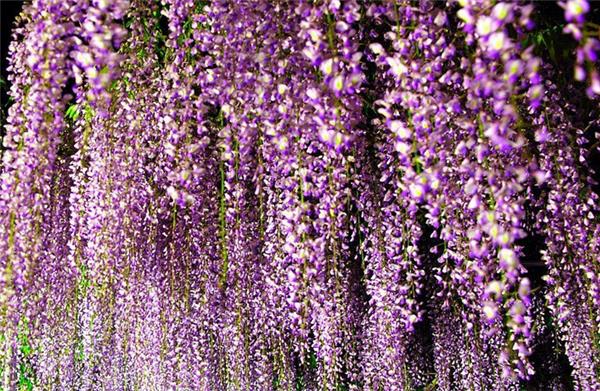
To cultivate wisteria so that it blooms abundantly year after year, fertilizer and water management should be strengthened. When planting, choose a high, dry location with good drainage. In waterlogged spots, the roots rot easily. After planting, every 2-3 years during the dormant period, apply additional organic fertilizer to increase soil nutrients.
In early spring in the north, the weather is dry, and this is exactly the sprouting period, so water frequently. After autumn begins, also water thoroughly with winter water in preparation for overwintering. If winter water is insufficient and the early spring weather the following year is too dry, the branch tips may wither.
During the winter and spring dormant period, pruning should be carried out to adjust branch distribution; overly dense branches and thin, weak branches should be cut off from the base so that the structure of the main vine and side vines is well-balanced and clear, and every part can get ventilation and light. During the growing period, summer pruning can be done after flowering, mainly removing overly dense branches, pinching and tipping new shoots, and controlling excessive growth.
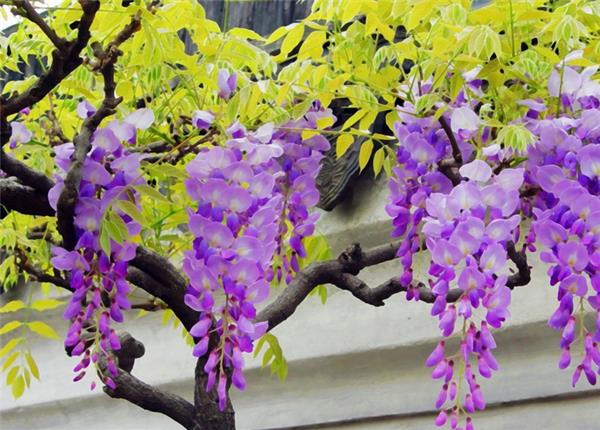
Wisteria has dense branches and leaves and beautiful flower clusters. It is mostly used to climb flower trellises, green corridors, dead trees or rockery, and can also be made into elegantly shaped cascade-style bonsai, placed on high stands or on top of bookcases, with flowers covering the tree and the old trunk slanting across, giving it a distinctive charm.