Can Rubber Plants Be Grown in Water? Introduction to Hydroponic Cultivation Methods
The rubber plant has large, glossy leaves and stays green all year round. It is an evergreen tree of the Moraceae family, and as a potted plant it is excellent material for decorating the home. Small and medium-sized plants are often used to beautify living rooms and studies; medium and large plants are suitable for placing on both sides of the entrance halls and in the center of lobbies of large buildings, where they look especially majestic and impressive. So, can rubber plants be grown in water?
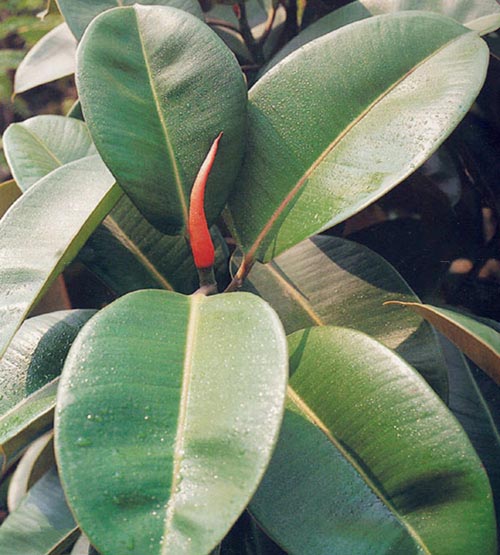
Can Rubber Plants Be Grown in Water?
Yes
Rubber Plant Hydroponic Methods
For hydroponic rubber plants, select a small soil-grown plant with a good shape and grow it in water using the root-washing method. Old roots do not rot easily and can adapt to the hydroponic environment relatively quickly. Alternatively, from May to September, take healthy, vigorous shoot tips, remove the basal leaves, let the cut ends dry, and root them directly in water. Because the canopy is rather heavy, it is best to add ceramsite to the container, which both helps stabilize the plant and promotes rooting.
In the early stage of hydroponics, change the clean water once every 2-3 days. After two weeks, water roots gradually grow. When the plant has fully adapted to the hydroponic environment, move it to a spot with ample light and add foliage plant nutrient solution for maintenance, changing the nutrient solution once every two weeks. Rubber plants like a hot, humid environment with ample light. The suitable growing temperature is 22-32 degrees, and the overwintering temperature should be above 8 degrees. They are fairly tolerant of shade.
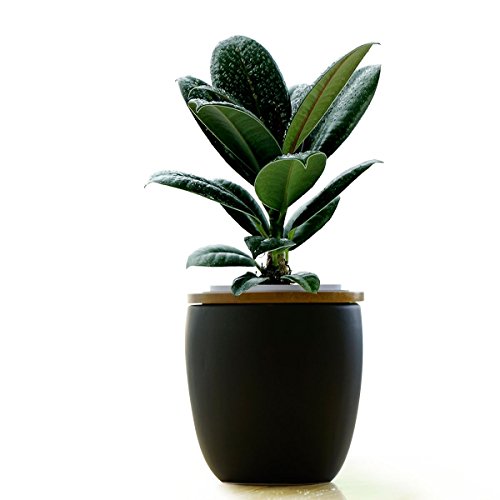
The Flower Language of the Rubber Plant
The flower language of the rubber plant is steadiness, honesty, trust, everlasting greenness, and good fortune and happiness. If given to someone with whom one has an extremely good relationship, the flower language of the rubber plant is: I offer you my most sincere trust and love; you have only me, and I have only you.
Pruning Methods for Rubber Plants
The rubber plant is extremely adaptable. Because its leaves are thick and leathery, smooth and glossy, it is deeply loved by flower growers. It is a common flower for home growing or hall decoration, but pruning and shaping the rubber plant is very important. During maintenance, if no attention is paid to shaping its form, the ornamental value of the rubber plant will be seriously affected. Pruning of the rubber plant is generally carried out in late spring and early summer in combination with pruning. Select one-year-old woody middle branches as cuttings. Keep three buds per cutting, cut off the lower leaf, fold the upper two leaves together and tie them with plastic, or cut off half of the upper leaf to reduce water evaporation.
Pruning Techniques for Rubber Plants
In the shaping and pruning of rubber plants, it is sometimes also necessary to highlight the growth of the main trunk or main branches and to thin out overly dense branches or branches that affect the shape. The commonly used shaping and pruning methods to highlight the main trunk and main branches are bud removal and branch thinning. That is, remove buds that are just beginning to sprout, achieving the purpose of inhibiting the growth of side branches. The principle is to eliminate the growth of side branches at the budding stage so that nutrients are concentrated to supply the growth of the main branches. That is, use pruning shears to cut off branches from their base. This is often used to thin out overly dense branches. Branch thinning is a remedial measure for bud removal; that is, because bud removal was not done in time, side branches have already formed, and in order to strengthen the growth of the main trunk or meet shaping needs, some excess side branches are thinned out.
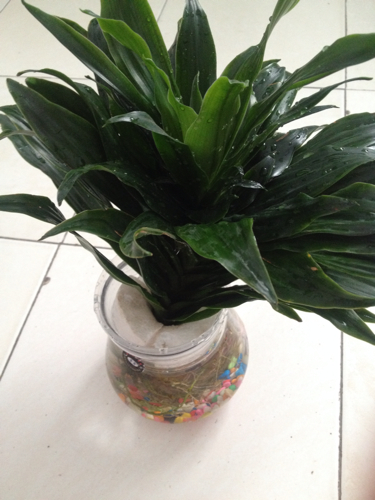
In addition to its extremely high ornamental value, the rubber plant can beautify the indoor home and please the eye, and it also has a unique function of purifying dust, and can also purify formaldehyde among volatile organic compounds.