How to Cultivate Hyacinths? Teach You the Correct Cultivation Method
The hyacinth is a bulbous flower of the lily family. Native to southern Europe and Asia Minor, it is a world-famous fragrant flower today. The hyacinth has a delicate posture, a riot of colors, dazzling brilliance, and a pleasant fresh fragrance. Whenever the flowering season comes, it looks like one brilliant colorful painting after another; it can also be grown in pots for viewing or used as cut flowers for decoration. If you grow it in a gourd-shaped glass bottle filled with clear water, you can view the flowers at the top and see a cluster of sturdy white roots at the bottom, with both flowers and roots flourishing for an even better ornamental effect.
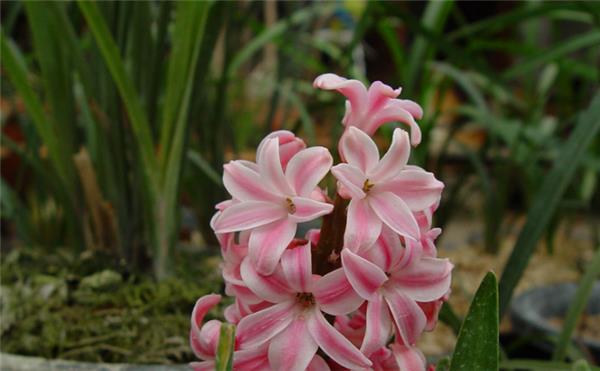
I. Key Points for Cultivating Hyacinths
Potting Soil
For potted hyacinths, use a growing medium mixed in equal parts of rotted soil, garden soil and sand. Usually planted in November, with a planting depth such that the shoulder of the bulb is level with the soil surface. Water thoroughly after planting.
Watering
When the hyacinth has just been planted, do not water too much, so as to avoid the rhizome cut surface rotting. During the growth period, keep the pot moist; after the flower stem emerges, spray water on the leaves 1 to 2 times a day to increase air humidity.
Fertilizing
Apply 1 to 2 additional rounds of well-rotted dilute organic fertilizer before and after flowering. After flowering, apply appropriately more potassium fertilizer to promote the growth of the small bulbs.
Light
The hyacinth prefers a warm winter and a cool, moist summer with plenty of sunlight. During the growth period, place it in a spot with ample sunlight.
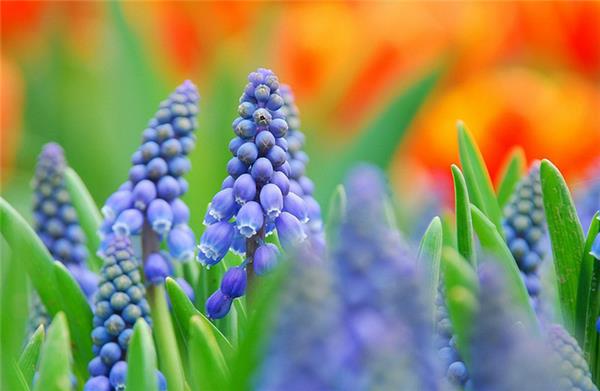
II. Cultivation Methods for Hyacinths
1. Open-field cultivation is best carried out from October to November, and choosing well-drained soil is the most important condition. Apply sufficient base fertilizer before planting, add a thin layer of sand on top, then arrange the bulbs in order, with a plant spacing of 15 cm to 18 cm, and cover with 5 cm to 8 cm of soil. Also cover with grass to keep the soil loose and moist. Generally no other management is done before flowering; after flowering, if you do not intend to collect seeds, cut off the flower stem to promote bulb development, and the cut should be made as high on the flower stem as possible. In early June, the bulbs can be dug out, spread out, graded and stored in a cold storage; the summer temperature should not exceed 28°C.
2. For potting, use loam, leaf mold, fine sand, etc. mixed as a nutrient soil. Generally, a 10 cm diameter pot holds one bulb, and a 15 cm diameter pot holds 2 to 3 bulbs; then bury the pot in the ground, covering it with 10 cm to 15 cm of soil. After 7 to 8 weeks, when the sprouts have grown to more than 10 cm, remove the covering soil to let sunlight reach them. Generally planted from October to November, it flowers in March.
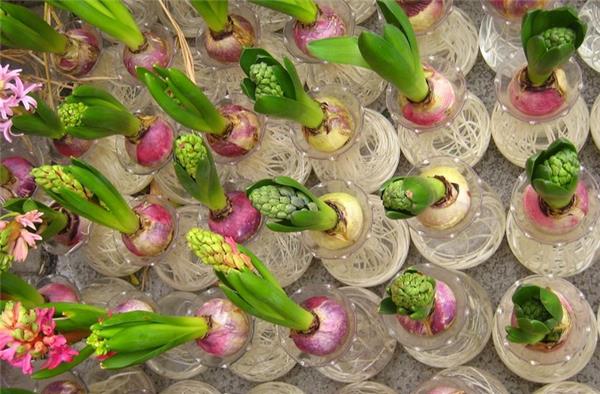
3. For water culture, fill the container with clean water and place it in a dark place; choose a large bulb so that the bottom of the bulb is immersed in water. When the roots reach 10 cm long, move it to a bright place to let sunlight reach it, keeping the room temperature at around 15°C. Planted in October, it can be expected to flower by the end of the year.
III. Care Methods for Hydroponic Hyacinths
1. There should be a 1 cm-2 cm gap between the water surface and the bottom of the bulb; never let the water submerge the bottom of the bulb!
2. The water temperature should not be high; below 15°C is better.
3. Place the bulb on the neck of the bottle; after roots begin to form, lower the water level until the roots just barely touch the water surface. This allows the roots to fully absorb oxygen and promotes the growth of root hairs. After the roots have developed, cover the culture container with black cloth to let the bulb develop further.
4. Before the bulb sprouts, do not place it under direct sunlight.
5. When the sprout has grown to five cm, place it in a dark place; after the roots have fully grown, place it in a warm spot without direct sunlight, and add water frequently so that the water reaches the bulb.
Through the above introduction to the key points, methods and care methods for cultivating hyacinths, we believe you have surely come to understand this flowering plant with a beautiful meaning. Growing a pot of hyacinths yourself is quite an accomplishment.