Can a cactus be grown in water? A detailed guide to hydroponic care
The cactus is a very easy plant to grow; it needs little watering and will not die of drought. But what if you grow a cactus hydroponically? What should you pay attention to, and how can you grow a hydroponic cactus well?
How to grow a hydroponic cactus
How to grow a hydroponic cactus 1. Choosing the mother plant
First, choose a cactus with a sturdy body. The key is to choose a plant whose lower stem section protrudes downward. Cacti grafted onto a three-ribbed stem (Hylocereus undatus) are easier to grow hydroponically.
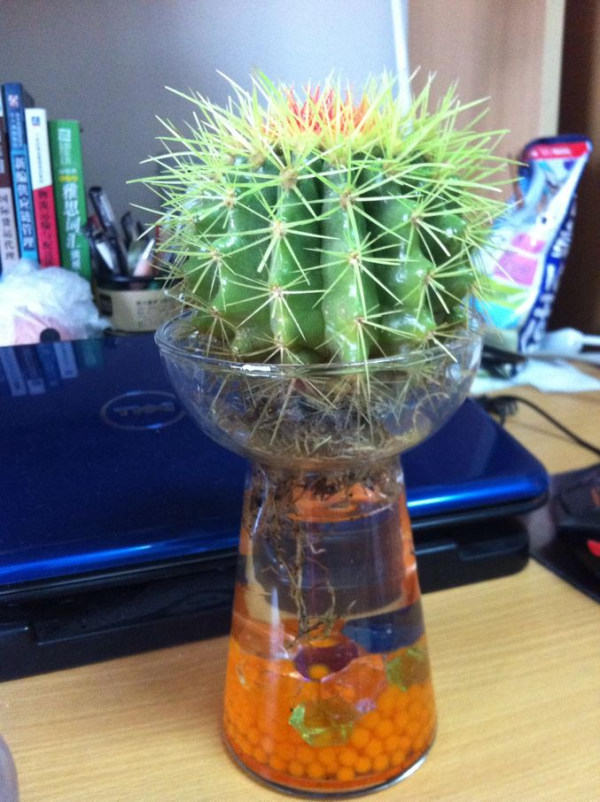
How to grow a hydroponic cactus 2. Treatment
After choosing the mother plant, completely cut off the original dead roots under the body, making sure the cut is flat. Then rinse the soil clinging to the stem section clean with water, and let it dry in a dry place for 3 days so the cut is completely dry. Removing the soil-grown roots from a cactus before inducing new ones is necessary. Because the cactus is a succulent plant, drying it for a period before induction is more favorable for root promotion, since for succulents the moisture requirements of the seedbed during root promotion are quite strict: too much causes rot easily, too little affects the root-promotion result.
How to grow a hydroponic cactus 3. Hydroponics
In terms of effect, the nutrient stress caused by plain water better accelerates the formation of root aeration tissue and the development of water roots. But from a cultivation standpoint, it is better to use a nutrient solution of appropriate concentration in the water, as this relates to the fertilizer tolerance of the plant after induction.
Prepare a glass bottle of suitable size, or use a mineral water bottle; a transparent container makes it easy to observe the contact surface between the liquid level and the stem section. Fix the chosen and treated cactus at the mouth of the bottle with floral foam or foam, then add nutrient solution below, with the nutrient solution level just reaching the stem section. Prepare a children's foam puzzle board or a white construction foam board, and use a sharp knife to carve several small triangular holes in the board (for fixing a golden barrel cactus, you can cut off the mouth of a used purified water bottle and use it upside down; note: cut off the bottle mouth so the roots of the golden barrel cactus can emerge from the cut bottle mouth, then place it in the bottle body containing the nutrient solution). Insert the three-ribbed stems into the triangular holes; at this point the roots of all the three-ribbed stems just touch the liquid surface.
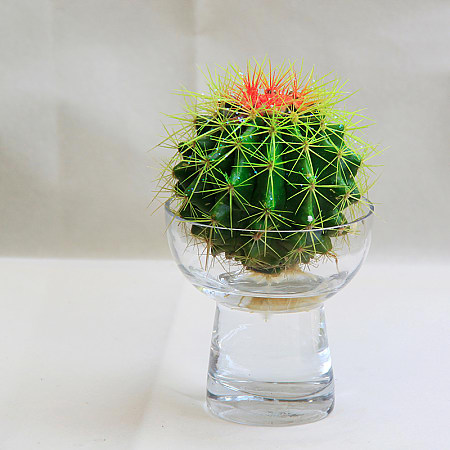
An ammonia-free nutrient solution is most suitable for keeping fish and plants together; otherwise it will kill the fish.
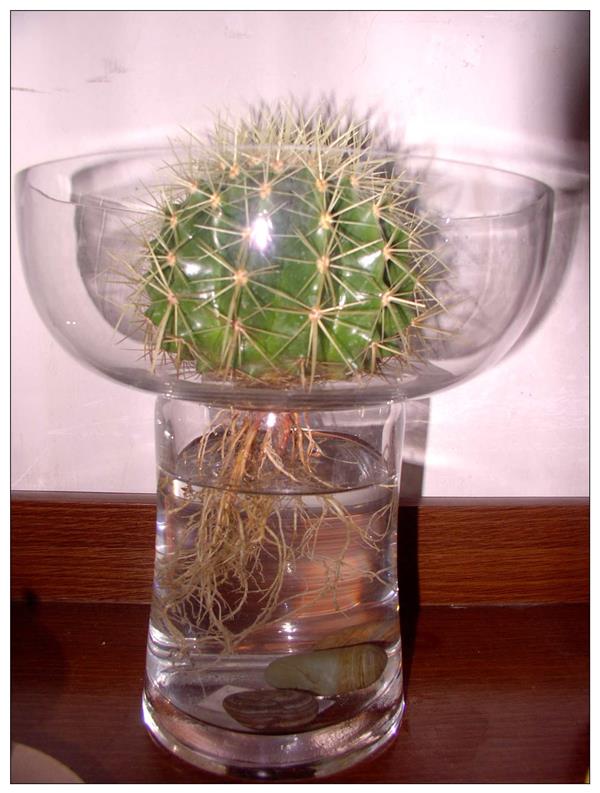
When growing a cactus hydroponically, the water level must not exceed 1/2 of the roots.
How to grow a hydroponic cactus 4. Later-stage hydroponic treatment
Buy two magnets with a diameter of 6-10cm and put them into the container, in order to magnetize the nutrient solution and thereby speed up the emergence of water roots. (If conditions allow, you can also buy from the market a small submersible pump with a suction-wall mount specially made for ecological fish tanks, attach it to the inner wall of the nutrient solution, switch on the power, and achieve a flowing, oxygen-carrying circulation of the nutrient solution.)
Cactus care techniques
Temperature: The cactus likes high temperatures and a dry environment. In winter, the room temperature should be kept above 20°C during the day, and the nighttime temperature should not be lower than 10°C. Too low a temperature easily causes root rot, but too high a temperature easily leads to scale insect damage.
Light: The cactus requires plenty of sunlight, but in summer it must not be exposed to strong direct sun and needs appropriate shading. For indoor cultivation, artificial light can be used to make it grow vigorously.
Soil: The cactus is suited to growing in well-drained sandy loam. For indoor cultivation, artificial potting soil is mostly used, usually prepared by mixing half peat soil and half fine sand; you can also use crushed pine needles mixed with fine sand as a prepared potting soil for planting.
Watering: The cactus requires a dry environment and is afraid of water accumulating in the pot soil. Generally, keep the pot soil "dry when it should be dry, wet when it should be wet." It is best to use water that has been left to stand for watering. In spring and summer, water once a month; in winter, water once every 2-3 months. Be sure to water thoroughly. Fertilizing: When changing the pot soil for a cactus, apply a small amount of base fertilizer at the bottom of the pot, such as horseshoe slices, bean cake or sesame paste residue. During the growing season, apply a fermented organic liquid fertilizer once every half month (a concentration of 20% is suitable); never let the fertilizer concentration be too high.
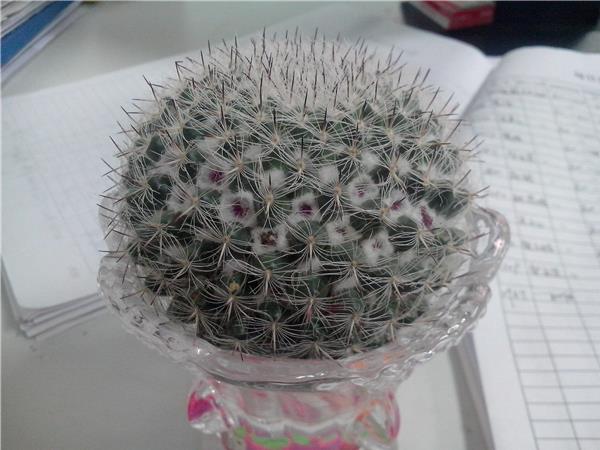
Cacti can be propagated by grafting, generally using the flat grafting method. The rootstock can be a three-ribbed stem or a sturdy flat pad. The specific method: first cut off the top of the rootstock, cut the base of the scion crosswise, join the two, then tie them together with string. After two weeks, remove the string.
The aging of a cactus starts from the bottom. When yellowing from aging appears, use a brush to apply undiluted Yunda 120 to the body several times and the yellow will fade, making the cactus young again; this is my experience. Yunda 120 is a plant growth regulator containing hormones, and even at high concentration it is harmless to the body. It has fewer side effects than other plant growth regulators.
Growing a cactus hydroponically requires changing the water and cleaning the plant roots:
For hydroponic plants, change the water about once every 7 days in summer and about once every 10-15 days in winter, adding a few drops of special nutrient solution for hydroponic flowers (prepare the nutrient solution concentration according to the instructions). The container used for growing hydroponic plants easily grows moss, which affects the appearance of the roots and also consumes oxygen in the water. When changing the water, first wash off the mucus on the flower roots with clean water, and cut off old roots and rotten roots. Also scrub the moss off the container and the roots. Each time you change the water, the water level should preferably submerge 1/2-2/3 of the roots, with the remaining root sections left exposed to the air.
Growing a cactus hydroponically requires keeping moisture and spraying foliar fertilizer:
To prevent the leaves from drying out, in daily care, spray the leaf surface with clean water to keep it moist. It is best to spray foliar fertilizer once a week, which can both provide nutrients to the leaves and increase their gloss, and in winter can also achieve the purpose of resisting low temperatures.
Making a cactus young again is my experience. Yunda 120 is a plant growth regulator containing hormones, and even at high concentration it is harmless to the body. It has fewer side effects than other plant growth regulators.Growing a cactus hydroponically requires changing the water and cleaning the plant roots:
For hydroponic plants, change the water about once every 7 days in summer and about once every 10-15 days in winter, adding a few drops of special nutrient solution for hydroponic flowers (prepare the nutrient solution concentration according to the instructions). The container used for growing hydroponic plants easily grows moss, which affects the appearance of the roots and also consumes oxygen in the water. When changing the water, first wash off the mucus on the flower roots with clean water, and cut off old roots and rotten roots. Also scrub the moss off the container and the roots. Each time you change the water, the water level should preferably submerge 1/2-2/3 of the roots, with the remaining root sections left exposed to the air.
Growing a cactus hydroponically requires keeping moisture and spraying foliar fertilizer:
To prevent the leaves from drying out, in daily care, spray the leaf surface with clean water to keep it moist. It is best to spray foliar fertilizer once a week, which can both provide nutrients to the leaves and increase their gloss, and in winter can also achieve the purpose of resisting low temperatures.