Can spider plants be grown in water? Learn the correct water culture method
Can spider plants be grown in water? Spider plants have clustered, cylindrical, fleshy fibrous roots and rhizomes, with leaves growing from the base, linear to linear-lanceolate, with long, narrow, flexible leaves resembling orchids. The flower scape emerges from the leaf cluster, slender and curved, with small white flowers, blooming in spring and summer. After flowering, it becomes a creeping stolon, with new plantlets bearing aerial roots sprouting at the top. It prefers warm, humid and semi-shady environments, with an optimal growth temperature of 15°C-25°C. In winter it must not go below 5°C.
Can spider plants be grown in water
Yes
Steps for growing spider plants in water
(1) Take a potted spider plant with an attractive shape out of the pot and wash off the soil.
(2) Cut off old roots. Cut off withered and yellow leaves.
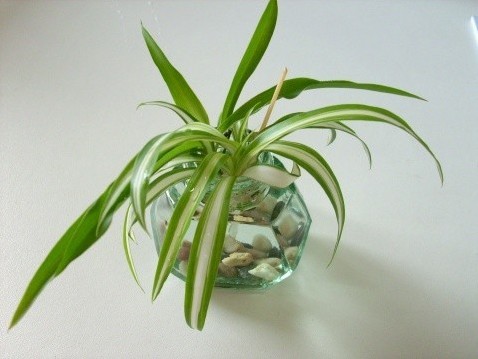
(3) Insert it into a plastic sieve and fill with orchid stone or maifan stone to increase permeability and hold the plant in place. Then place it in a wide-mouthed transparent glass bottle for water culture.
3. Division water culture
Cut a small spider plantlet with aerial roots from the creeping stolon of the mother plant and separate it for water culture.
Care and management
(1) When growing spider plants in water, just let the bottom 1/3 of the root system touch the water surface. Do not submerge all the white fleshy roots of the spider plant in water, otherwise water will accumulate and cause root rot.
(2) For a spider plant newly placed in water, change the water once a day. After roots form, reduce the frequency of water changes.
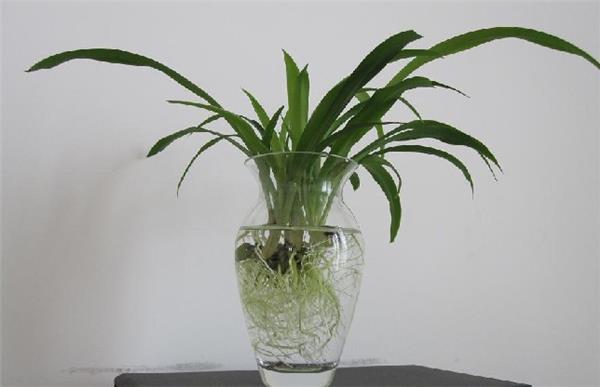
Daily management of spider plants grown in water
① Water: When growing spider plants in water, just let the bottom 1/3 of the root system touch the water surface. Do not submerge all the white fleshy roots of the spider plant in water, otherwise water will accumulate and cause root rot.
For a spider plant newly placed in water, change the water once a day. After roots form, reduce the frequency of water changes. For cultivation in a single-layer container bottle, add water and flower nutrient solution once every 4 days, feeding the water in through a straw until full. For a double-layer bottle, change the water once a week; when changing, pour out the bottle water, wash the container clean, fill with clean water and flower nutrient solution, then place the plastic sieve on top of the water bottle. You can also add ammonium nitrate and potassium dihydrogen phosphate to the water, which contain nitrogen, phosphorus and potassium fertilizers and can promote the growth of spider plants. The ratio is 3 parts per thousand, then add a small amount of penicillin to prevent disease, and change the water once every 10-15 days.
If the root system of the spider plant has already rotted in the water, it is best to first clean the bottle and the spider plant's roots, cut off all the rotted roots, and soak them in a 500-fold potassium permanganate solution for 20 minutes to disinfect; the bottle should also be disinfected. Place the disinfected spider plant in a cool place first, and after about 2 days cultivate it again in clean water. A semi-shady or scattered-light environment is suitable; in a shaded place it will gradually weaken. In winter it needs to be placed in a sunny spot. If the temperature is 20-25°C, change the water once every 3 days; when below 20°C, it is best to change the water about once every 5 days; when above 25°C, change the water once every 1-2 days. And each time you change the water, rinse the mucus off the roots with tap water. With this care it is guaranteed to grow well. Note: do not fertilize within 1 month; afterwards you can apply a little to help recovery.
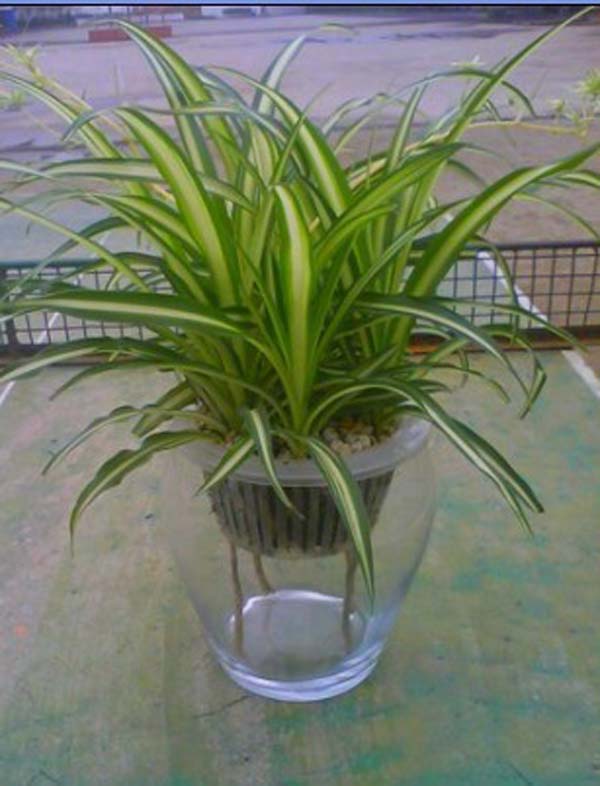
② Fertilizer: Nutrient solution for flowers is added through the roots while adding and changing water; for foliar feeding, spray the diluted flower nutrient solution on the branches and leaves once every 3 days.
③ Pest and disease control: If pests or diseases are found, spray the leaves with all-purpose powder mixed with water.
④ Promoting flowering: Spider plants bloom half a year after potting. When flowering, do not spray water on the flowers, to prevent premature flower drop. After the flowers fade, cut them off from the branch tips to encourage more flowering.
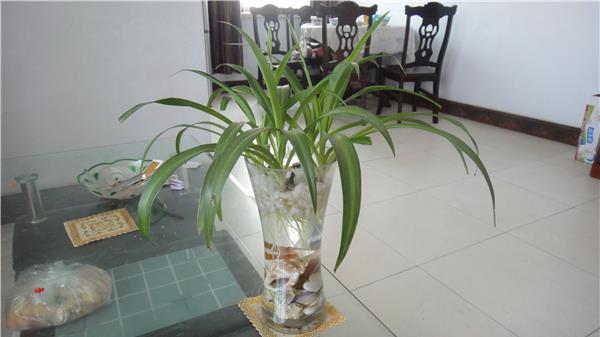
Can spider plants be placed in the bedroom at night
Spider plants can be placed in the bedroom at night. Some people worry that placing plants in a room at night will affect the air, but there is really no need to worry about this; a few pots of plants will not affect normal human breathing of the air. When growing plants indoors, whether they give people a sense of pleasure is what matters most. In the bedroom, a place for people to sleep and rest, creating a beautiful and tranquil atmosphere is the most important thing. Placing a pot of fresh, elegant and refined spider plant is undoubtedly a very ideal choice.