How to grow pothos in water? A full breakdown of things to note
Hydroponic pothos has soft stems, emerald-green leaves and an elegant, graceful form. It can absorb formaldehyde from the air and purify it, making it the top choice for people who love hydroponic flowers. Beginners often run into this problem when growing pothos in water: why are my hydroponic pothos leaves narrow and small, dull and lusterless, and why do the roots often become slimy and unattractive? How can you grow hydroponic pothos well?
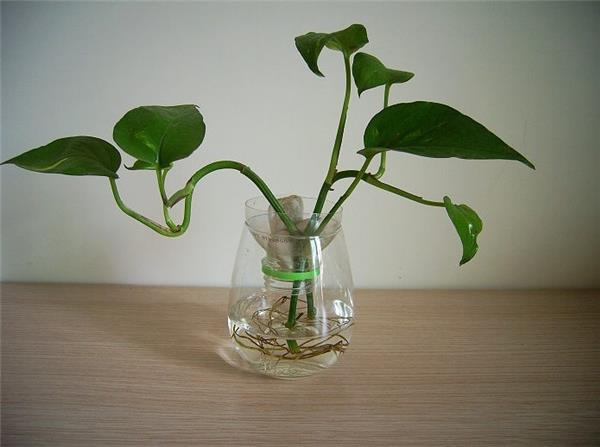
How to grow hydroponic pothos
To grow hydroponic pothos well, you first need to understand its growth habits. Hydroponic pothos likes warm, damp environments and loose, fertile soil. It is extremely shade-tolerant and can be placed in a sunny spot indoors year-round; in dimmer spots, it needs to be moved to a bright spot for a period every half month, otherwise the leaves tend to become smaller and the stem nodes elongate. To grow hydroponic pothos, first choose healthy, strong pothos stems that have aerial roots. Once cut and placed in clean water, stems with aerial roots quickly adapt to the hydroponic environment and can grow water roots in about ten days. Alternatively, you can take a potted plant with a good shape, wash the soil off the roots, trim away excess old roots, and place it in clean water; it will also root easily. Newly hydroponic pothos needs frequent water changes, once every 2 or 3 days, and once a week after new roots grow. Once new leaves appear, you can add nutrient solution once every 10 days, or spray some diluted nutrient solution on the leaves to keep them emerald green and glossy.
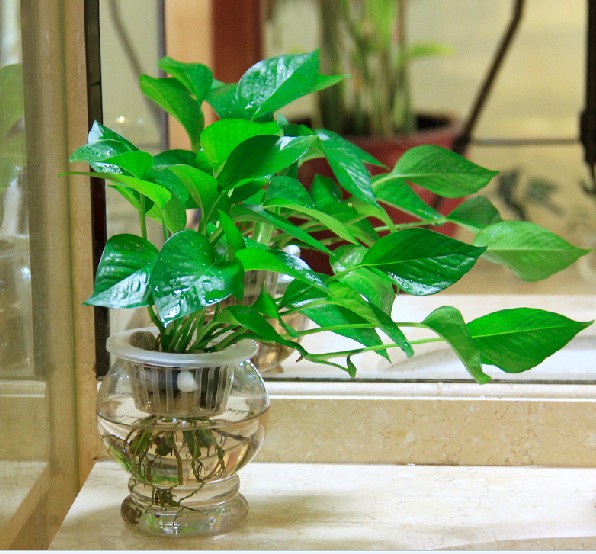
Things to note when growing hydroponic pothos:
1. First, choose the right pothos stems. Healthy, strong stems with aerial roots are the good material for hydroponics; once cut and placed in clean water, stems with aerial roots quickly adapt to the hydroponic environment and can grow water roots in about ten days. Note that the part of the stem placed in water must not have leaves, otherwise the leaves soaking in the water easily affect water quality. Alternatively, you can take a potted plant with a good shape, wash the soil off the roots, trim away excess old roots, and place it in clean water; it will also root easily.
2. In the first few days of hydroponics, pay attention to water changes: change the water every two or three days, using water at the same temperature as the room, and after water roots grow, change the water once a week. Once new leaves grow, you can add nutrient solution about once every ten days, or spray some diluted nutrient solution water on the leaves, which keeps the leaves emerald green and glossy.
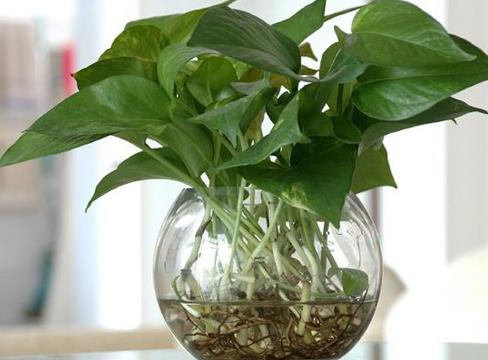
3. The roots of hydroponic pothos need regular cleaning and trimming. If the roots are too long, shorten them promptly to avoid nutrient loss. If the roots rot and become slimy, clean them promptly too, cut off the rotten roots, and soak them in potassium permanganate solution to disinfect before resuming care. In the first few days after resuming care, change the water every two or three days as you did at the start of hydroponics, and once growth has fully recovered, change the water once every ten days.
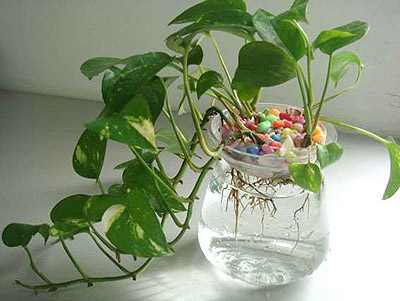
Pothos benefits and effects
Pothos is an ornamental plant, but its purifying ability is not bad either. For example, when moving into a new house, you can place a pot of pothos to purify the air, such as the benzene, methanol, trichloroethylene and other substances commonly found in paint smells. Research shows that placing one pot of pothos per 10 sq m can eliminate odors in a week.
From the perspective of feng shui, pothos has the effect of drawing wind. Placing it in the spot indoors with the strongest stale air has the effect of drawing wind to disperse the stale air. It also releases oxygen to purify the air.
After a pot of pothos placed on the kitchen counter has been there for a while, the kitchen smell is no longer as strong as before, because pothos can absorb some cooking fumes and purify the kitchen air, and it can absorb even the carcinogenic substances in serious fumes.