The Benefits and Methods of Growing Hydroponic Flowers in Glass Bottles
Growing hydroponic flowers in glass bottles is a fairly common soilless method of cultivating flowers. Because glass bottles are generally transparent and come in all kinds of unique shapes, pairing them with green plants gives them very high ornamental value.
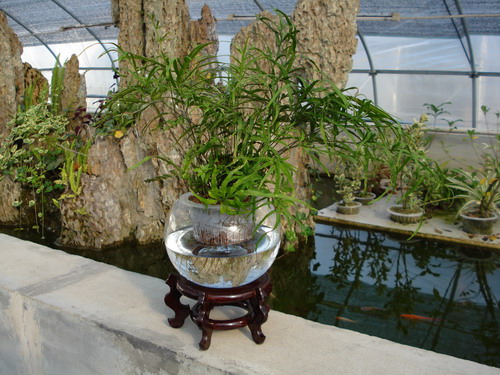
I. The Benefits of Growing Hydroponic Flowers in Glass Bottles
1. Hydroponic flower glass bottles are rather aesthetically pleasing in their design, and since they are made from transparent glass material, they achieve a great improvement in clarity. In their beautiful design they can both highlight the beauty of the flowers and also provide effective help in purifying the air indoors. In terms of style, glass bottles are still fairly inexpensive, so they are loved by ordinary households; added to this, the vases have a strong sense of design, so they are favored by more and more people.
2. Using hydroponic flower glass bottles as a helper can make the growing results better. In addition, hydroponic flower glass bottles look transparent in appearance, which both helps the plants absorb sunlight and also achieves the ideal effect in cultivating flower color.
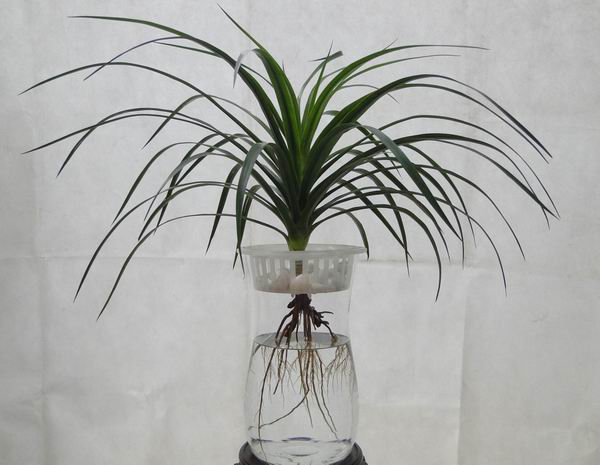
II. The Methods of Growing Hydroponic Flowers in Glass Bottles
1. When growing flowers in hydroponic flower glass bottles, separate the soil-covered pot from the plant, then wash the soil off the flower roots with clean water; by washing with water, the roots become cleaner. If the flowers are seedlings, they will be rather weak in constitution; at this point, adding an appropriate amount of nutrient solution can increase the growth rate of the flowers and improve the production quality of the flowers.
2. Hydroponic flower glass bottles need frequent water changes; changing the water means replacing the water in the bottle that has nutrient solution added. Generally, in spring and autumn change the water once every 5 to 10 days, in summer about once every 5 days, and in winter once every 10 to 15 days. Home hydroponic flowers should use soft water as the water source; generally, tap water that meets national standards can be used. Let the tap water sit for two hours to half a day, and after its temperature approaches room temperature and the chlorine and other substances in the water have fully evaporated, add the purchased nutrient solution in the prescribed ratio, and it becomes a nutrient solution suitable for growing hydroponic plants.
3. In the technique of growing flowers and plants hydroponically in glass bottles, if a certain nutrient element is lacking, physiological disorders will occur, affecting growth, development and flowering, and in severe cases even causing death. Therefore, the nutrients in the solution must be adjusted in time. For example, with nitrogen deficiency the plant grows slowly, the leaves turn yellow, and in severe cases the leaves drop.
4. Phosphorus deficiency often appears as an abnormal dark green color, sometimes with gray or purple spots, delaying maturity. If nutrient deficiency occurs, it should also be carefully identified and then supplemented. This is because sometimes it is not necessarily caused by nutrient deficiency; it may be due to inappropriate pH, or it may be caused by a simultaneous deficiency of several elements. Be sure to clarify the situation and treat the root cause.
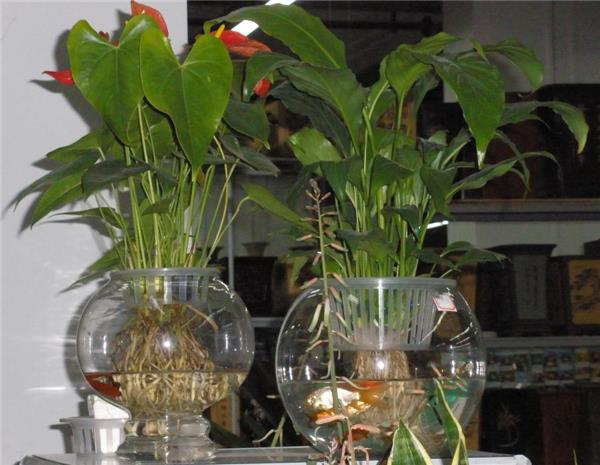
III. What Plants Are Best Suited to Glass Bottle Vases
1. Peace lily (Spathiphyllum). It is a perennial plant of the Araceae family, with basal, leathery, long elliptic-lanceolate leaves that taper at both ends; the leaves are dark green with a silky sheen and have a distinct midrib and petiole. The spathe is upright, rising above the foliage, broadly ovate, white or slightly green; the spadix is cream-yellow and slender, flowering in spring and summer. The peace lily is regarded as the "flower of purity," grows well hydroponically, and has a very obvious effect in increasing air humidity.
2. Peperomia (Peperomia). It is an evergreen perennial plant of the Piperaceae family, with a plant height not exceeding 30 cm and upright or creeping stems. The leaves are alternate, opposite or whorled; the spike inflorescence is terminal or opposite the leaves, and the flowers are extremely small and white, growing in the depressions of the inflorescence axis. It roots easily in hydroponics, grows well, and has leathery, glossy leaves. It is highly adaptable and can tolerate indoor environments; it likes warm, humid, semi-shaded conditions and cannot tolerate direct sunlight. The suitable temperature is around 25°C, and in winter it must not go below 10°C.
3. Dieffenbachia (Dieffenbachia). It is a perennial evergreen herbaceous plant of the Araceae family, with mostly fleshy, upright stems and short internodes. The leaves are ovate-elliptic, with slightly wavy edges, dark green mixed with irregular yellow or white spots and stripes, giving strong color contrast. It likes warm, highly humid, semi-shaded environments and cannot tolerate direct sunlight. The suitable growing temperature is 25-30°C, the overwintering temperature must not be below 10°C, and it is especially suitable for hydroponic care.
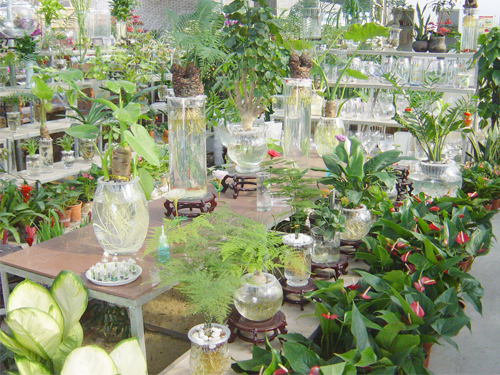
Because glass pieces for growing hydroponic flowers come in many different shapes, and as long as they are cleaned thoroughly you can see the flower roots bathed in clear water, the fresh green and the transparent water color always bring a cooling feeling, making them very suitable for placing on a desk in the scorching summer.
Because glass pieces for growing hydroponic flowers come in many different shapes, and as long as they are cleaned thoroughly you can see the flower roots bathed in clear water, the fresh green and the transparent water color always bring a cooling feeling, making them very suitable for placing on a desk in the scorching summer.