Jujubes that burst with juice and come in a dazzling array of varieties: Chiu Chu-ying's 30 years of breeding help farmers turn their fortunes around
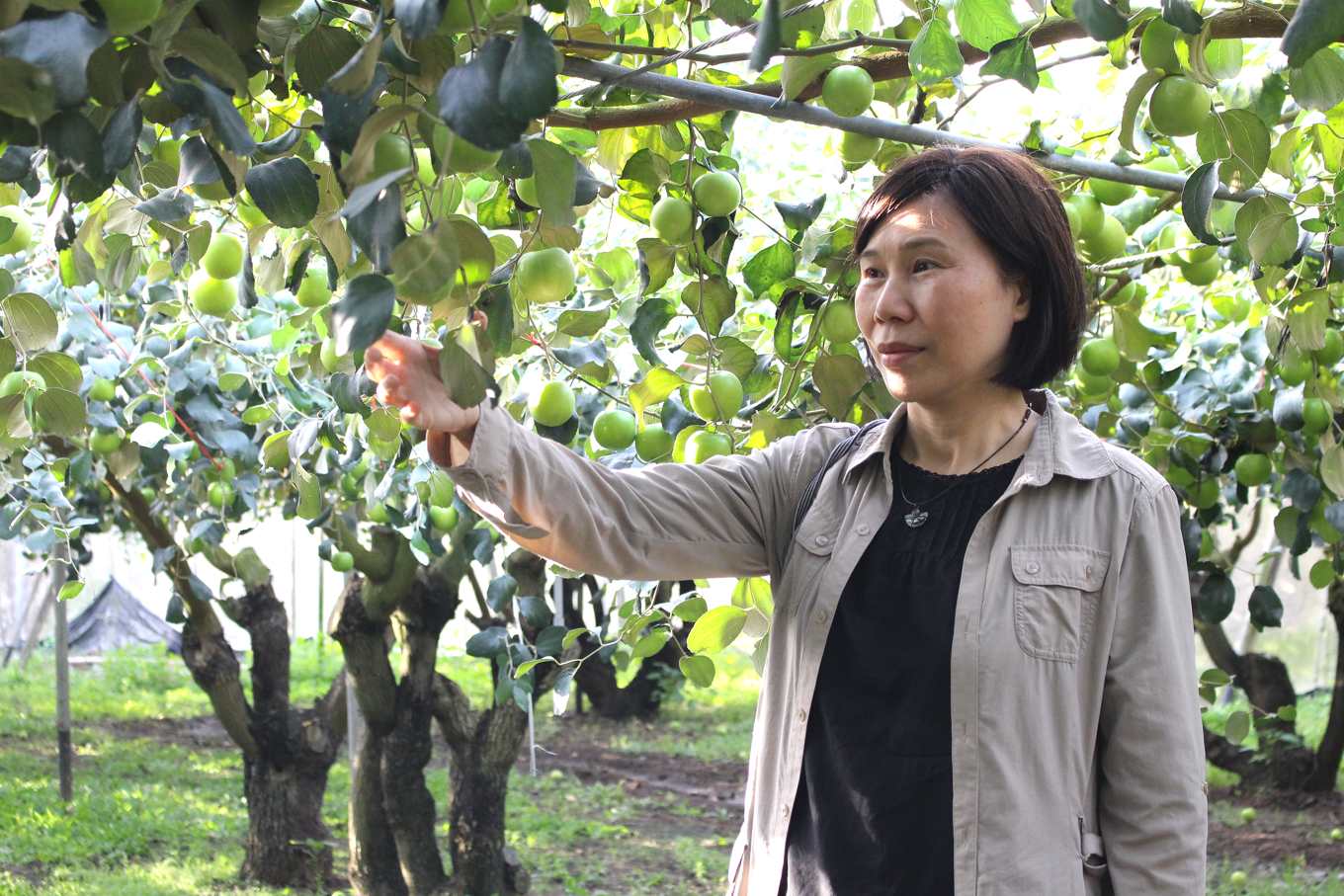
Bite into a round, green fruit: juicy and refreshing, sweet without being cloying. At first glance you would think it is a green apple, but it is actually the "Chen Mi" jujube, which is currently in peak season, and this is only one of the varieties. Taiwan's jujube varieties are like a hundred flowers blooming, each with its own characteristics, differing in skin thickness, sweetness, juice rate and fruit size.
Jujubes were first introduced into the country from India. That variety had thick skin, a rather astringent taste and small fruit, and it is the fixed impression older generations have of jujubes. However, after Chiu Chu-ying, a fruit tree researcher at the Kaohsiung District Agricultural Research and Extension Station, threw herself into jujube breeding, the world of jujubes was turned upside down.
Li Yung-tsung believes that although the domestic home-delivery market offers good prices, domestic market volume gradually declines after the Lunar New Year, so he hopes to expand into export markets. "Last year we began trying to use No. 11 to break into export markets." For example, a shipment to Dubai a few days ago: "The trader said the jujubes that arrived were super sweet and would definitely sell well."
Li Yung-tsung grows five and a half fen of No. 12 Chen Ai and four and a half fen of No. 11 Chen Mi, mainly for the home-delivery market. In the past he also grew the old Indian variety, "but the harvest period was inconsistent, and they were astringent and unpleasant to eat." After Chiu Chu-ying developed multiple varieties, he upgraded all the way to the present. "We all follow her lead."
Although jujubes can be harvested in the same year they are planted, switching to new varieties inevitably brings difficulties, such as grafting failures and low yields. "But you have to fight! You have to follow the trends of the times, or you will be eliminated. Customers like to try something new." The first year is a running-in period, and by the second year things gradually stabilize.
Orchardists: Without the Kaohsiung Agricultural Research and Extension Station, there would be no success for Taiwan's jujubes today
Su Wen-tsai, a Dashe jujube orchardist in Kaohsiung, began growing jujubes in the 83rd year of the Republic of China (1994). In the past he mostly grew the old "Kao Lang No. 1" variety, and later he followed with Chen Bao, Chen Mi, Chen Ai and others. "As long as it can attract consumers and improve farmers' income, farmers' willingness to accept new varieties is high."
However, Su points out that each jujube variety has a different personality, and you have to gradually understand how to care for it. "Even harvesting differs from variety to variety. For Chen Ai and Chen Mi, you look at the tail of the jujube; once it changes color it can be harvested. For older varieties, you look at whether the stem end is fully open." He laughs and says, "The first time I grew a new variety, I did not even know how to tell or how to harvest it. Dr. Chiu actually picked a few for me to see, and only then did I understand."
"It takes two years to become familiar with a variety." In particular, pay attention to the amount of fruit thinning. "Whether thinning is thorough makes a world of difference to subsequent quality and yield." Every switch to a new variety is a learning experience. Su Wen-tsai believes, "A good variety means following the times." The old varieties had an average fruit weight of only 2 liang, while today's varieties weigh about three and a half to four liang per fruit.
Su Wen-tsai points out that he mainly grows Chen Bao, Chen Mi and Chen Ai, using their differing growth-period lengths to stagger the harvest times, harvesting all the way from November to mid-April of the following year. This not only reduces harvesting labor but also keeps a steady supply of high-quality jujubes.
In addition to selling his own produce and sending it to wholesale markets, Su Wen-tsai also steadily exports to Hong Kong, China. He says this year is the third year of exporting to Hong Kong, China, from early December to mid-March of the following year, with a volume of about 600 jin per week. "The taste of jujubes from China and Taiwan really differs a lot; climate determines quality." He also stresses, "Without the Kaohsiung Research and Extension Station, there would be no success for Taiwan's jujubes today."
Surviving typhoon devastation, a jujube orchardist unexpectedly found "Chen Ai," with sweet, crisp, juicy flesh