How to Grow Moss Rose (Portulaca grandiflora)? A Detailed Guide to Moss Rose Planting Methods
The newly sprouted leaves of moss rose are light green; after a few days, once the leaves have grown, they turn dark green - so green they look almost black, so green they dazzle the eye. Seen from a distance, they look like evenly spaced thorns inserted along the tender stems, but they are not sharp and do not prick - instead they are smooth, glossy and tender. The stems of moss rose are tender, juicy and fleshy, with tender red stems stretching from inside the pot to outside it; of course, the stems of moss rose vary in length and thickness. The flowers present every kind of graceful posture: some are fully open, like a smiling face; some have petals unfurled on one side while the other side stubbornly refuses to bloom, like a shy girl; some are still just buds. Loosening the soil and fertilizing the moss rose every day makes the flowers bloom even more brilliantly. So how do you grow moss rose?
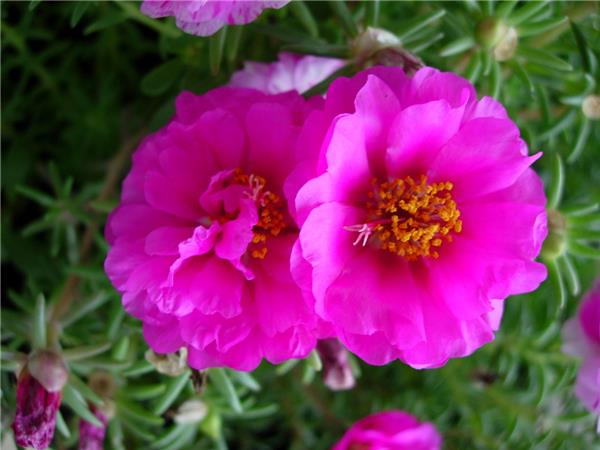
How to Grow Moss Rose
Sowing
Moss rose seeds are extremely tiny, about 8,400 seeds per gram. They can be sown in spring, summer or autumn. Seedling trays are often used for sowing. After sowing, you can cover them with a little bit of soil, or leave them uncovered. The germination temperature is 21-24°C, and seedlings emerge in about 7-10 days. The seedlings are extremely slender and weak, so if a relatively high temperature is maintained, the young plants grow very quickly and can form fairly thick, fleshy stems and leaves. At this point the young plants can be potted directly, using pots about 10 cm in diameter, with 2-5 plants per pot; the survival rate is high and growth is rapid.
Cuttings
Moss rose is very easy to propagate from cuttings. In summer, use the cut shoot tips as cuttings; wilted stems can also be used. After rooting, flower buds appear right away. Transplanted plants do not need to be moved with soil, and they do not need frequent watering during the growing period.
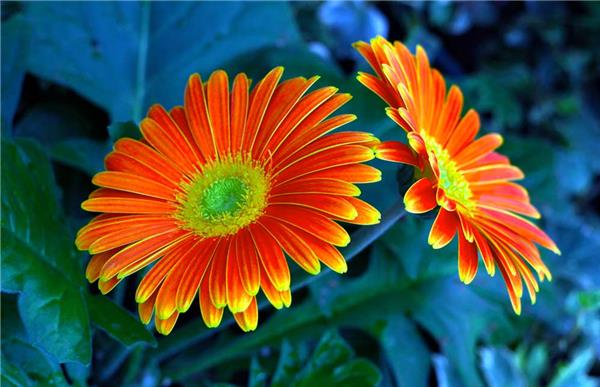
Winter care for moss rose: in winter, move the moss rose indoors to a spot that gets sunlight, and let the potting soil dry out a little, so it can overwinter safely. After Qingming the following year, the pot can be placed outside the window; if a cold snap arrives, it still needs to be brought back inside for care.
How to Care for Moss Rose Although moss rose has very strong vitality, there are still some methods to pay attention to during cultivation.
Soil: Moss rose has almost no requirements for soil and can grow in almost any soil. However, the most suitable and cheapest soil for moss rose is sandy soil with good drainage. You can mix loam, yellow sand and rice husk ash in a 3:5:2 ratio, then add calcium silicate powder and mix well.
Light: Light is the most basic condition for moss rose growth. No matter how excellent other environmental conditions are, without light it will never bloom. Therefore, during the growing period of moss rose, keep it in sufficient light.

Pests and diseases: Moss rose rarely suffers from pests and diseases, but it is often harmed by aphids, almond sawflies and globular scale insects on apricot. The methods for preventing these pests are also fairly simple. Before germination, spray generously with imidacloprid at a 4000-5000 times dilution; after germination, use imidacloprid at a 4000-5000 times dilution plus cypermethrin at a 2000-3000 times dilution to kill aphids.
Fertilizing: Moss rose does not need overly frequent fertilizing; generally, fertilize once every half month. You can use monopotassium phosphate at a 1:1000 dilution.
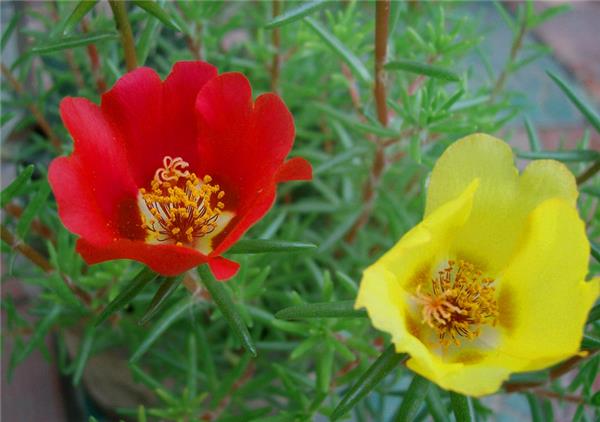
Daily care:
Moss rose is best kept in a sunny environment. If the light is weak, it will grow leggy, produce few flowers, or even fail to bloom. Moss rose is fairly tolerant of poor soil, so ordinary potting soil is usually fine. If conditions allow, use sandy soil with good drainage. Just keep the potting soil at a certain level of moisture at ordinary times, and apply monopotassium phosphate at a 1:1000 dilution (or another flowering fertilizer) once every half month, and you can achieve the effect of large, vividly colored flowers that bloom continuously.