What Are the Characteristics of Annual Flowers? Understanding the Main Features in One Article
Annual flowers have their own unique characteristics, such as a short growth cycle, a short flowering cycle, and a flowering period that is easy to control. They have ornamental value different from that of perennial herbaceous flowers.
I. Characteristics of Annual Flowers
1. Annual herbaceous flowers refer to herbaceous flowers that can complete their entire life cycle within a single growing season. The life cycle of these plants, from seed to seed, occurs within 1 year: sown in spring and harvested in autumn, or sown in autumn and harvested in late spring of the following year.
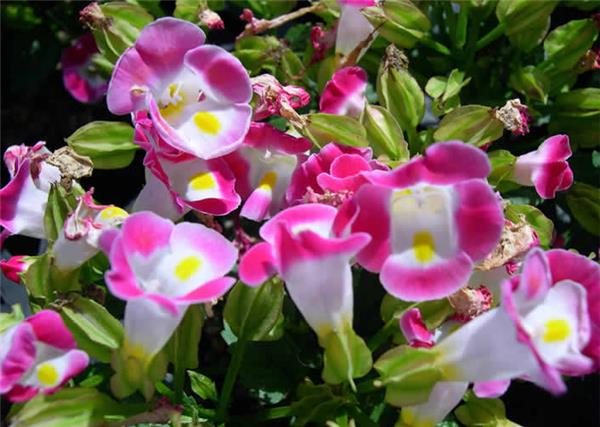
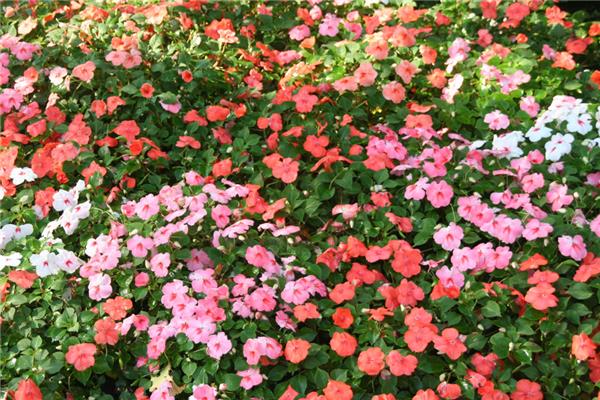
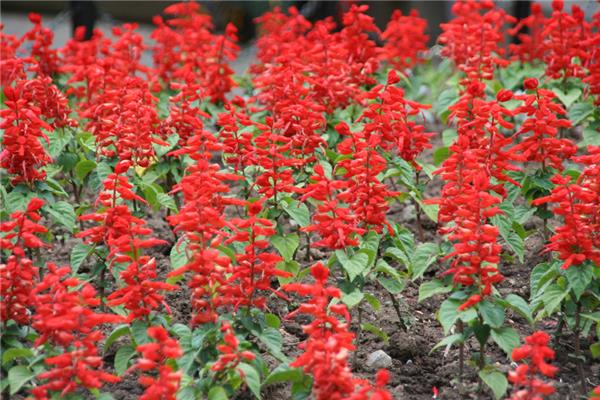
2. Annual flowers are generally sown in spring, bloom and bear fruit in the same year, produce seeds, complete their life cycle, and then wither and die. This type of flower begins flower bud differentiation shortly after the seedlings grow, and continues until flowering and fruiting in autumn. Examples include marigold, zinnia, cockscomb, garden balsam, scarlet sage, globe amaranth, lobelia, China aster, and cosmos. Most annual flowers prefer sunlight and well-drained, fertile soil. The flowering period can be regulated by adjusting the sowing time, light treatment, or applying plant growth regulators.
3. There are many flower varieties to choose from, making it easy to create rich landscapes. However, most species have relatively strict requirements for soil and moisture in the environment.
4. The flowering period of annual bulbous flowers is easy to control and uniform. As long as the bulbs are of uniform size and the planting conditions, time, and methods are consistent, they can bloom simultaneously.
5. Note that the boundaries between annual and biennial, and between biennial and perennial, are sometimes not sharply defined. For example, Calendula officinalis, daisy, and cineraria are sown in autumn, form seedlings in the same year, overwinter, and then bolt and bloom in the spring of the following year, showing typical biennial flower characteristics. However, when these flowers are sown in spring, they can also bolt and bloom in the same year.
II. Landscape Application Characteristics of Annual Flowers
1. Annual herbaceous flowers are important flowers in summer landscapes;
2. Bright and beautiful colors, abundant and uniform blooming, good decorative effect, often used for key landscaping;
3. They are commonly used flowers in formal garden designs;
4. Seedlings are easy to obtain, convenient for large-area use, and produce quick results;
5. Each type of flower has a concentrated flowering period, making it convenient to replace varieties in time and maintain a longer-lasting ornamental effect;
6. Some species can also self-seed and spread, creating a wild, natural charm;
7. Climbing types can be used for vertical greening, with quick results and low requirements for the strength of support structures;
8. To ensure the ornamental effect, they must be replaced multiple times a year, resulting in higher management costs;
9. They have relatively high requirements for environmental conditions, and when planted directly in the ground, a good planting site must be selected.
III. Representative Annual Flowers
1. Rudbeckia hirta, also known as black-eyed Susan, is a perennial herbaceous flower of the genus Rudbeckia in the Asteraceae family, often cultivated as an annual or biennial herbaceous flower. The plant height is 80 to 100 cm, the entire plant is covered with rough bristles, and it branches near the base. Black-eyed Susan has large flowers, bright colors, and a long flowering period. It is often used as a material for flower beds and flower borders, and can also be potted for home viewing or used as a cut flower material.
2. Cosmos, also known as autumn cosmos, large cosmos, autumn cherry, Gesang flower, eight-petal plum, and broom plum. Large cosmos belongs to the family Asteraceae, genus Cosmos. Cosmos is an annual herbaceous plant with a plant height of 30-120 cm and a flowering period in summer and autumn.
3. Cypress vine, also known as dense-leaved pine, commonly called five-pointed star flower and lion grass. It likes light and prefers a warm, humid environment. It grows in areas from 0 m to 2,500 m above sea level, is not cold-tolerant, and when potted must be given a trellis for it to twine around. When in bloom, it is extremely delicate and beautiful.
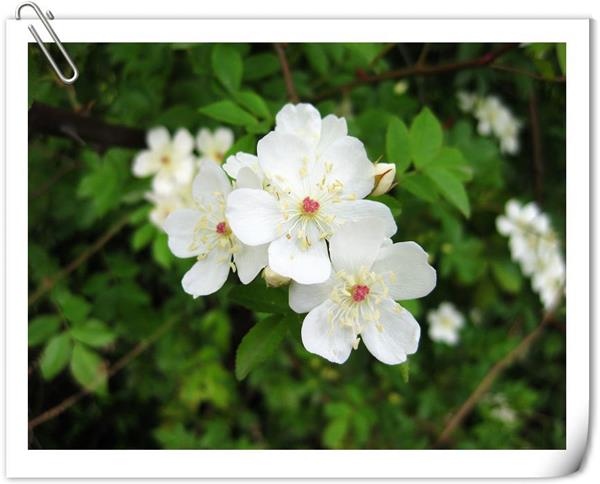
4. Orange jasmine, also known as Chinese box orange, ten-mile fragrance, club moss, manjiangxiang, thousand-mile fragrance, stone pepper, nine-autumn fragrance, nine-tree fragrance, ten-thousand-mile fragrance, cross-mountain fragrance, golden osmanthus, mountain yellow skin, and thousand eyes. The flowers are white and fragrant. It has the distinctive fragrance of the Rutaceae family. After the flowering period, it produces fruit, initially green, and when the berries mature they turn reddish-brown. It can be used as medicinal material.
Because annual flowers have a short flowering period, they often need to be replaced, but every year you can see different, newly grown flowers, so they have ornamental value different from that of perennial herbaceous flowers, and are especially suitable for those who like constant change.