What are the cultivation methods and precautions for poinsettia?
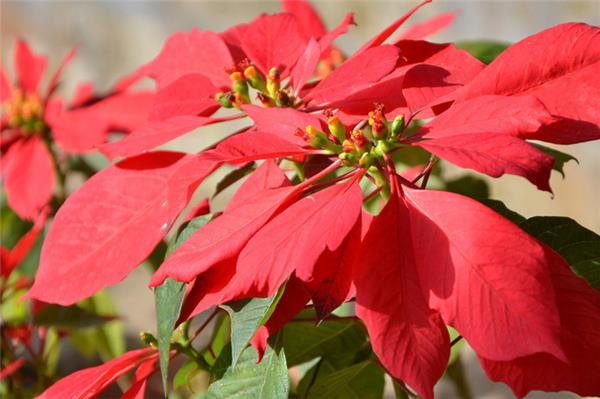
Poinsettia is an evergreen shrub with alternate simple leaves. People often mistake its brightly colored bracts at the top for its flowers; its true flowers are actually the small yellow-green flowers in the center of the bracts. Poinsettia has many advantages: it is not only beautiful and attractive, but also symbolizes happiness, making it suitable as a blessing gift for anyone. Having said so much about the merits of poinsettia, let us now look at the cultivation methods and precautions for poinsettia.
I. Cultivation methods for poinsettia
1. Soil selection for poinsettia cultivation
The soil requirement for poinsettia cultivation is clean, well-drained, slightly acidic soil. The soil can be a mixed soil of peat with an appropriate amount of perlite, vermiculite, bark and other materials.
2. Fertilization for poinsettia cultivation
Poinsettia likes fertilizer, so attention should be paid to fertilizing it during cultivation. During the growing period, the fertilization cycle for poinsettia is once every 7-10 days. Fertilizer should not be too concentrated, and raw fertilizer must not be applied. It should be noted that under low light in winter, the frequency and amount of fertilization should be reduced; during the peak growing season, more nitrogen fertilizer should be supplemented, while during the flowering period, the nitrogen content in the fertilizer should be appropriately reduced.
3. Watering for poinsettia cultivation
Poinsettia is relatively sensitive to water, and water control directly affects its growth and development. Too dry or too wet conditions will both cause adverse reactions in poinsettia. When cultivating poinsettia, water less in the early growth stage, water more in summer when temperatures are high, and you can also spray water onto the ground to increase humidity according to the weather and the dryness or wetness of the potting soil; in spring and autumn, generally water once every 1-2 days.
II. Precautions for poinsettia cultivation
1. After heavy pruning in April-May of spring, repot. The potting soil should preferably be fertile, well-drained and highly breathable. The quality of the soil directly affects the growth of poinsettia. After repotting and survival, ensure sufficient light and water and fertilizer to promote renewed growth and the emergence of new branches. After the new branches become semi-lignified, they can be cut off for cuttings, and at the same time appropriately trim the plant shape so that the old branches are evenly distributed. If the old plant is not pruned, pinch it 2-3 times to achieve a full plant shape.
In spring, poinsettia grows vigorously, so sufficient light should be provided, and the potting soil should be alternately dry and moist. If the potting soil remains moist for a long time, the roots will not grow well and are prone to rot. However, if the potting soil remains dry for a long time, the fibrous roots on the main root are prone to shriveling, causing the plant to lose water. When fertilizing, the fertilizer concentration should not be high, otherwise it is easy to burn the roots.
2. In summer, poinsettia is not tolerant of high temperatures and strong sunlight. In summer, the temperature should not exceed 28°C, otherwise growth will be poor. In summer, it should grow in a semi-shaded environment, ensuring sufficient water supply. When the temperature is relatively high, spray water around it frequently and strengthen ventilation to lower the temperature. If the temperature is higher than 28°C, poinsettia growth stagnates, so fertilization should be stopped and resumed after the temperature drops.
III. Uses of poinsettia
1. Ornamental
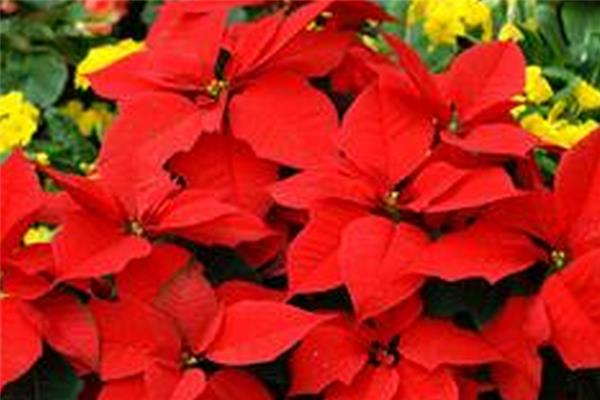
Poinsettia has graceful branches and leaves, bright flower colors and a long flowering period. It blooms right around Christmas, New Year's Day and Spring Festival. Its brilliant red color adds a festive atmosphere. During holidays, displaying poinsettia in patterned arrangements for viewing has a very good effect.
2. Home decoration
With the development of high-rise buildings in cities, people spend most of their time indoors. In addition to arranging beautiful furniture and some furnishings in the home, if potted flowers, bonsai and flower arrangements can be used as indoor decoration, it will have a more unique flavor. It can not only bring a strong sense of life to the room, but also make people feel pleasant and relaxed. The unique and charming red bracts of poinsettia are eye-catching and alluring. When decorating a windowsill, balcony or study, they spread red and display green, charming and moving.
3. Feng shui
Poinsettia has brilliant flower colors. Because it blooms right around New Year's Day and Spring Festival, it carries the beautiful meaning of universal celebration and jointly welcoming new life. At this time, using it to decorate places such as the home living room can easily bring good luck to family members in terms of feng shui.
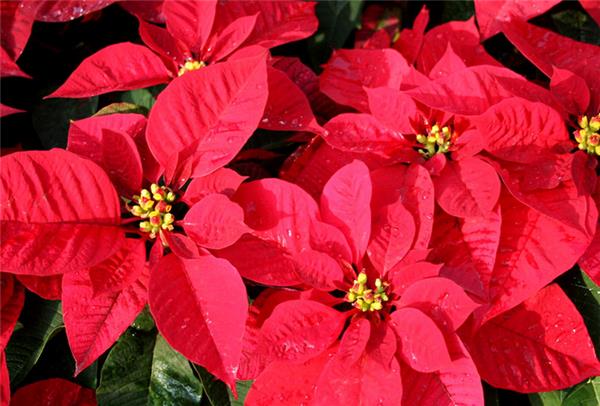
Undoubtedly, poinsettia is very beautiful, but what pleases your eyes is not its flowers, but its bracts. Poinsettia is an evergreen shrub, with green tender branches and dark brown old branches. The leaves near the inflorescence at the top are bract-like and turn red when flowering, and are the main ornamental part. Placing a pot of poinsettia at home and quietly accompanying its growth, it first gives you vibrant green, yet in the most bleak and cold season, it repays you with a mass of fiery passion. During the festive Christmas and New Year's Day, it shares with you those happy and blissful moments. This is undoubtedly a very wonderful thing.
During the festive Christmas and New Year's Day, it shares with you those happy and blissful moments. This is undoubtedly a very wonderful thing.