How to grow string of pearls? A step-by-step guide to the growing method
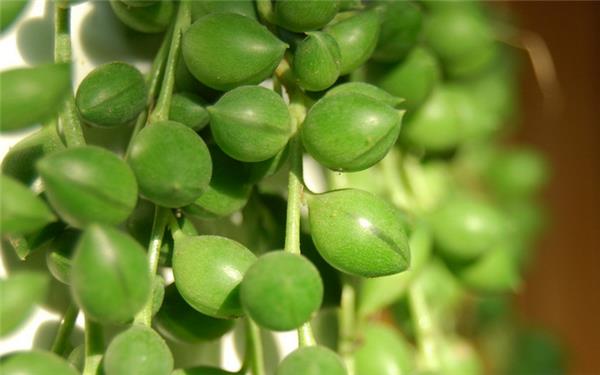
Most plants in nature have names that resemble their appearance, such as crab claw orchid (Schlumbergera), winter jasmine (Jasminum nudiflorum), and so on. Does the name string of pearls also symbolize some characteristics of the plant? Indeed, string of pearls has leaves similar to pearls, round and green, crystal clear, as if a summer sprite bringing us a cooler feeling. Beautiful plants also have fragile traits, so while enjoying the beauty of string of pearls, we should also pay attention to its growing method.
I. Growing method for string of pearls
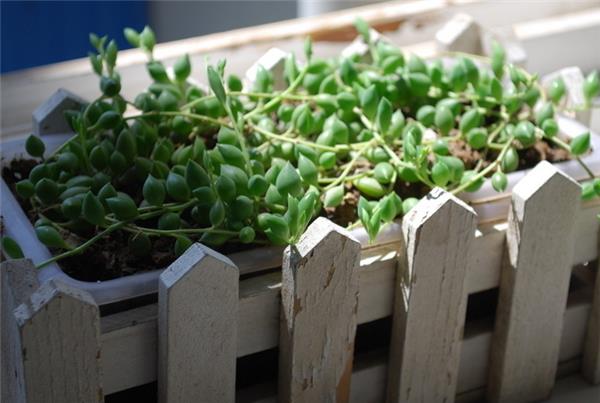
1. Because the leaves are fleshy and juicy, it is drought-tolerant. When watering during cultivation, it is better to keep it dry rather than wet; this is one of the keys to success. When the weather is dry, you can spray more water on the leaves and vines to make up for the lack of moisture and keep the beads green and plump. It prefers partial shade; exposure to strong sun may scorch the beads, while too weak light will make growth poor.
2. The plant's root system is very shallow, so it can be planted in a shallow pot. Generally, use a tile to cover the bottom hole, and spread a layer of coal cinders or coarse sand to increase air permeability and drainage (especially when using the commonly seen plastic pots). For the soil, it is best to use leaf mold (fallen leaves of trees in autumn and winter mixed with a certain amount of broken soil and exposed to the sun for about a year, then mixed with a certain amount of sand; the soil-to-sand ratio is about 1:3).
3. It likes warmth and humidity, is relatively cold-tolerant (when cultivated in the Jianghuai region it can tolerate a low temperature of 0°C), and is heat-tolerant. The most suitable temperature is about 20°C-28°C. Growth is slow at both high and low temperatures, especially in a high-temperature environment above 30°C, when it almost goes dormant, so water and fertilizer should be reduced, otherwise the roots are prone to rot. This is also one of the keys to successful cultivation.
II. Precautions for string of pearls
1. Watering: The flesh of string of pearls is thick and juicy, and its drought tolerance is relatively strong, but its resistance to rot is somewhat weak. Therefore, in daily watering, follow the principle of keeping it dry rather than wet, especially in summer, when root rot is most likely to occur. When watering, it is best to use a spraying method. String of pearls prefers a partial-shade environment; whether it is high temperature or excessive shade, both will affect its growth.
2. Fertilizing: Fertilizing should follow the principle of "light fertilizer, frequent application," applying fertilizer in multiple portions and small amounts. Generally, apply 1-3‰ nitrogen fertilizer and potassium dihydrogen phosphate, which can promote the growth of its leaves.
3. Environment: String of pearls likes a warm and humid environment and grows best at 20-28°C. If the temperature is too high, the plant will adaptively go dormant, and at this time its need for water and fertilizer is very low, so water and fertilizer can be reduced, otherwise it will cause root rot.
III. Matching string of pearls with home styles
Placing string of pearls in the kitchen
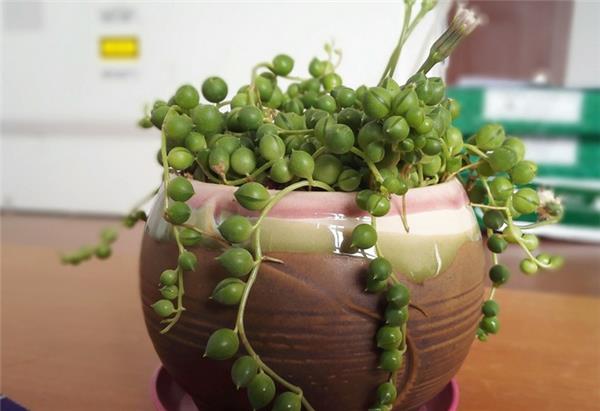
The rate at which plants appear in the kitchen is second only to the living room, because some family members spend a lot of time in the kitchen every day, and the environmental humidity is also very suitable for most plants. In addition, ordinary household kitchens mostly use white or light-colored decor and stainless steel sinks; colorful plants can soften the hard lines and inject a breath of life into the kitchen. It is usually located in a north-facing room with fewer windows, and some potted plants can be used to decorate it and eliminate the feeling of coldness. Because there is little sunlight, shade-loving plants should be chosen. The kitchen is a workspace with frequent activity and scattered items, and both smoke and temperature are relatively high, so large potted plants are not suitable, while hanging potted plants are more appropriate. Among them, string of pearls is the best; placing a pot of string of pearls in a room can absorb harmful gases such as carbon monoxide, carbon dioxide, sulfur dioxide, and nitrogen oxides within 24 hours, playing the role of an air filter.
Placing string of pearls in the bedroom
The bedroom generally should be quiet, peaceful, and cozy. String of pearls, lilies, tuberoses, calla lilies, and so on can be used. They can make the relationship between husband and wife harmonious, and both body and mind can rest in warmth and quiet.
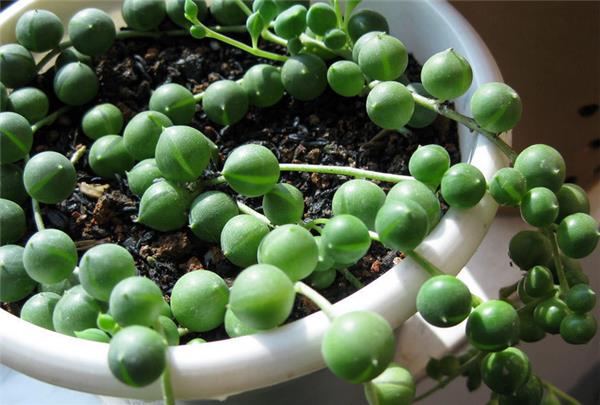
String of pearls has relatively beautiful leaf shape and leaf color and has a certain ornamental value, so it is often used for indoor greening and planting, and is an ideal flower for home hanging cultivation; in addition, because spider plants have the function of absorbing toxic gases such as benzene and formaldehyde, string of pearls also has the reputation of being a "green purifier," so it is also used for indoor air-purifying potted planting.