How to Grow Orange Jessamine (Murraya paniculata) and Seed Selection Tips
The name "Orange Jessamine" alone gives a sense of intoxicating atmosphere, and its rich fragrance is the main reason it has become increasingly popular. To grow Orange Jessamine well and keep it blooming continuously, you need to put more effort into its care.
I. The Uses and Value of Orange Jessamine
1. Medicinal value: The leaves, seeds, and roots of Orange Jessamine can all be used as medicine. After the root is used medicinally, it can disperse blood stasis and relieve pain, stop bleeding, and dispel wind and activate collaterals; the seeds used medicinally can astringe the intestines and consolidate essence.
2. Ornamental value: Orange Jessamine is evergreen through all four seasons with glossy foliage, and its fragrance is captivating; it can be used for viewing and beautifying the environment.
3. Air purification: Orange Jessamine also has strong resistance to toxic gases such as sulfur dioxide, so it can be planted indoors, in living rooms, and in courtyards to purify the air.
II. Ecological Habits of Orange Jessamine
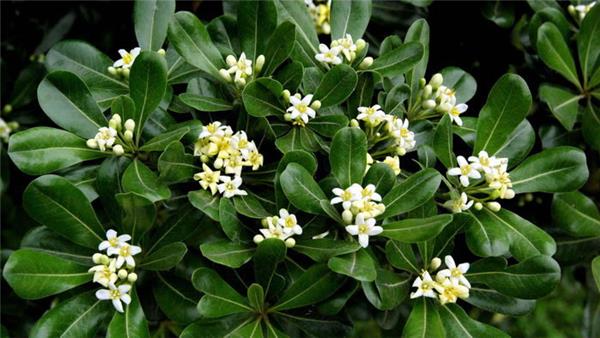
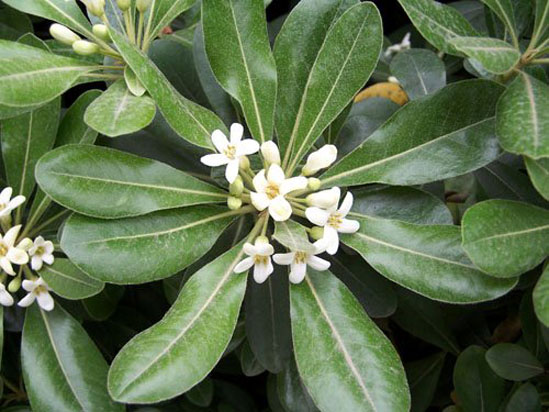
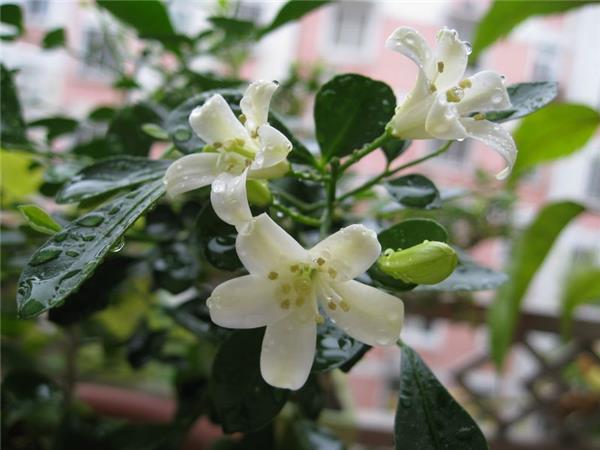
Orange Jessamine is a small tree or evergreen shrub. Its plant height reaches 3 m, with dense branches and leaves and a rounded crown. Its leaves are alternate, leathery, narrowly obovate, and about 5-12 cm long. Its flowers are white or tinged with yellow-green, fragrant, with pedicels 0.8-1.5 cm long. There are 5 stamens, 5 sepals, and 5 petals. The capsule of Orange Jessamine is nearly spherical, angular, up to 1.5 cm long; it is initially green, later turning yellow, and the seeds are bright red with mucilage. Orange Jessamine likes to grow in a warm and humid maritime climate. It likes sunlight and is fairly shade-tolerant. It has low requirements for soil; it can grow in either alkaline or neutral soil.
III. How to Select Orange Jessamine Seeds
Before sowing, the seeds must first be selected. Whether the seeds are chosen well or not directly affects whether sowing can succeed.
1. It is best to use seeds harvested in the current year. The longer the seeds are stored, the lower their germination rate.
2. Choose seeds that are plump and free of defects or deformities.
3. Choose seeds free of pests and diseases.
4. Seed disinfection: Disinfection includes two concepts; one refers to disinfecting the seeds, and the other refers to disinfecting the sowing substrate. For household seed disinfection, it is common to soak the seeds in hot water at about 60°C for a quarter of an hour, then use warm water to promote germination for 12-24 hours. To disinfect the sowing substrate, the best method is to put it in a pot and heat it while stirring; any pests or diseases will be killed by the heat.
IV. How to Grow Orange Jessamine
Propagation: Sowing is more common in the south, while cutting propagation is more common in the north. Cuttings are best taken in the rainy season. Cut current-year semi-lignified branches as cuttings. After inserting them, shade them and water them; after about one month, callus tissue can form and new roots can sprout.
Soil: It likes warm, humid environments and sunlight, and is also tolerant of partial shade. It requires loose, fertile soil. Mix 2 parts leaf mold or peat soil + 1 part garden soil for potted planting, and apply base fertilizer.
Water and fertilizer: During the growing season, frequently spray water on the leaf surface. Water according to the principle of "water when dry, stop when wet." Apply a dilute cake fertilizer solution once before and once after flowering.
Light: It likes ample light.
Pruning: Pittosporum has strong branching ability and is tolerant of pruning. Shaping and pruning should begin from the seedling stage. Pinch the tops to encourage side branches, and often train the crown into a spherical shape.
Repotting: Young potted plants can be repotted once a year, while mature plants can be repotted about every 2 years.
Overwintering: The overwintering temperature should be greater than 5°C. When the indoor temperature is low in winter, control watering.
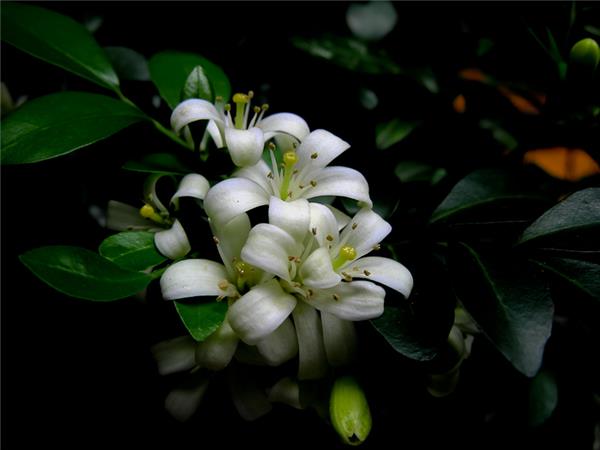
So, after reading the introduction above, does everyone know how to grow Orange Jessamine and make it produce Orange Jessamine flowers with pure white color, beautiful flower shape, delicate flower branches, and fragrant scent? If you have learned it, hurry up and try planting it.