How to Grow Living Stones (Lithops)? A Complete Guide to Their Care
Living stones (Lithops) prefer a warm-winter, cool-summer environment. They are sensitive to low temperatures and enjoy plenty of sunlight but not intense light. The suitable growing temperature is 10-30°C. After about 3-4 years of growth, they can produce yellow, white or pink flowers from the fissure between the leaves. The flowers usually open in the afternoon and close in the evening, with a blooming period of about 3-7 days. The flowers are very delicate and beautiful.
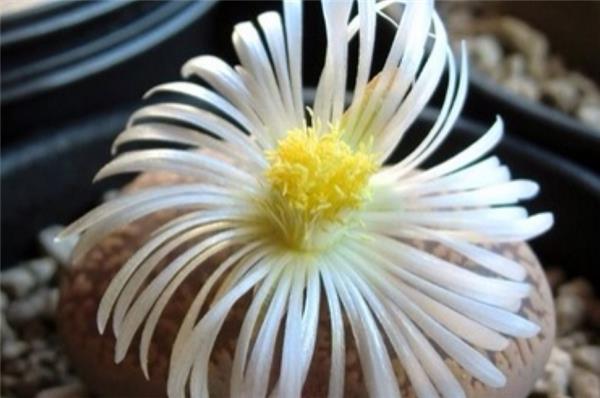
I. How to Grow Living Stones
1. Propagation: Seed sowing is the most common method. Sow seeds in April to May. The seeds are very small, so sow them indoors under cover at a temperature of 22-24°C. They germinate in about 7-10 days after sowing. The seedlings are very small and slow-growing, so care must be taken with their management. Seed-grown plants need 2-3 years to flower.
2. Cultivation: Living stone seedlings are relatively difficult to care for. They prefer a warm-winter, cool-summer climate. Every year in March to April, when new globe-shaped leaves grow, the old globe-shaped leaves gradually shrivel. In summer, the new globe-shaped leaves grow thicker and thicker, always maintaining 2 globe-shaped leaves. During the growing period they need more water, but not overly wet soil. At the same time, fertilize once every half month, but the fertilizer solution must never touch the globe-shaped leaves. After flowering in autumn, pause fertilizing. In every season, place them in a spot with plenty of sunlight. If exposed to low temperatures or too much shade, the globe-shaped leaves will not grow well and will gradually shrivel. For potted living stones, the root system is small and shallow. You can place brightly colored pebbles around them, which both provide support and enhance the ornamental effect.
3. Pests and diseases: They are mainly susceptible to leaf spot disease and leaf rot disease, which can be treated by spraying with 65% mancozeb wettable powder diluted 600 times. Pests include ants and root-knot nematodes. To reduce nematode damage, use the soil replacement method. To prevent ants, use the double-pot water barrier method so that ants cannot crawl onto the tender, juicy globe-shaped leaves. Living stones resemble colorful pebbles in both shape and color, with many varieties and rich colors. They are world-famous small succulents, often grown in pots for indoor ornamental display.
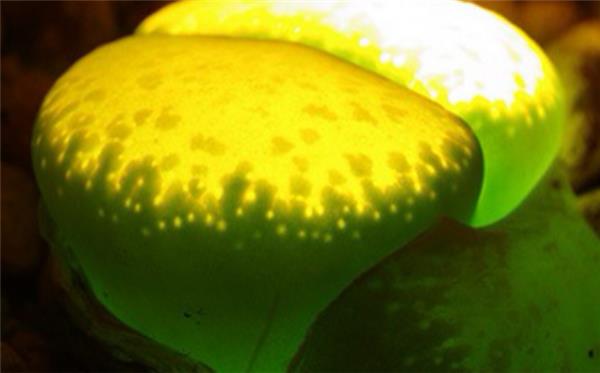
II. Seedling Care for Living Stones
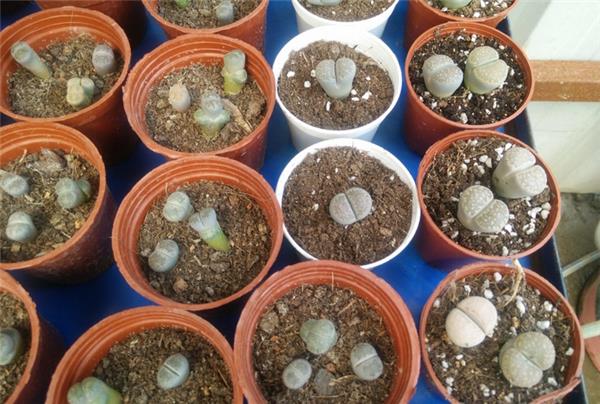
During the seedling stage, water whenever the soil looks slightly dry. Apply fungicide once a week. As long as there is plenty of light, they generally will not become etiolated. Continue this care until the molting stage. Many beginners who grow living stones have only heard that water should be withheld during molting, but they have no idea when exactly to start. For numbered varieties, this is easier to control because the growth states are all similar. Basically, when one starts molting, the others are about the same. As soon as you see one stone with its central fissure split open enough to reveal the small stone inside, you can begin withholding water. Now let's talk about mixed varieties. Mixed seeds produce many different varieties, and although their molting times are similar, they are still somewhat uneven. In this case, you need to find a middle ground. Observe carefully: when a small portion of the stones have split open, about 1/5 showing cracks, you can begin withholding water. Once you start withholding water, it must be complete. Don't be afraid they will die of drought. Generally, losing a small number during the molting period is normal; there are always some weak seedlings that will die. Don't start watering again just because you see some dying. You must be decisive and withhold water completely until the old outer skin of the seedlings has turned withered yellow and become a thin layer. At that point, the water-withholding period should end. Then begin giving a small amount of water to let the plants slowly revive and enter the growing state. Water in the evening as usual. At the beginning, do not give too much water. Use a spray bottle to mist lightly, just enough to make the soil surface slightly moist. After a few days, once the potting soil has dried out completely, mist again. You will find the plants slowly breaking through the old skin and entering rapid growth. During this period, be sure not to give too much water, as they easily become etiolated. At the same time, pay attention to sterilization and pest control. For pest control, simply sprinkle some carbofuran or Bayer green granules on the soil surface. Living stones only need soil pest control. Pest control is generally done in spring and autumn.
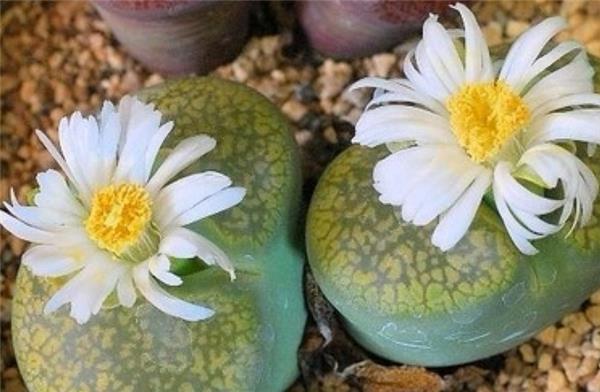
III. How to Care for Living Stones During the Molting Process
The molting process of living stones usually occurs in late winter to early spring. The central fissure of the plant gradually splits open, and one or two or three new plants gradually grow larger at the split, while the original plant gradually withers and is replaced by the new plants. This process of new plants replacing the old ones is the molting growth and propagation process of living stones. During the molting process of living stones, never spray water onto the plants. Why must water not get on the plants during molting? Because watering the old skin during the molting period can easily lead to bacterial infection and then rot.
Note that not all living stones use the same water-withholding method. Regarding the molting of living stones, don't keep giving in to the urge to water living stones that haven't finished molting. In fact, the molting period of living stones is quite long, lasting two to three months from start to finish. This is for mature plants. The molting period for seedlings is relatively shorter. During the molting period, mature plants should not be given a single drop of water; giving water will prolong the molting period. Besides the difference in water withholding between mature plants and seedlings, living stones also differ by size and variety.
In addition, during the molting period, provide full light if possible. They are not easily damaged by sun (this is for mature plants). For seedlings, relatively reduce direct light. Only when the old outer skin of the living stone has dried into a thin membrane is the molting considered complete. In other words, when it is completely dry and whitish, and the old skin comes off with a gentle touch, that is when the living stone has truly finished molting. The first watering after molting is very important. For the first time, water the living stones with water diluted 10,000 times with thiophanate-methyl. You can water until half-drenched or fully drenched. So-called half-drenched means using a watering can and, with the living stone as the center point, watering in a circle around it. Do not water onto the living stone itself. That is all you need to do.
The above is our introduction to how to grow living stones and how to care for them during the molting process. During the molting process of living stones, be sure to pay attention to water withholding and light, and always watch for changes in the living stones. After molting, the first watering must include some fertilizer solution to help the living stones grow larger and more vigorous.
They are not easily damaged by sun (this is for mature plants). For seedlings, relatively reduce direct light. Only when the old outer skin of the living stone has dried into a thin membrane is the molting considered complete. In other words, when it is completely dry and whitish, and the old skin comes off with a gentle touch, that is when the living stone has truly finished molting. The first watering after molting is very important. For the first time, water the living stones with water diluted 10,000 times with thiophanate-methyl. You can water until half-drenched or fully drenched. So-called half-drenched means using a watering can and, with the living stone as the center point, watering in a circle around it. Do not water onto the living stone itself. That is all you need to do.
The above is our introduction to how to grow living stones and how to care for them during the molting process. During the molting process of living stones, be sure to pay attention to water withholding and light, and always watch for changes in the living stones. After molting, the first watering must include some fertilizer solution to help the living stones grow larger and more vigorous.