How to grow Haworthia cooperi var. truncata? With pictures for appreciation
Haworthia cooperi var. truncata is a succulent plant belonging to the Liliaceae family. Its leaves are thick and crystal clear, and it got its name because it is as clear and translucent as an ice lantern. The leaf margins of Haworthia cooperi var. truncata have tiny hairs, but there are no hairs at the tip. The diameter of the plant can reach about 7~8 cm, and the leaf tips are relatively flat. Haworthia cooperi var. truncata is highly ornamental. Because its appearance is elegant, as if it had been carefully carved by hand, it can be said to be uniquely distinctive. So here comes the question: as a highly ornamental Haworthia cooperi var. truncata, its cultivation deserves even more attention. How exactly should Haworthia cooperi var. truncata be grown?
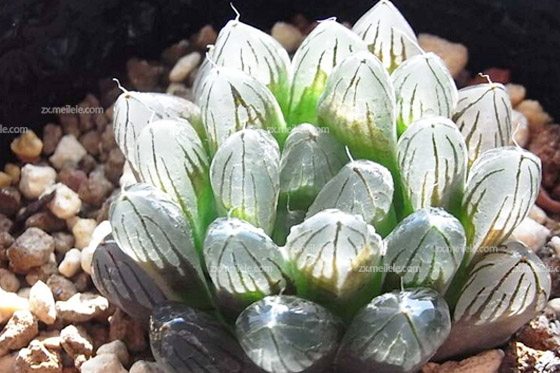
How to grow Haworthia cooperi var. truncata - Soil
No matter what plant is being cultivated, soil is truly very important. To grow Haworthia cooperi var. truncata well, it is recommended to use granular soil that is well aerated and well drained and not prone to compaction for planting and cultivation. Adding some peat to it is even better, and then spreading a layer of fertilizer at the bottom of the pot can make up for the shortcoming of insufficient nutrients in granular soil, maintaining both aeration and sufficient nutrients.
How to grow Haworthia cooperi var. truncata - Light
Haworthia cooperi var. truncata likes a cool environment and has the characteristics of being drought-tolerant but not cold-tolerant. Its growing season is mainly in spring and autumn. Therefore, when cultivating Haworthia cooperi var. truncata, avoid placing it in a high-temperature, scorching-sun environment. It is best to place it in a well-ventilated place with sufficient light. An overly dark environment will also cause defects in the plant. Therefore, it is best to place Haworthia cooperi var. truncata in a spot with half shade and half sun.
How to grow Haworthia cooperi var. truncata - Watering
Haworthia cooperi var. truncata likes a humid environment, so when watering, it is best to choose a sprayer to water. When watering, you should grasp the principle of "do not water if not dry, and water thoroughly when watering." If the soil is too dry, its roots and stems will shrivel and eventually die. However, in order to avoid long-term water accumulation, be careful not to be exposed to rain frequently, so as to avoid root rot. If you want to know whether the soil in the pot is dry, poke your finger 3 cm deep into the soil. If it is dry, water it immediately.
How to grow Haworthia cooperi var. truncata - Fertilizing
Haworthia cooperi var. truncata is actually a plant that does not like fertilizer much, but in order to ensure the supply of nutrients, some fertilizer should still be applied appropriately. During its growing season, that is, in spring and autumn, applying a thin fertilizer twice is enough. Avoid applying too much fertilizer to prevent burning or even killing the plant. One more point to pay special attention to is that Haworthia cooperi var. truncata that has just been potted must not be fertilized, and this point deserves particular attention.
How to grow Haworthia cooperi var. truncata - Repotting
Because the roots of Haworthia cooperi var. truncata secrete a relatively strong acidic substance, in order to prevent the soil from gradually becoming acidified, it must be repotted every year to avoid slow growth or even no growth. When repotting, still choose the two seasons of spring and autumn, and still choose granular soil with good aeration. If you find that the Haworthia cooperi var. truncata in your home is growing slowly or has even reached the point of not growing, then you need to repot it.
Conclusion: As a highly ornamental plant, Haworthia cooperi var. truncata certainly requires special attention to many things during cultivation. I do not know whether this solution on how to grow Haworthia cooperi var. truncata that the editor has put together has helped you, but I believe it is still of some help.
Recommended reading:
☑ Jade plant pictures ☑ Camellia pictures ☑ Toxic plants ☑ Succulent plants ☑ Variegated spider plant ☑ Home flower growing
☑ Ferns ☑ Rose flower language ☑ Orchid varieties ☑ Daphne odora ☑ Bonsai ficus ☑ Hoya pictures